How to Decorate a Living Room
Learn how to plan furniture, colors, lighting and decor to create a living room that feels cohesive and functional.
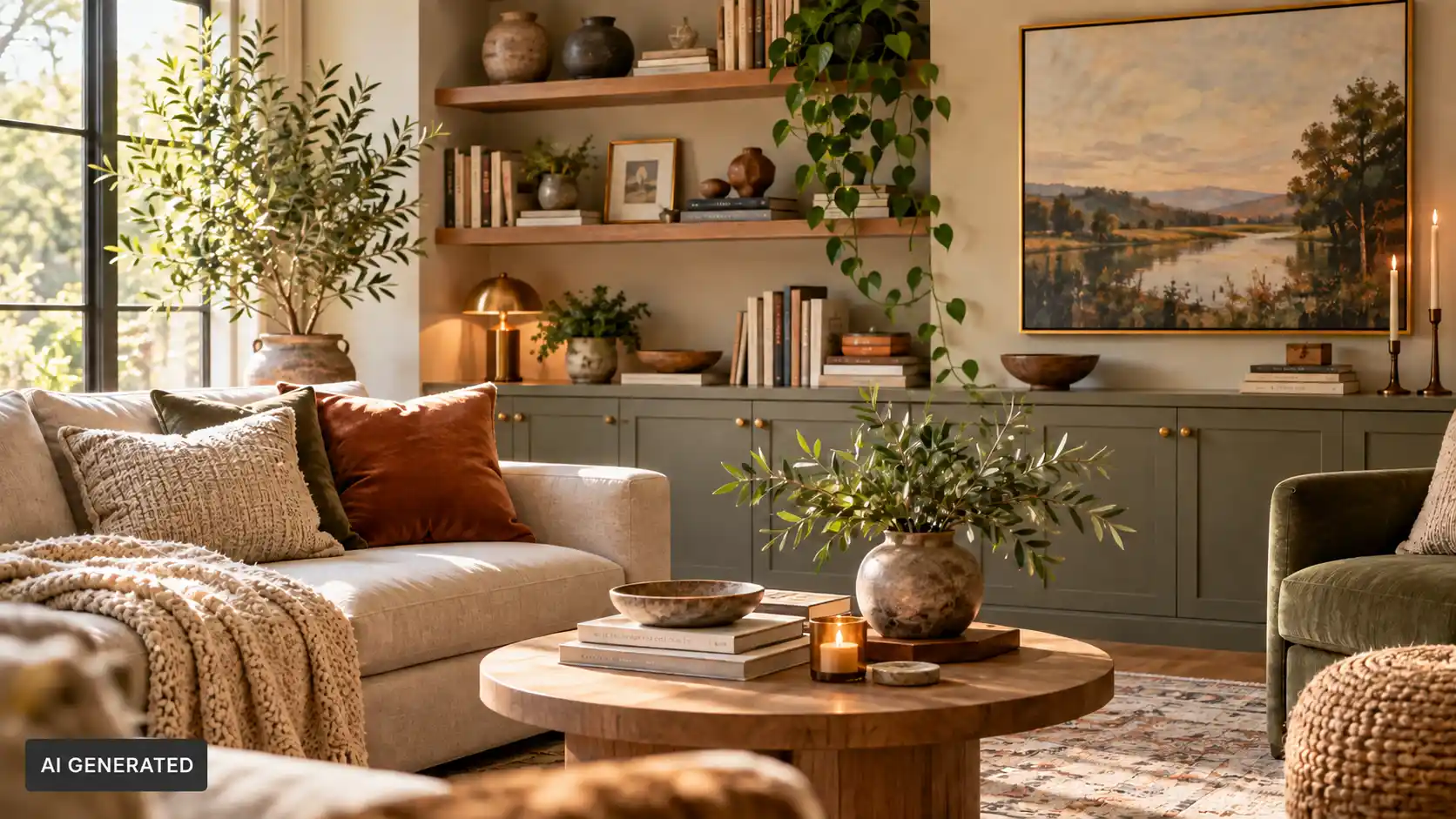
Decorate a living room by first deciding how the space will be used, measuring the room and planning the furniture layout. Choose the sofa and other large pieces before moving on to the rug, lighting, curtains, wall decor and smaller accessories.
Starting with the bigger decisions makes it easier to create a room that feels balanced and works for everyday life. Instead of choosing individual pieces simply because you like them, think about how furniture, circulation, lighting and decor will work together.
How to decorate a living room step by step
1. Measure the room
Before buying furniture, get a clear picture of the space you actually have. Measure the length of each wall, doors and windows, ceiling height, radiators and built-in storage, fixed architectural features, and electrical outlets.
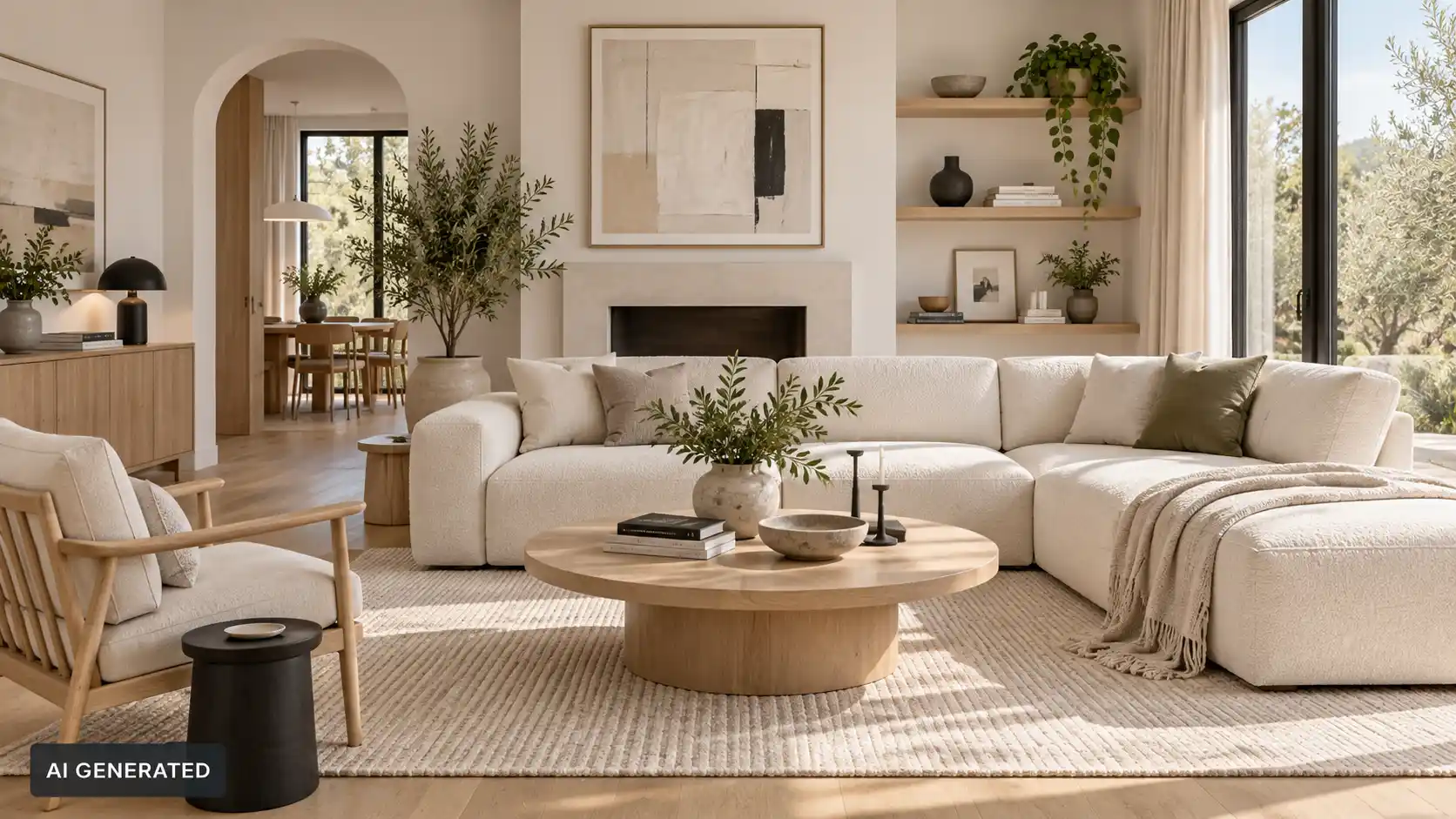
With those measurements, create a simple floor plan. This lets you test furniture dimensions and different arrangements before committing to larger purchases. In Planner 5D, for example, you can recreate the room in 2D and experiment with layouts before switching to a 3D view to see how the proportions work from inside the space.
2. Decide how you'll use the living room
The right living room layout depends on what you expect to do there. Think about whether the room needs to support:
- watching TV
- entertaining guests
- reading
- family time
- children's activities
- working from home
- several of these activities at once
Once you know the main functions, it becomes easier to decide how much seating you need, whether storage is a priority and where the main furniture should go.
Focus on your ideas. Put Copilot to work.
Describe what you want to create and let Planner 5D Copilot help turn your ideas into an editable 2D and 3D design.
Try Planner 5D Copilot →3. Choose a focal point
Most living rooms benefit from one clear visual anchor. Depending on the room, this could be a fireplace, a TV or media unit, a statement piece of artwork or a built-in bookcase. Use that feature as a starting point when arranging the space.
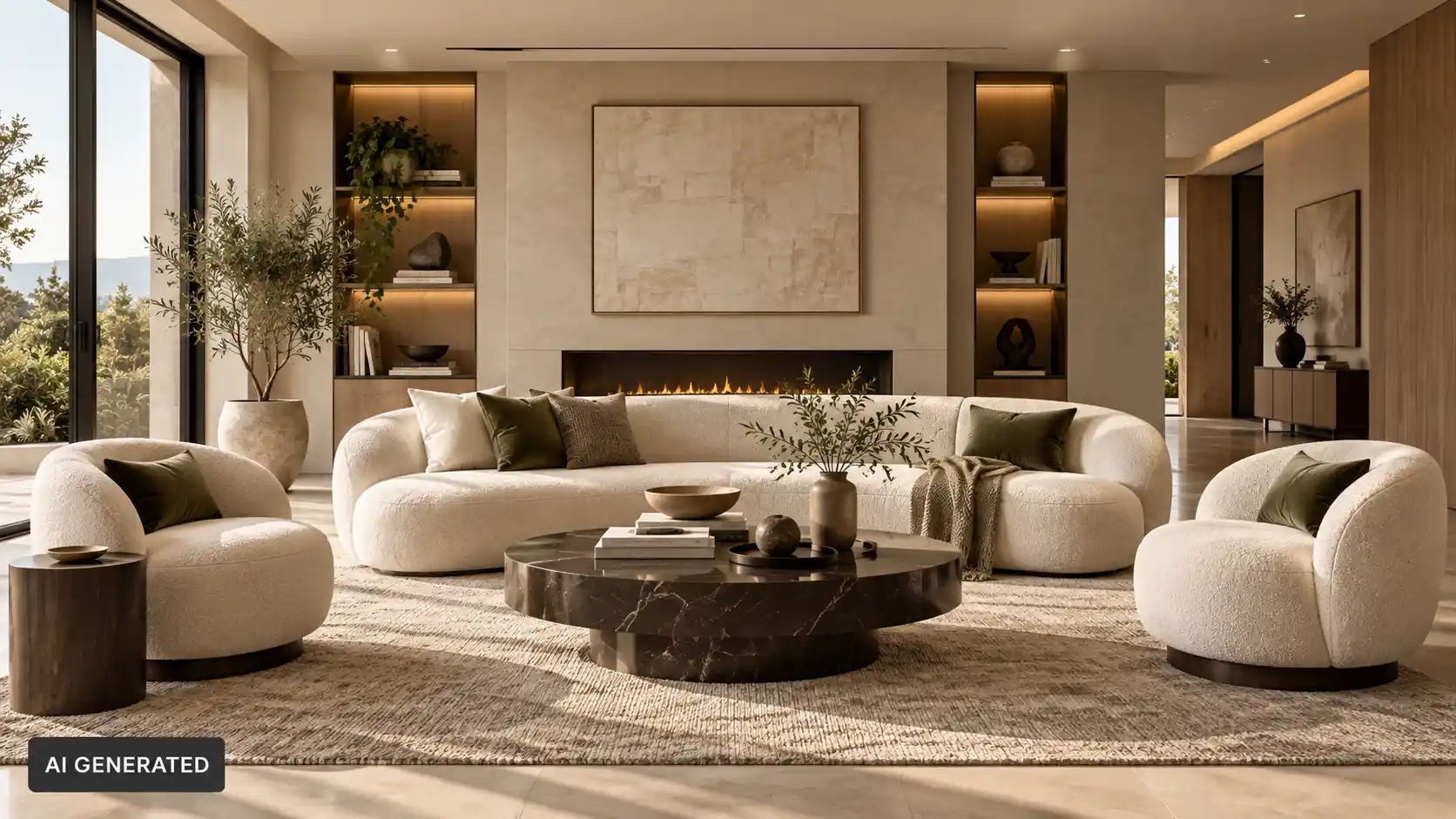
Not every piece of furniture has to face it directly, but the overall layout should acknowledge it. Problems often arise when several elements compete for attention—for example, a television on one wall, a fireplace on another and large artwork placed elsewhere. Choosing a primary focal point helps give the room a clearer sense of direction.
4. Plan the furniture layout
Start with the largest piece of furniture, which is usually the sofa. Once its position is established, add armchairs, side tables, a coffee table and storage according to the available space. As you build the layout, keep a few practical points in mind:
- Create conversation areas: arrange seating so people can comfortably face one another.
- Keep walking paths clear: avoid routes that force people to squeeze between furniture or cut through the main seating area.
- Watch the scale: oversized furniture can overwhelm a compact room, while too many small pieces can make a larger room feel fragmented.
- Do not default to the walls: pushing every piece against the perimeter is not always the best use of the room.
In wider living rooms, bringing the sofa and chairs slightly inward can create a more defined and comfortable seating area.
5. Choose a color palette
Once the layout is established, choose a simple palette that helps the different elements of the room feel connected. A practical approach is to work with:
- one dominant base or neutral color
- one or two complementary shades
- a smaller accent color
The base might come from the walls, sofa or another large surface, while stronger colors can appear in cushions, artwork, smaller furniture or decorative objects. You do not need every item to match. Repeating colors in different parts of the room is enough to create visual continuity.
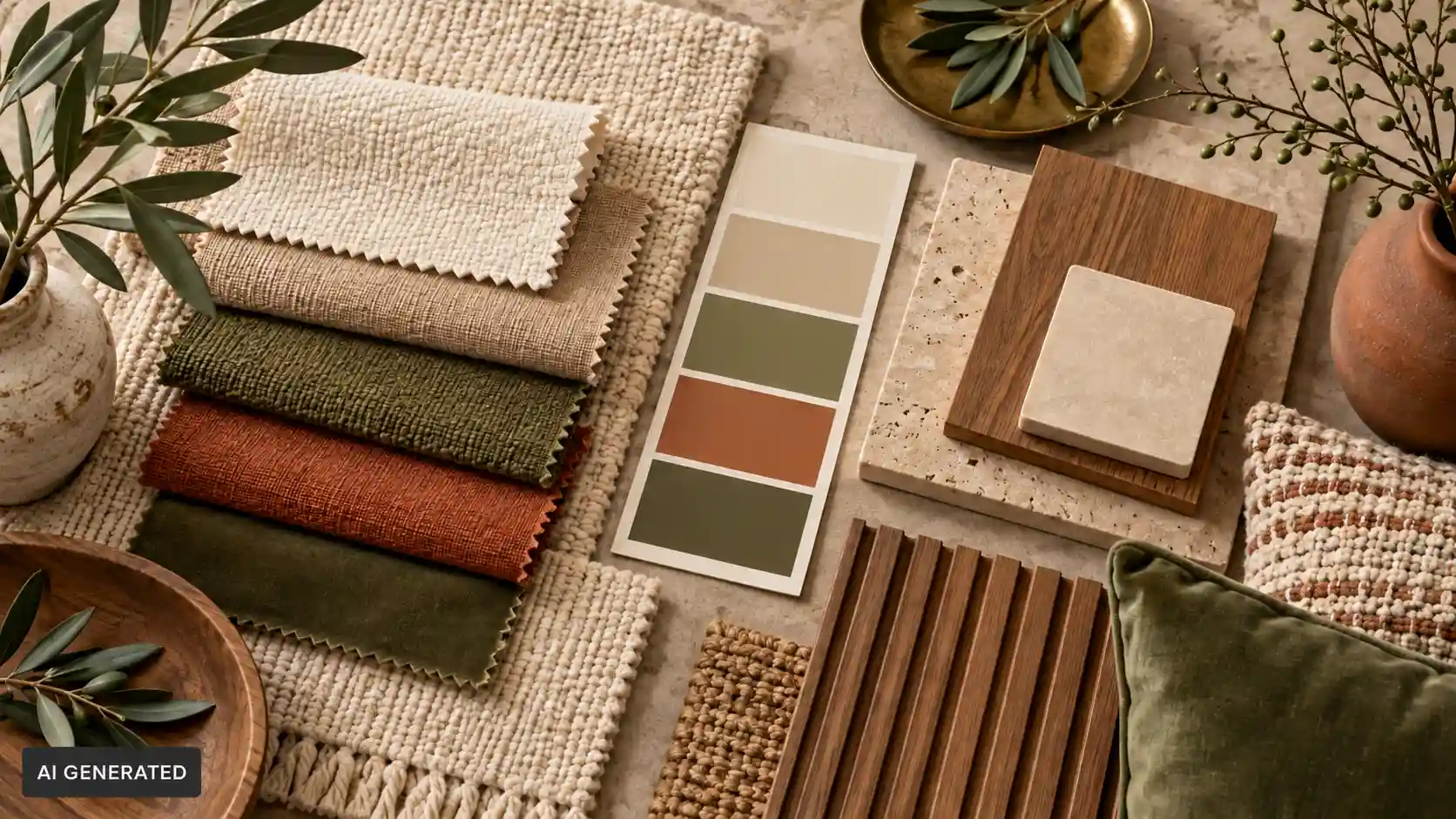
If you already own a sofa, rug or artwork you want to keep, use it as the starting point for the palette.
6. Add a correctly sized rug
A living room rug should help define the seating area rather than sit beneath the coffee table as an isolated decorative piece. Ideally, it should be large enough to visually connect the sofa and nearby chairs. Depending on the layout, the front legs of the main seating can rest on the rug, or all the furniture can sit completely on it in a larger space.
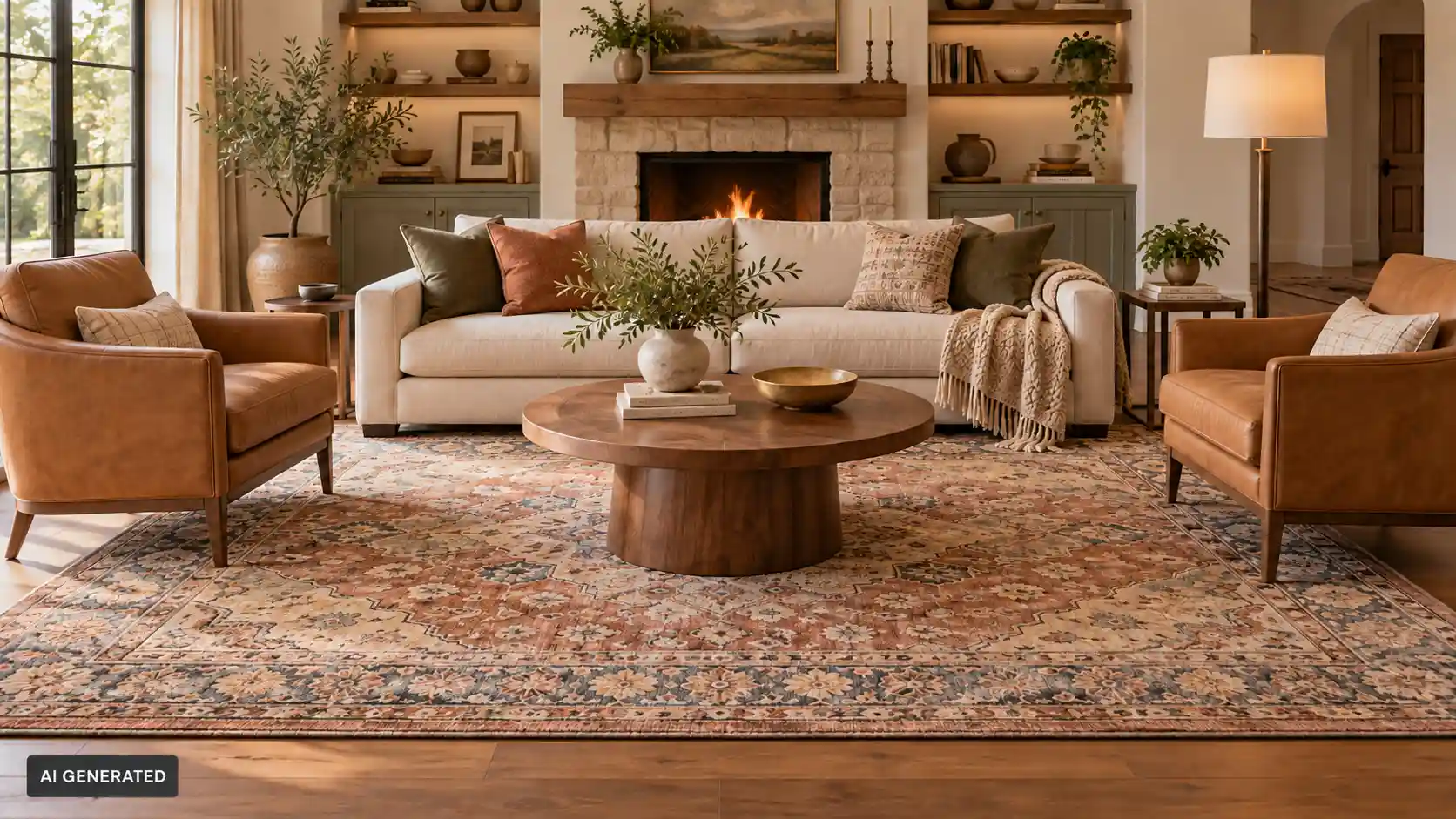
Before buying, mark the proposed rug dimensions on the floor with painter's tape. This simple test makes it much easier to judge scale than relying on measurements alone.
7. Layer the lighting
One central ceiling fixture rarely provides all the lighting a living room needs. Instead, combine different sources:
- General lighting: provides overall illumination through ceiling fixtures, recessed lights or similar ambient sources.
- Task lighting: supports activities such as reading or working.
- Accent lighting: highlights artwork, shelving, architectural details or simply adds softer light in the evening.
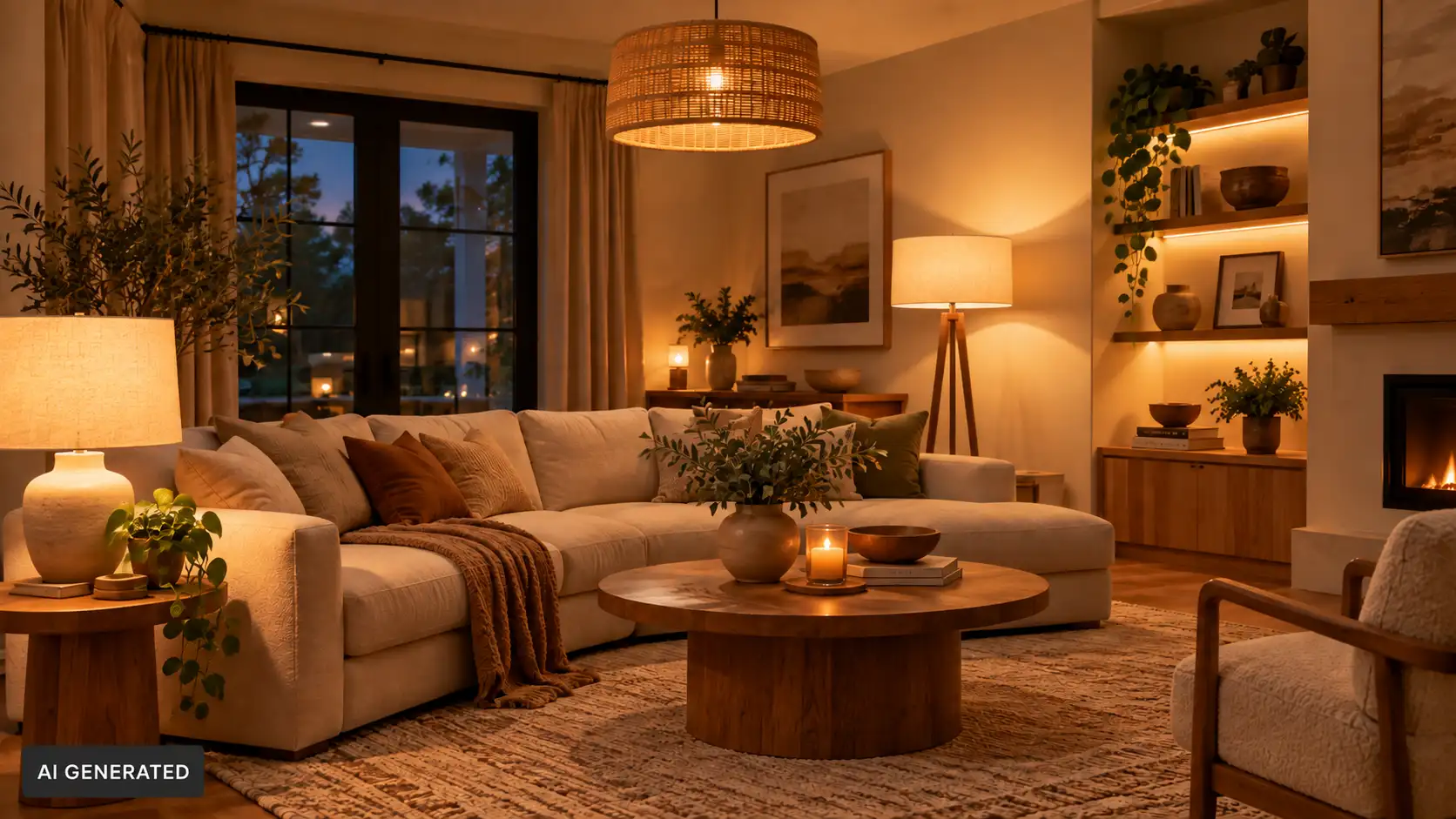
Floor and table lamps are particularly useful because they introduce light at different heights and give you more control over the atmosphere after dark. Think about where the light is actually needed before choosing fixtures. A floor lamp positioned beside a reading chair is more useful than one placed in an empty corner to fill the space.
8. Finish with decor
Once the furniture, rug and lighting are in place, add the decorative elements that give the room personality.
Curtains can soften windows and introduce texture. Artwork helps fill larger wall areas and can reinforce the room's color palette. Cushions and throws make it easy to introduce smaller patterns or seasonal changes, while plants bring natural shapes and color into the space.
Books, ceramics, travel objects and other personal items can make the room feel more individual, but there is no need to fill every shelf or table.
Editing is part of decorating. Leaving some surfaces relatively clear gives the pieces you do display more impact and prevents the room from feeling visually crowded.
How to decorate a small living room
Decorating a small living room is less about fitting in as much as possible and more about deciding what the room genuinely needs. A few choices can make a noticeable difference:
- Choose appropriately scaled furniture. A compact sofa with a shallower seat may leave much more usable floor area than a bulky sectional.
- Prioritize multifunctional pieces. Consider an ottoman with storage, nesting tables or a coffee table with drawers.
- Keep walking paths clear. Avoid placing furniture where it blocks doorways or the natural route through the room.
- Use vertical space. Wall-mounted shelving and taller storage can add capacity without taking up more floor area.
- Avoid too many small pieces. Several tiny tables, stools and cabinets often create more visual clutter than a few well-sized items.
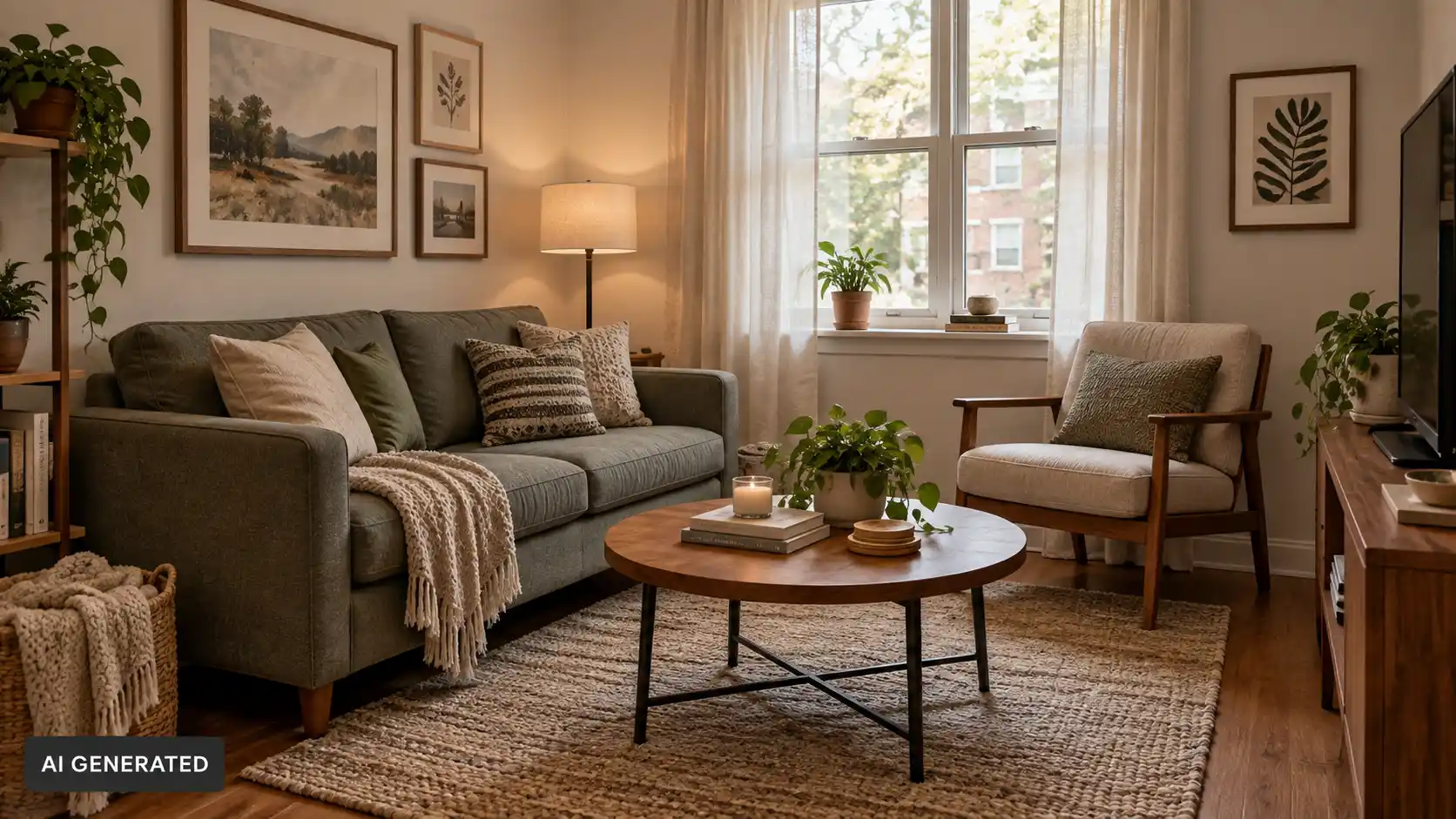
The aim is to make the room easy to move through while still providing the seating and storage you actually use.
Living room decorating mistakes to avoid
- Choosing furniture before measuring: furniture can appear much smaller in a showroom or online image than it does at home. Always compare product dimensions with the room first.
- Using a rug that is too small: a rug that only fits beneath the coffee table can make the seating look scattered rather than connected.
- Relying on one ceiling light: a single overhead fixture can leave the room feeling flat. Mix ceiling, floor and table lighting instead.
- Overcrowding the room: not every empty corner needs furniture or decor. Leave enough open space for movement and visual balance.
Final thoughts
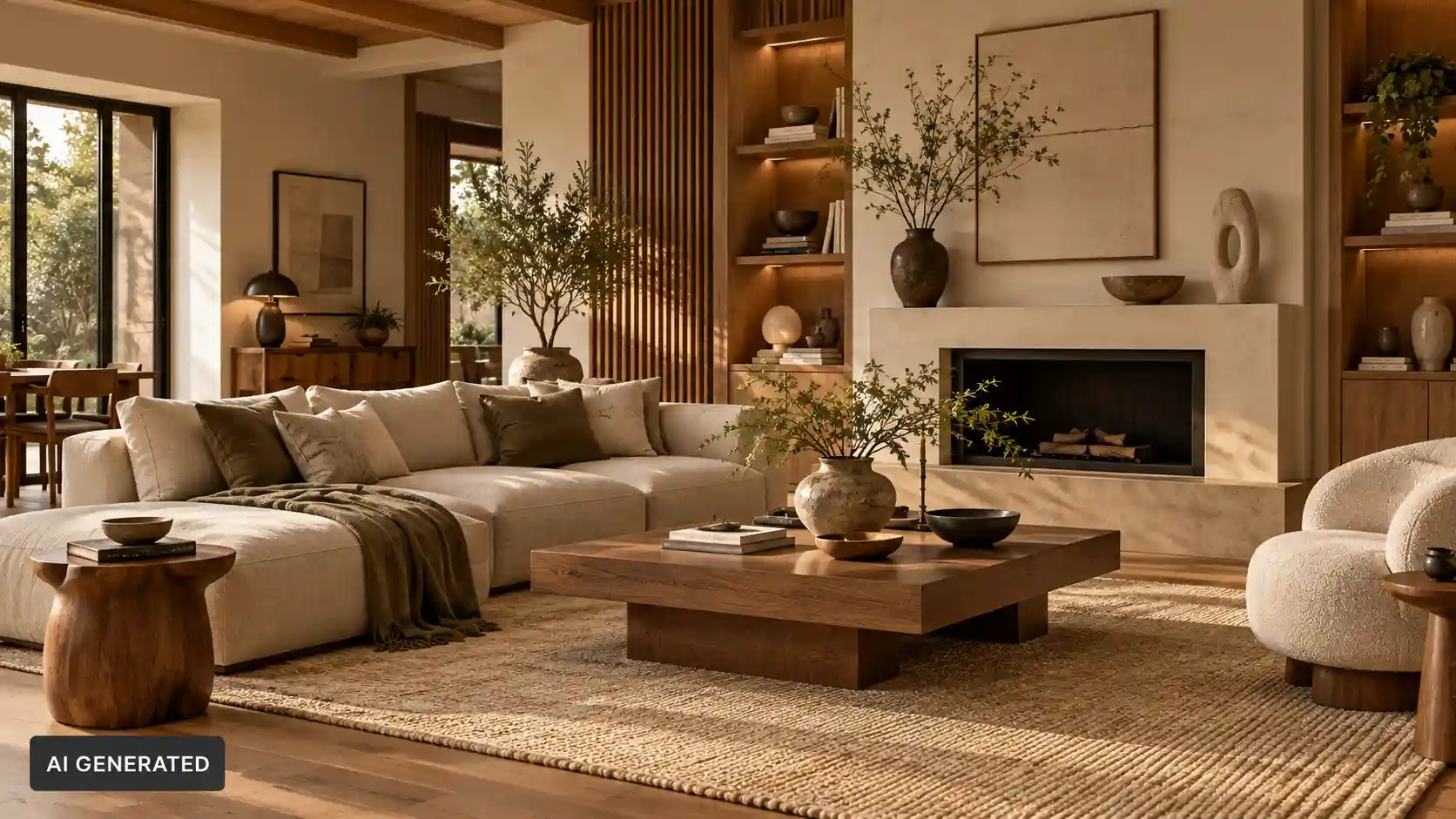
Learning how to decorate a living room is easier when you approach it as a sequence rather than starting with accessories. Measure the room, decide how it needs to function and test the furniture layout first. Then build the color palette, rug and lighting around those larger decisions before adding the finishing details.
Planning the space digitally can make this process easier. With Planner 5D, you can recreate your living room, compare furniture arrangements in 2D and 3D, and experiment with different design ideas before making changes to the real space.
Planner 5D: The Future of Interior Design
Experience the power of AI-driven design with Planner 5D. Our innovative tools, including the AI Studio, Copilot, and AI floor plan recognition, make bringing your dream home to life easier than ever. Transform your vision into reality and unlock a world of design possibilities today.
Start designingFAQ
What should I decorate first in a living room?
Start with the layout and the largest furniture pieces, particularly the sofa. Once these are established, choose the rug, lighting and window treatments before adding smaller decorative accessories.
How do I choose a living room color scheme?
Begin with an existing feature you want to keep, such as the sofa, flooring, rug or artwork. Choose a dominant base color, then repeat a small number of complementary and accent colors throughout the room.
How should I arrange living room furniture?
Arrange furniture according to the room's main use and focal point. Keep seating connected, maintain comfortable walking paths and make sure the scale of each piece suits the available space.
How can I decorate a small living room?
Use appropriately scaled furniture, prioritize pieces with more than one function and make use of vertical storage. Keeping circulation areas clear and limiting unnecessary furniture can also make the room feel more spacious.
How can I make my living room look more cohesive?
Repeat a few materials, colors or shapes across the room rather than trying to match everything exactly. A clear furniture layout, correctly sized rug and consistent lighting choices can also help visually connect different elements.
