How to Decorate a Dining Room Step by Step
Get practical dining room design ideas for choosing a table, arranging furniture, adding lighting, selecting colors, and styling your space.
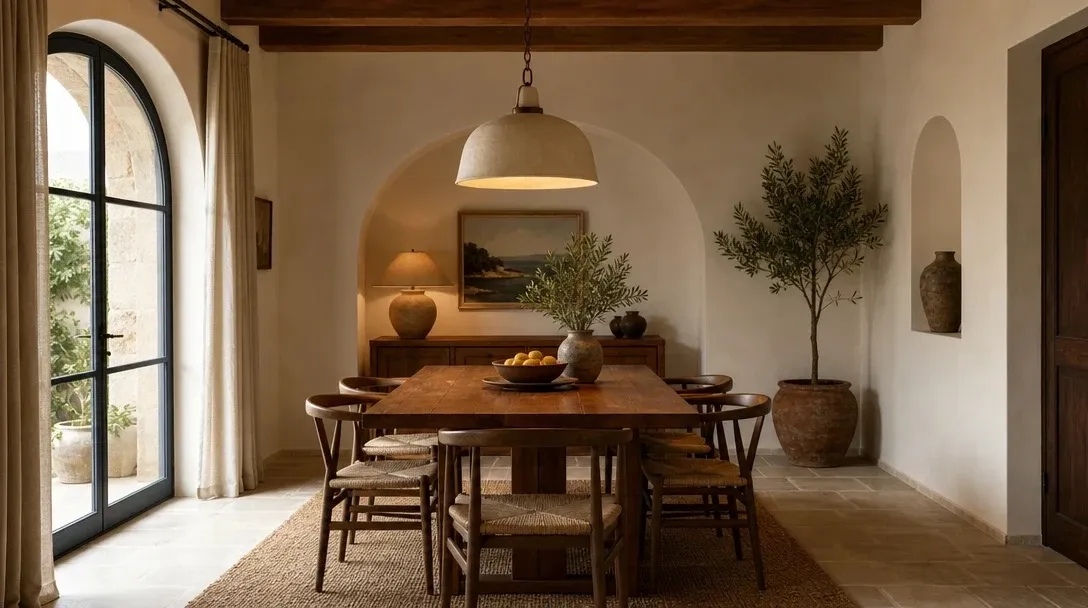
To decorate a dining room, start with a dining table that fits the space, add comfortable chairs, choose lighting that defines the dining area, and use rugs, wall decor, and accessories to create a cohesive look. Keep enough space around the table for comfortable movement and choose decorative elements that complement rather than overwhelm the room.
Whether you're furnishing a separate dining room or creating a dining zone within an open-plan space, it helps to make the biggest functional decisions first. Once the table, layout, and lighting are right, you can build your dining room decor around them.
Start with the dining table and chairs
The dining table is the visual and functional center of the room, so choose it first. Consider how many people you seat regularly, how much floor space you have, and how you move through the room.
Table shape can make a noticeable difference. Rectangular tables work well in long rooms and offer plenty of seating, while round tables can make compact or square rooms feel more open. An oval table offers a similar sense of flow without sacrificing as much surface area.
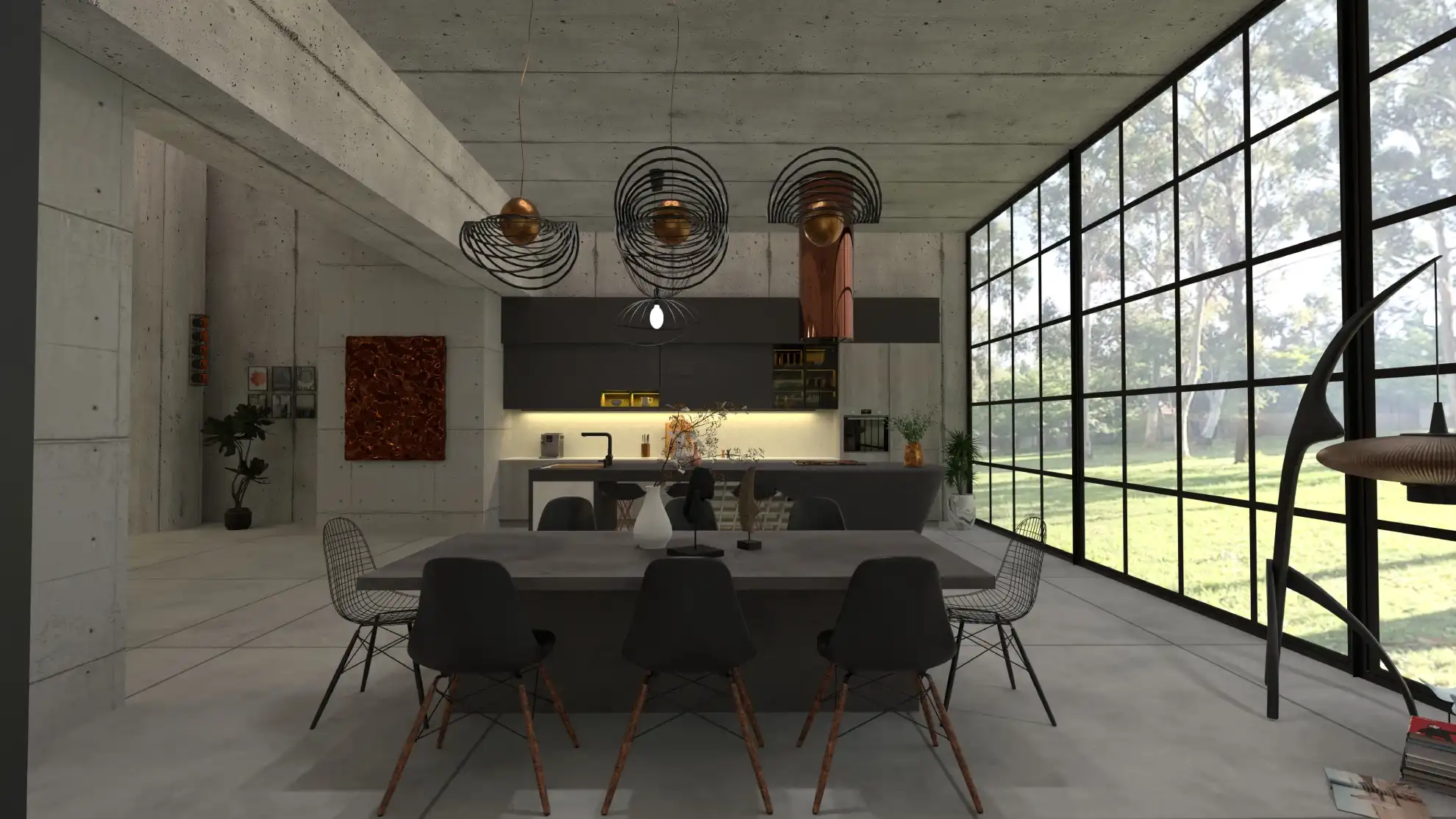
Aim for around 36 inches between the edge of the table and walls or other furniture so chairs can be pulled out comfortably. Mixing materials, colors, or chair styles can make a dining room design feel more personal. Just check that the seat height works with the tabletop and that the chairs can slide underneath it comfortably.
If you occasionally host larger groups, an extendable table provides extra seating when you need it without permanently taking up valuable floor space.
Plan the dining room layout
Centering the table is often a good starting point, but it isn't a rule. In an open-plan room or a space with several doors, positioning the table slightly off-center may create better circulation.
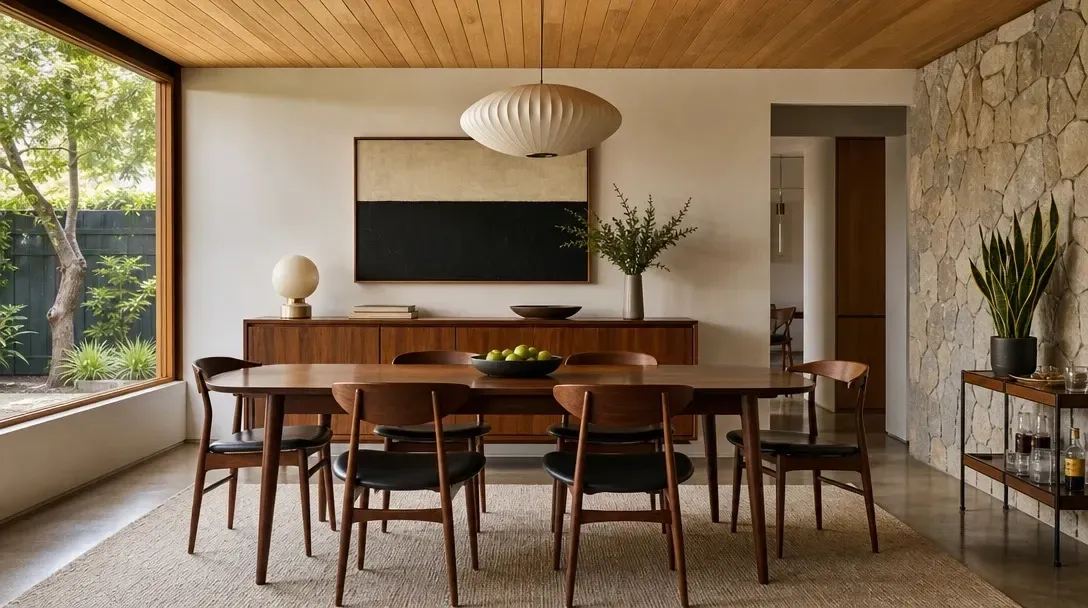
As you test your layout:
- Leave enough space to pull every chair out comfortably.
- Keep routes to doors and adjoining rooms clear.
- Check whether people can move around the table when others are seated.
- Make sure sideboards and cabinets can open fully.
- Avoid squeezing in extra dining room furniture simply because there is an empty wall.
A slightly simpler room with good circulation feels more comfortable than one filled with furniture.
Choose the right dining room lighting
Good lighting helps visually establish the table as the focal point of the room. Pendant lights and chandeliers are classic dining room lighting ideas because they create a clear visual connection with the table below. Rather than automatically centering the fixture in the room, position it in relation to the dining table.
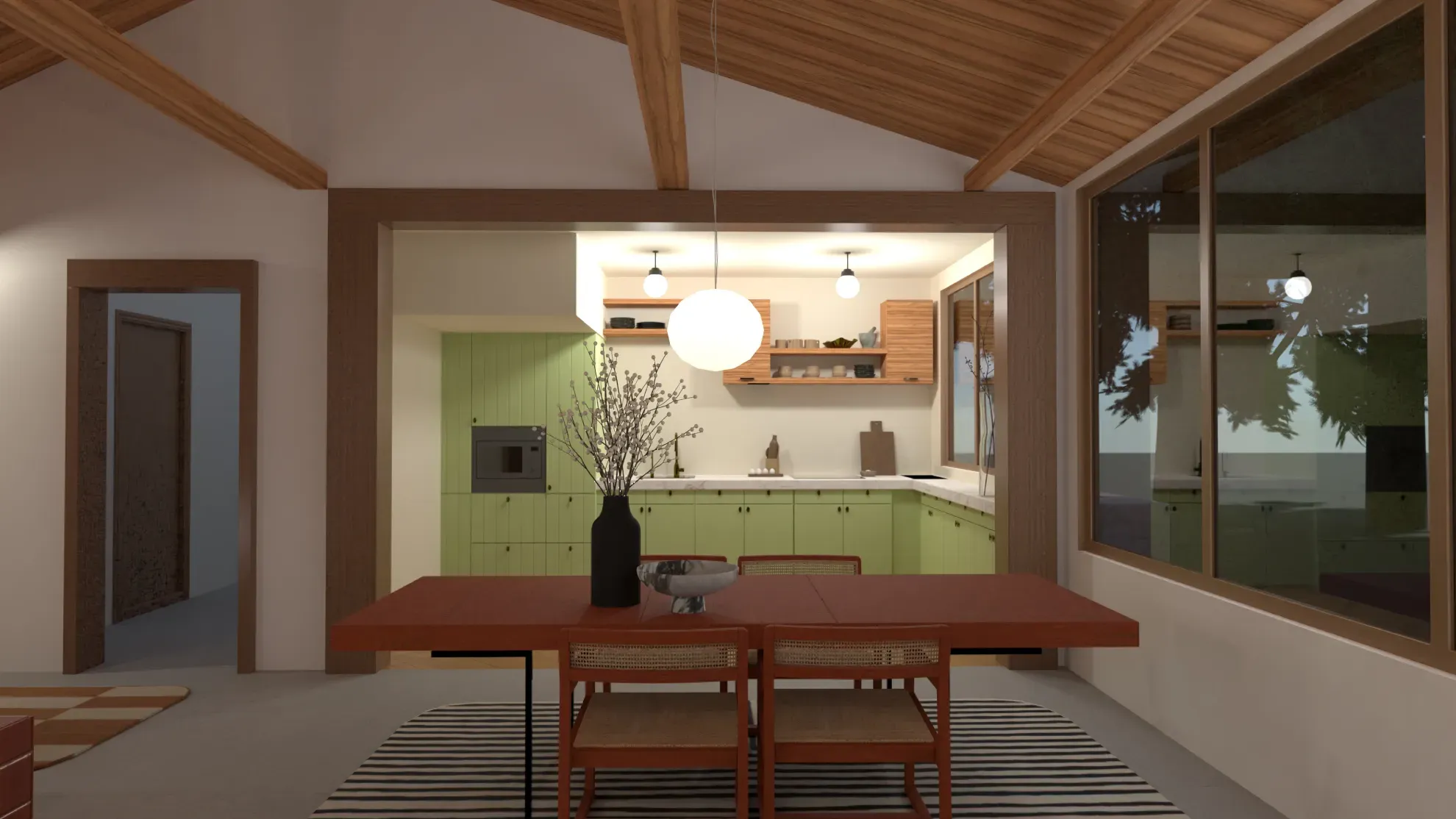
For a standard 8-foot ceiling, a useful starting point is to hang the bottom of a pendant or chandelier about 30–36 inches above the tabletop. A fixture measuring approximately one-half to two-thirds of the table's width can provide a balanced sense of scale.
Add a dimmer if possible so you can move from brighter everyday lighting to softer light for dinner. Wall sconces, floor lamps, or lamps placed on a sideboard can add another layer of ambient light and prevent the table fixture from doing all the work.
Add a dining room rug
A rug can anchor the dining table, introduce color and pattern, and help distinguish the dining zone in an open-plan home. Ideally, the rug should extend at least 24 inches beyond the table on every side, allowing the chairs to remain on the rug when they're pulled back.
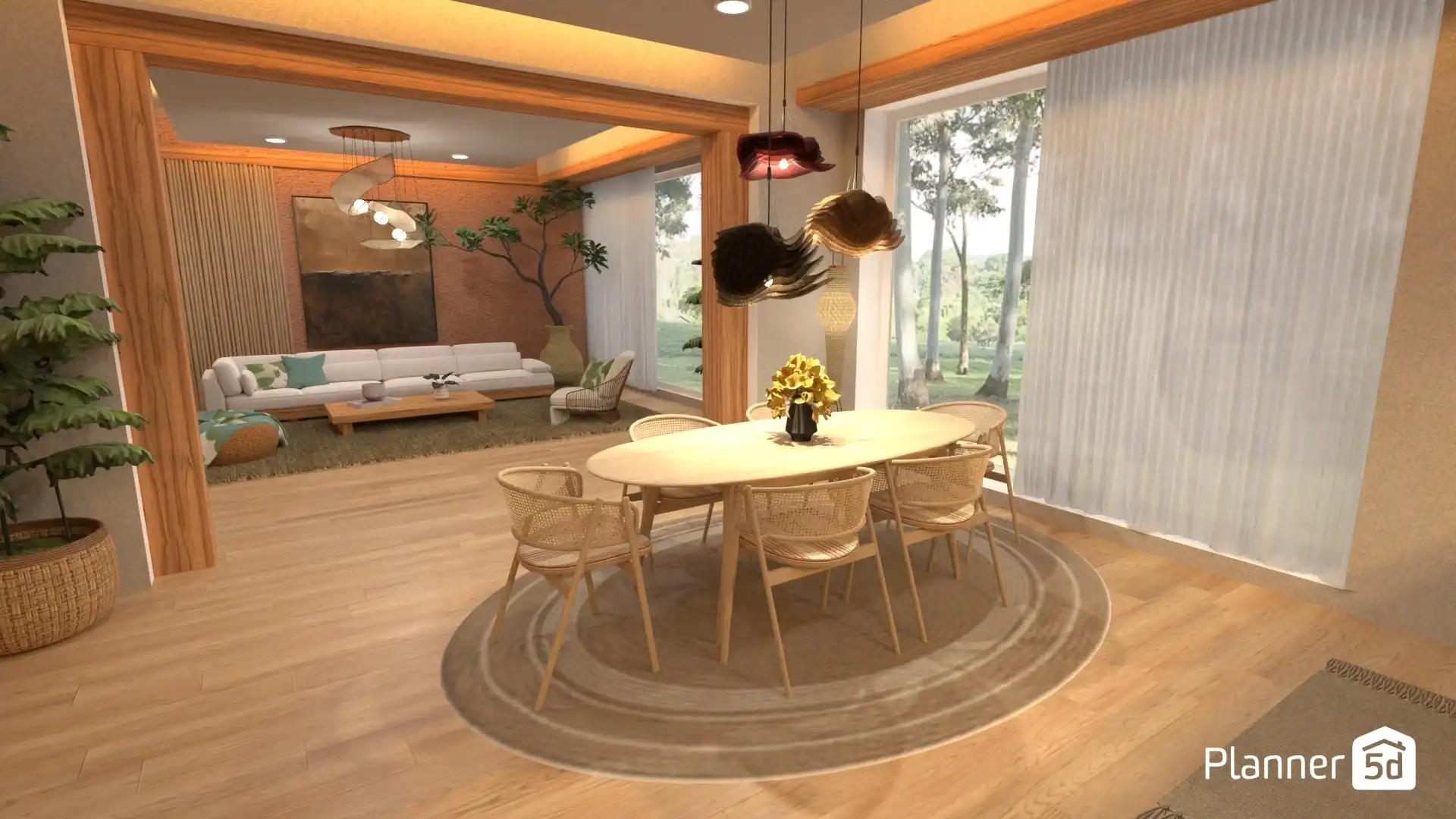
Choose a durable, easy-to-clean material for a room where spills and crumbs are inevitable. Low-pile and flatweave rugs are generally easier for dining chairs to move across than thick, high-pile designs.
In a small dining room where an appropriately sized rug would crowd the floor or interfere with doors, leaving the floor exposed can create a cleaner look.
Choose a dining room color scheme
Begin with two or three main colors and repeat them across walls, furniture, textiles, and accessories. Light, warm colors can help a small dining room feel more open, while deeper shades such as navy, forest green, charcoal, or burgundy can create a more intimate atmosphere.
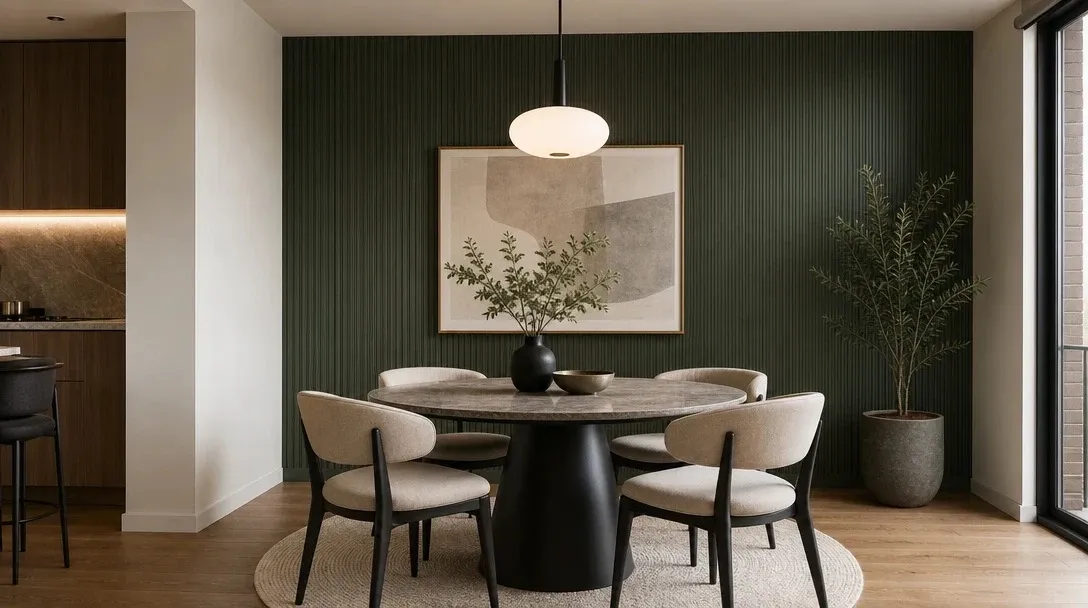
If you prefer a neutral foundation, introduce accent colors through artwork, curtains, a rug, or upholstered chairs. For modern dining room ideas, consider combining a restrained palette with contrasting textures instead of relying on many different colors. Wood, stone, metal, linen, glass, and upholstery can add depth even when the palette itself is simple.
Decorate the dining room walls
Dining room walls provide an opportunity to add personality without sacrificing valuable floor space. Depending on the style and dimensions of your room, consider:
- One large piece of artwork
- A curated gallery wall
- A statement mirror
- An accent wall
- Floating shelves
- Decorative wall paneling
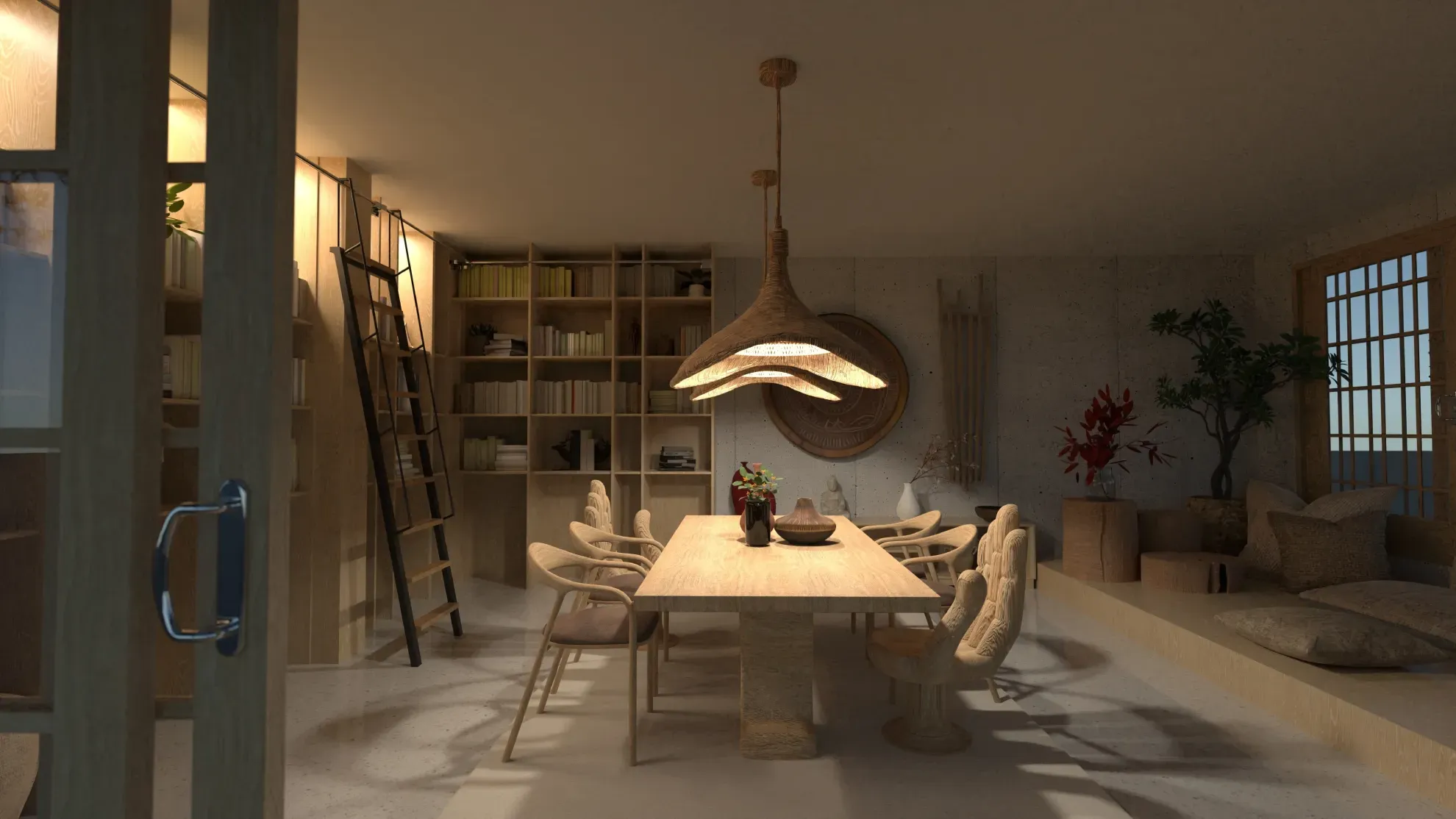
Scale your wall decor to the furniture. For example, one substantial artwork above a long sideboard can feel more intentional than several small pieces scattered across the wall. Mirrors can be useful in small dining rooms, as they reflect light and create a greater sense of depth.
Add storage and display furniture
If space allows, a sideboard, buffet, display cabinet, or bar cabinet can provide storage while giving you another surface for lamps and decor items.
Choose storage according to what you actually need to keep in the room. Closed cabinets are useful for tableware, linens, and serving pieces, while glass-fronted cabinets and floating shelves work well for objects you want to display.
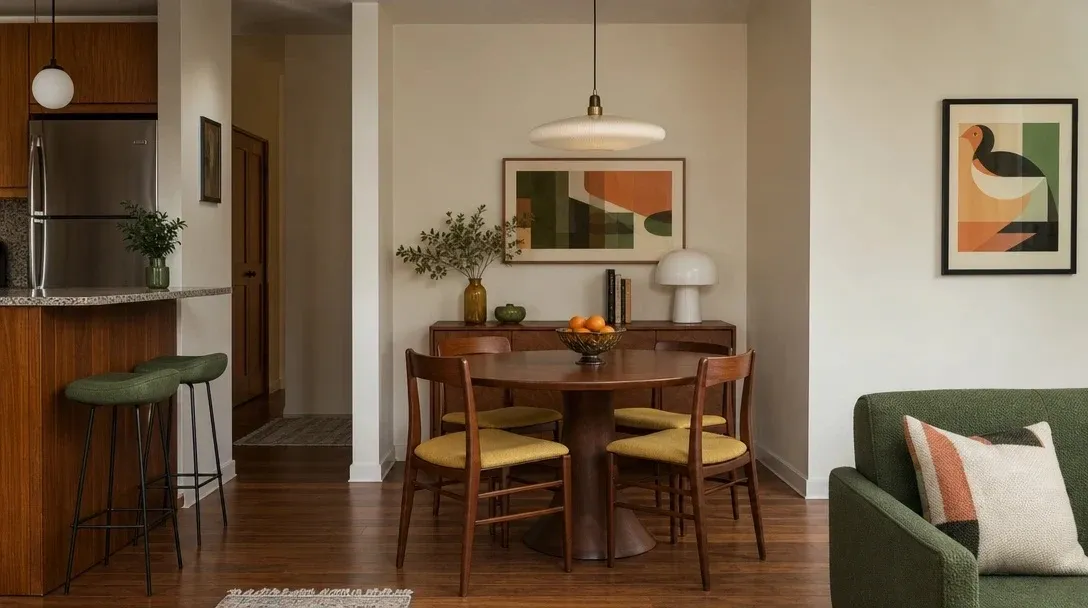
In smaller rooms, always check circulation before adding another piece of furniture. Storage isn't helpful if it makes getting in and out of a chair difficult.
Style the dining table without overdecorating it
A dining table doesn't need an elaborate tablescape when it isn't being used for a special occasion. A vase, candles, or small arrangement can create a focal point and leave the surface functional for everyday meals.
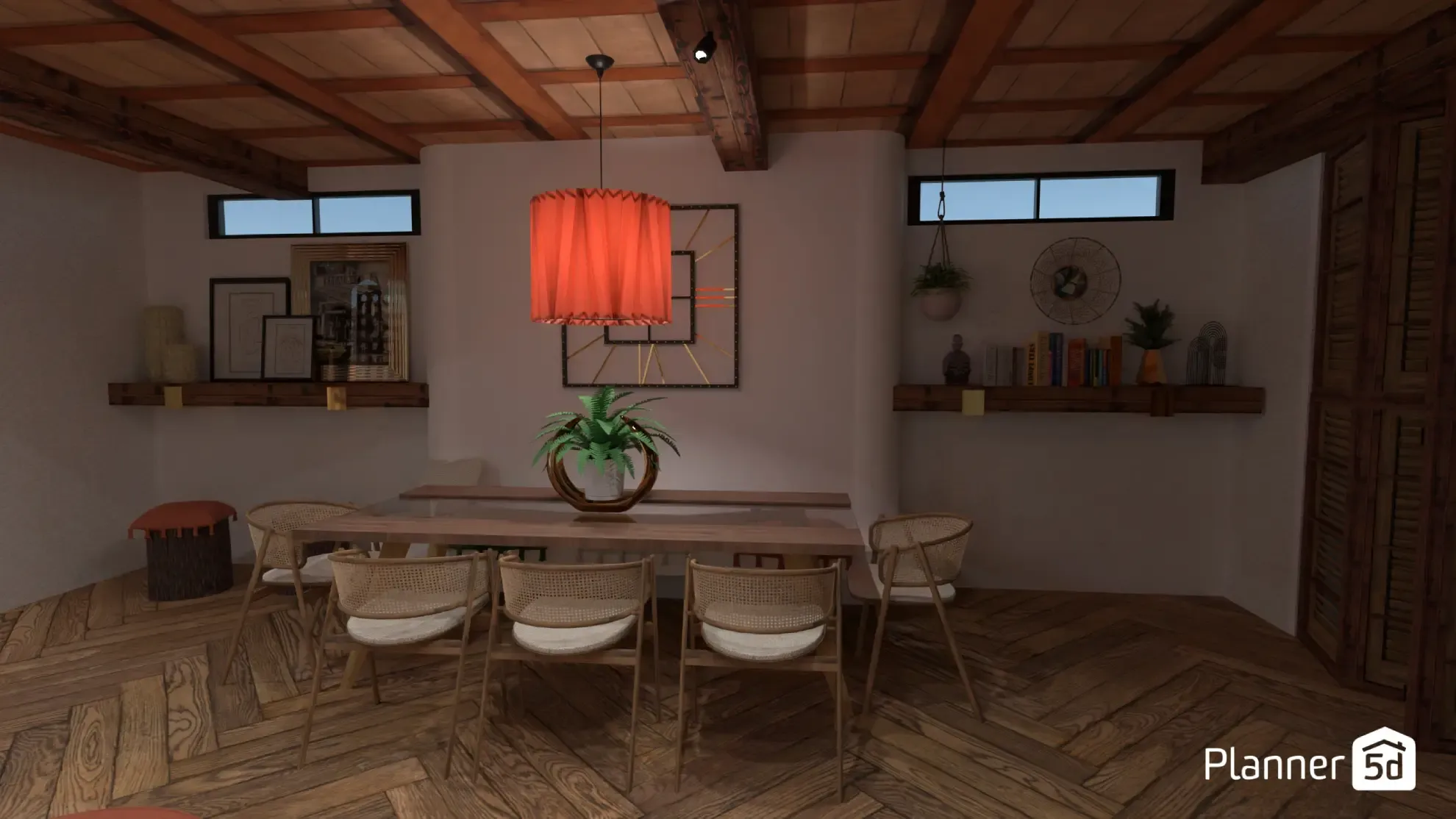
Keep the centerpiece proportional to the table and low enough that it doesn't interfere with conversation. On a long rectangular table, a few smaller objects arranged along its length can work better than one oversized centerpiece.
Bring the dining room together with finishing touches
Use smaller details to connect the different elements of your dining room decor. Curtains can soften the room and frame windows, while plants introduce natural color and texture. Table linens, candles, ceramics, and decorative objects provide easy ways to repeat colors or materials already used elsewhere.
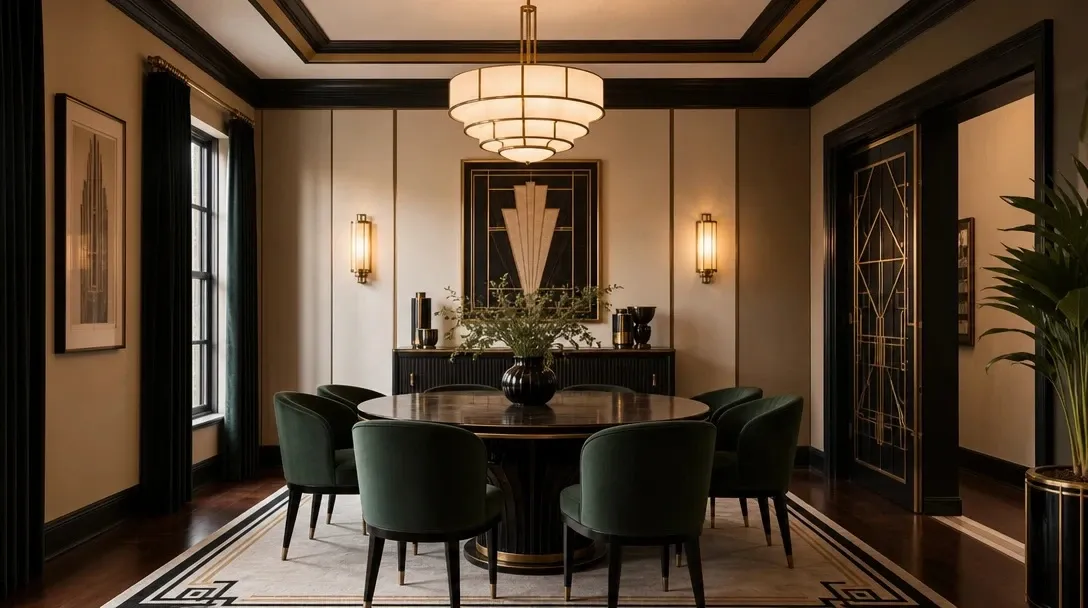
The goal isn't to decorate every available surface. Instead, repeat a few materials, colors, or shapes so the space feels connected. For example, a warm wood table might be complemented by wood picture frames, while the metal finish of a pendant could appear again in cabinet hardware or candleholders.
Plan your dining room before decorating
Before buying dining room furniture or committing to a color palette, measure the room and map out the main elements. Record the room dimensions, doors, windows, and any architectural features that affect furniture placement.
Then determine how many people you need to seat regularly and test different table dimensions. Remember to account for the chairs when they're pulled out rather than measuring the table alone.
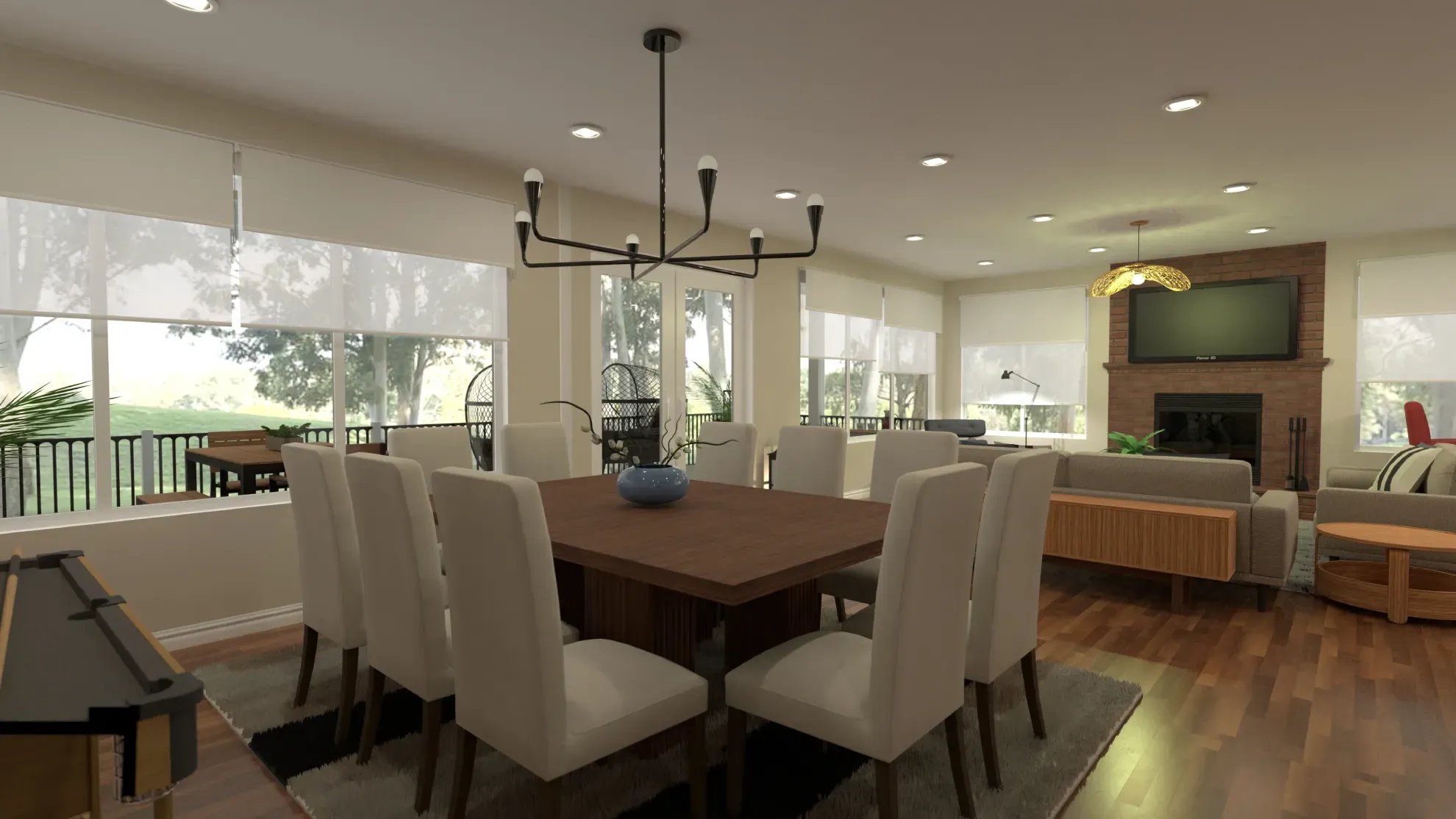
A room planning tool can make this process easier. With Planner 5D, you can recreate your dining room and experiment with furniture placement, layouts, colors, materials, and decor in 2D and 3D before making purchases.
This makes it easier to compare different ideas and identify potential layout problems before moving heavy furniture or ordering something that doesn't fit. Once the fundamentals are established, explore more dining room ideas to develop a look that suits your home.
Planner 5D: The Future of Interior Design
Experience the power of AI-driven design with Planner 5D. Our innovative tools, including the AI Studio, Smart Wizard, and AI floor plan recognition, make bringing your dream home to life easier than ever. Transform your vision into reality and unlock a world of design possibilities today.
Start designingFrequently Asked Questions
What is the best way to decorate a dining room?
Start with a correctly scaled table and comfortable chairs, then establish the layout and lighting. Add decor only after confirming that people can move easily around the table.
How do you make a dining room look more inviting?
Use layered lighting, comfortable seating, tactile materials, and a restrained palette. Add a plant, curtains, artwork, or a simple centerpiece without creating clutter.
What should you put on dining room walls?
Try artwork, a gallery wall, a mirror, paneling, an accent color, or shallow shelves. Match the table's scale and leave some wall space open.
How do you decorate a small dining room?
Choose a table proportional to the available space, keep walking paths clear, and avoid unnecessary furniture. Round tables, lighter colors, mirrors, compact storage, and visually lightweight chairs can all help a small dining room feel less crowded.
Does a dining room need a rug?
No. A rug adds definition and softness but is optional. If used, it should extend at least 24 inches beyond the table and be easy to clean.
