Layered blacks
Mix ink, charcoal and graphite so large dark surfaces retain depth and definition.
Designers collection / 2026
A designer-curated collection of black living room interiors, material details and moodboards created with Planner 5D.
Explore the gallery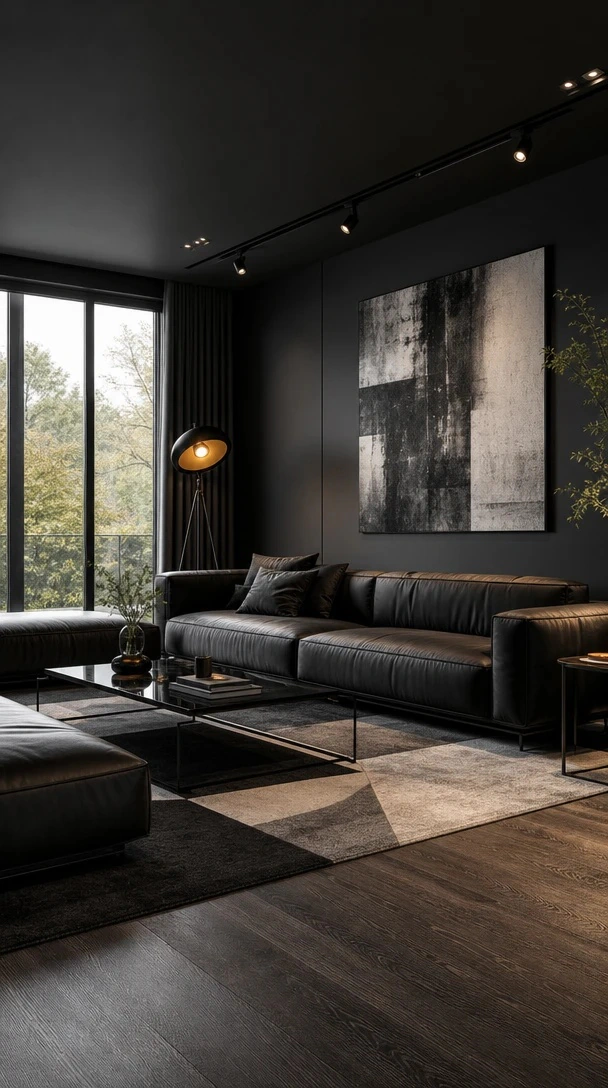 Created by Planner 5D
A dark interior succeeds through depth, warmth, texture and precisely controlled light.
Mix ink, charcoal and graphite so large dark surfaces retain depth and definition.
Walnut, cognac leather and aged brass keep the room inviting rather than severe.
Combine ambient, task and accent lighting to reveal form and create atmosphere.
Velvet, stone, metal, glass and textured textiles give the monochrome palette life.
Inspiration library
Images with prompts · Interiors, details and moodboards
Black leather and a glass table sit beneath oversized monochrome art. The glass keeps the rug visible, while daylight gives the dark surfaces definition.
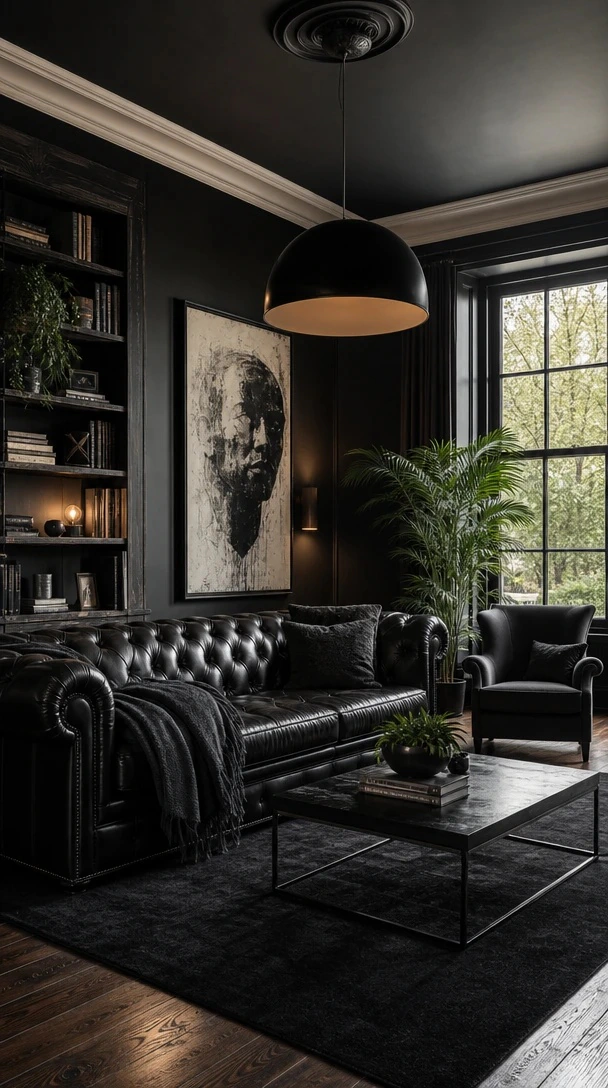
A black Chesterfield sits beside full-height bookshelves. Books, greenery and a warm pendant give the library-like room a lived-in feel.
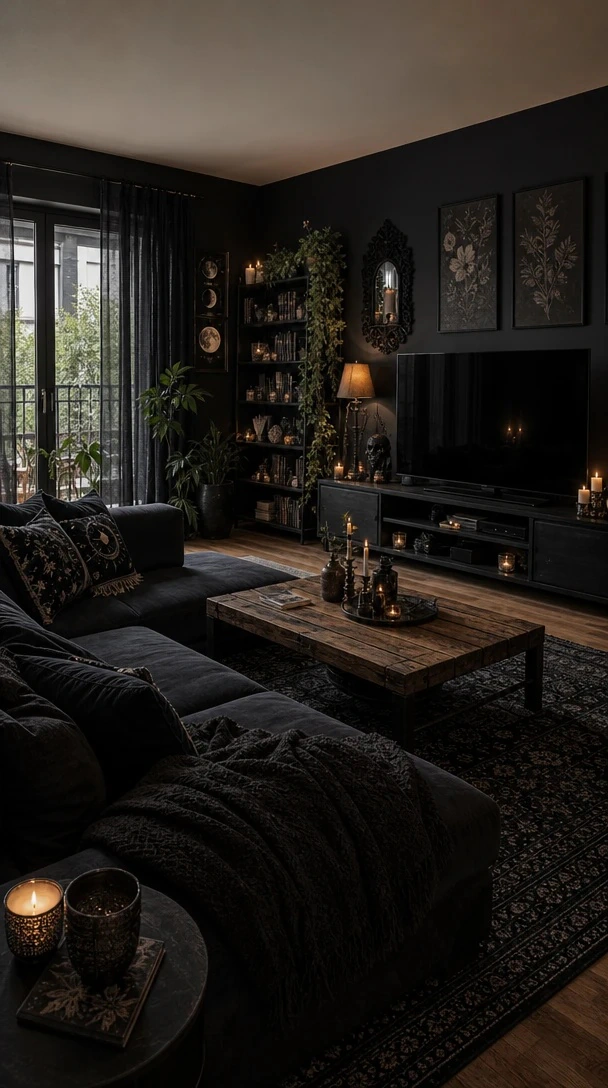
A TV shares the wall with botanical art, an ornate mirror and bookshelves. Warm wood and lighting help the screen sit within the room rather than dominate it.
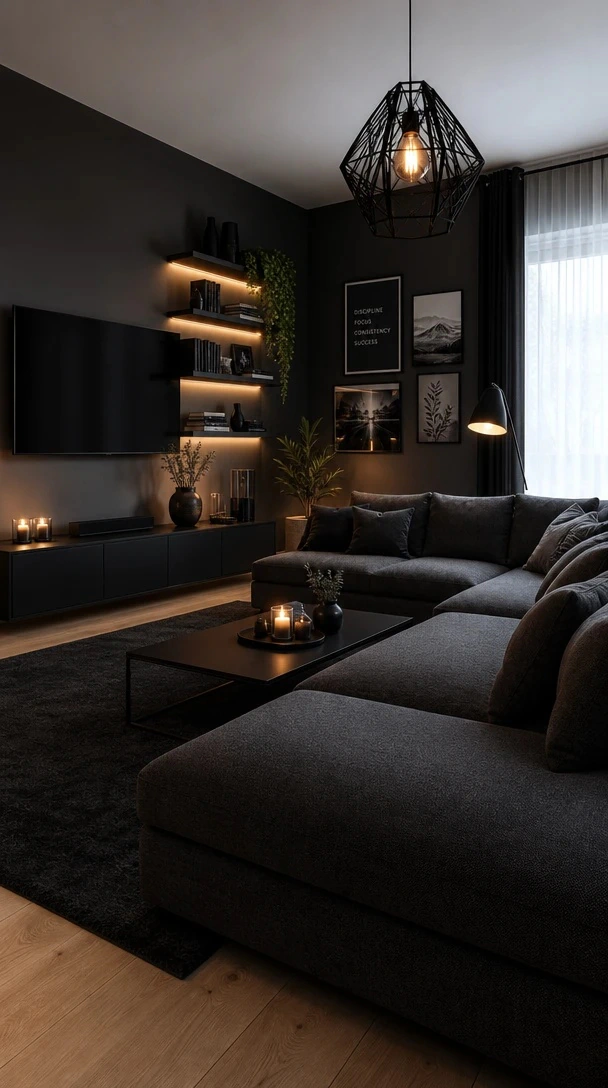
A deep charcoal corner sofa faces the TV, with warm shelf lighting and a wood floor. A lamp beside the seating would make the room useful beyond screen time.
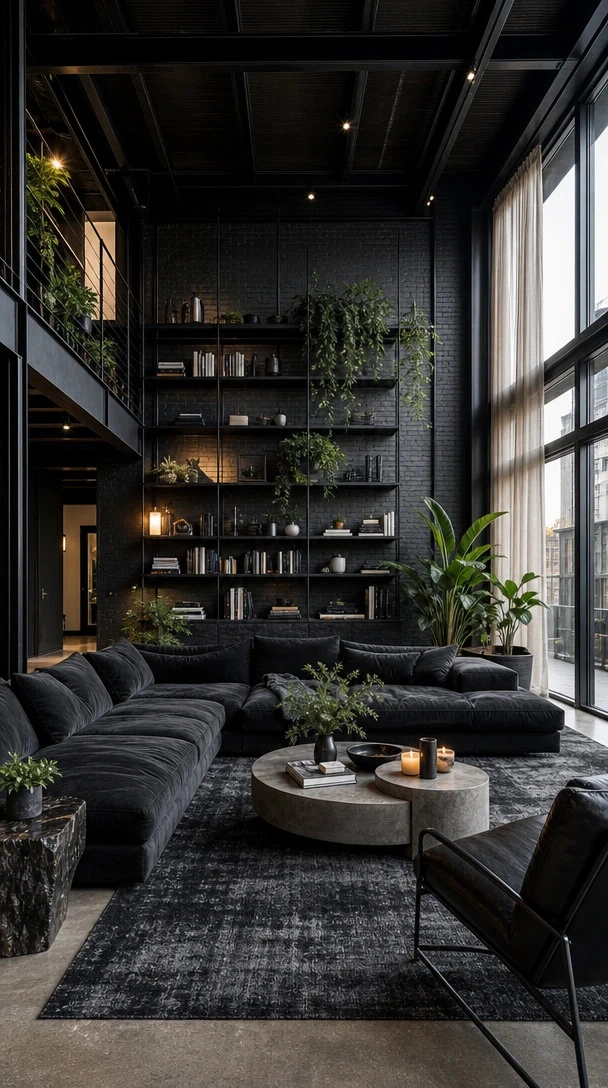
A low black sectional sits beneath tall shelves and industrial windows. The pale round table keeps the center distinct from the dark seating.
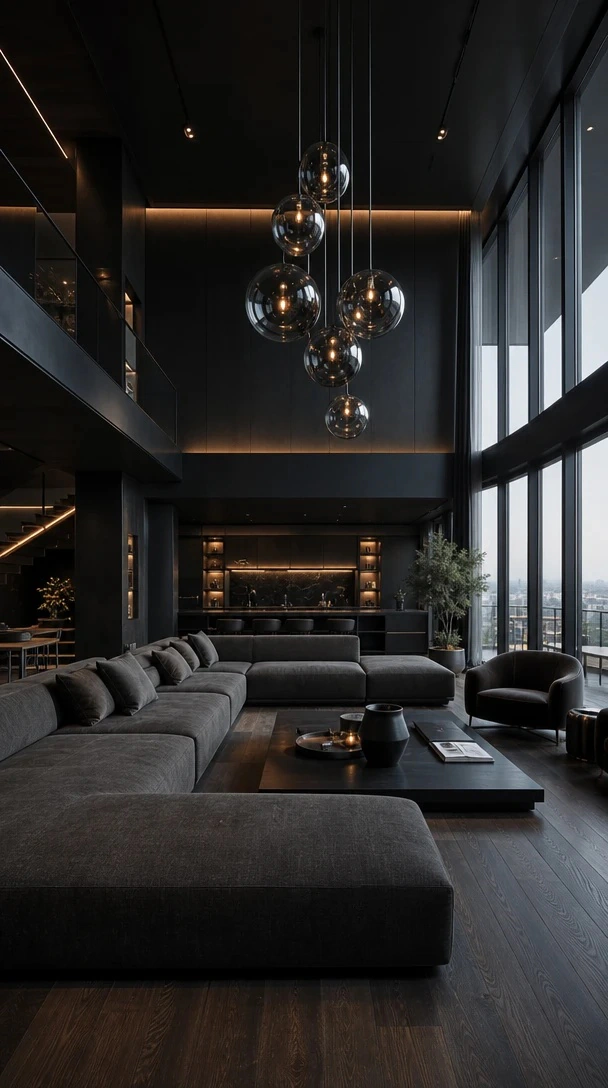
Deep seating anchors this double-height room, while a cluster of glass pendants occupies the space above. Lighter shapes balance the scale of the furniture.
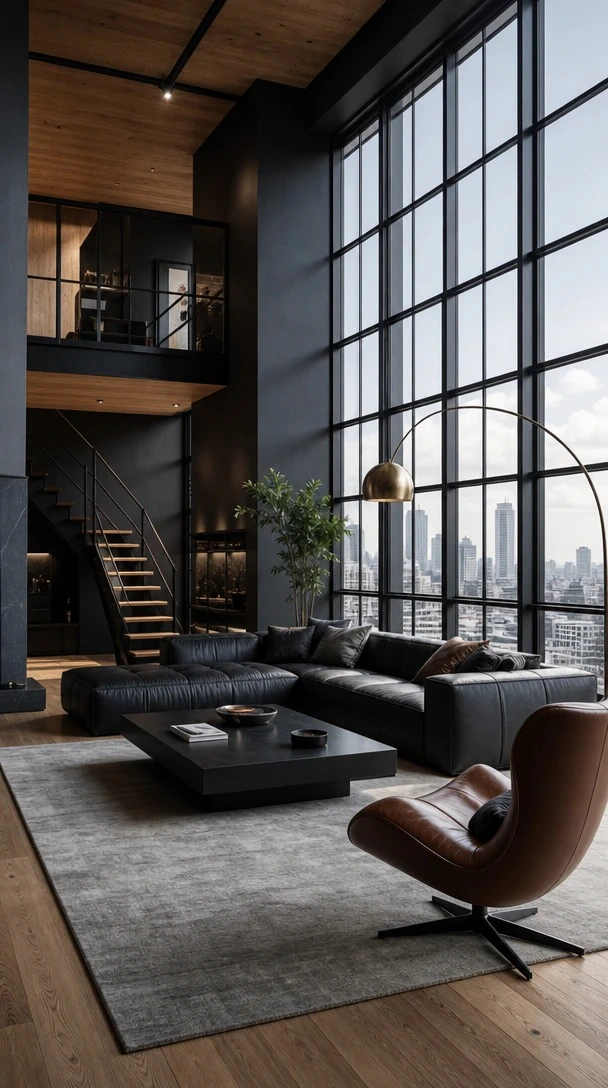
Low seating sits beneath a warm wood ceiling and tall gridded window. A separate reading corner makes use of the room’s generous height.
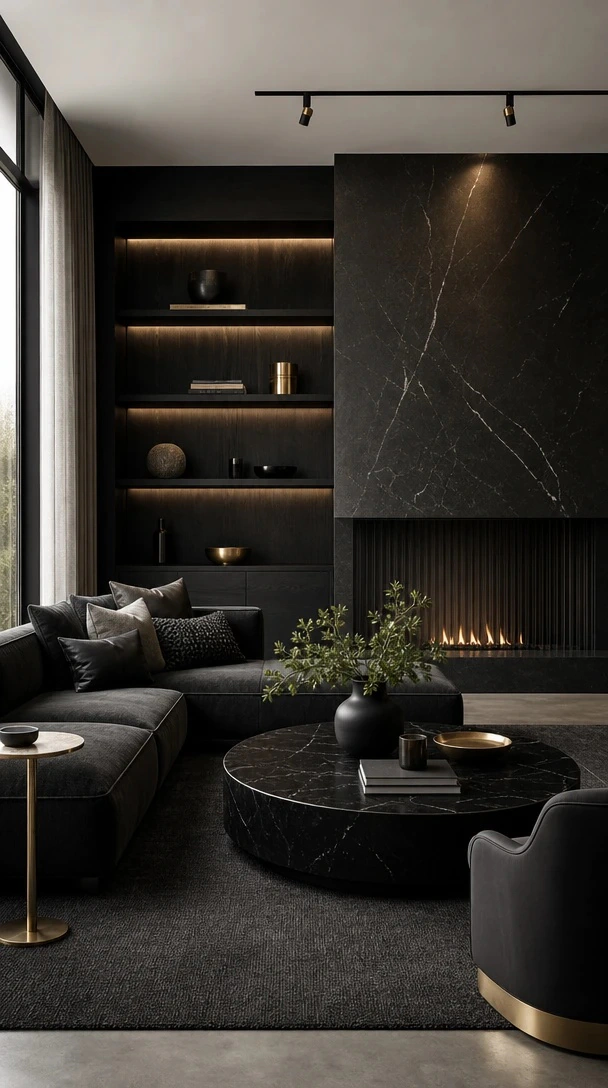
Soft dark upholstery sits beside veined stone and warm shelving. The round coffee table introduces a gentler shape among the harder surfaces.
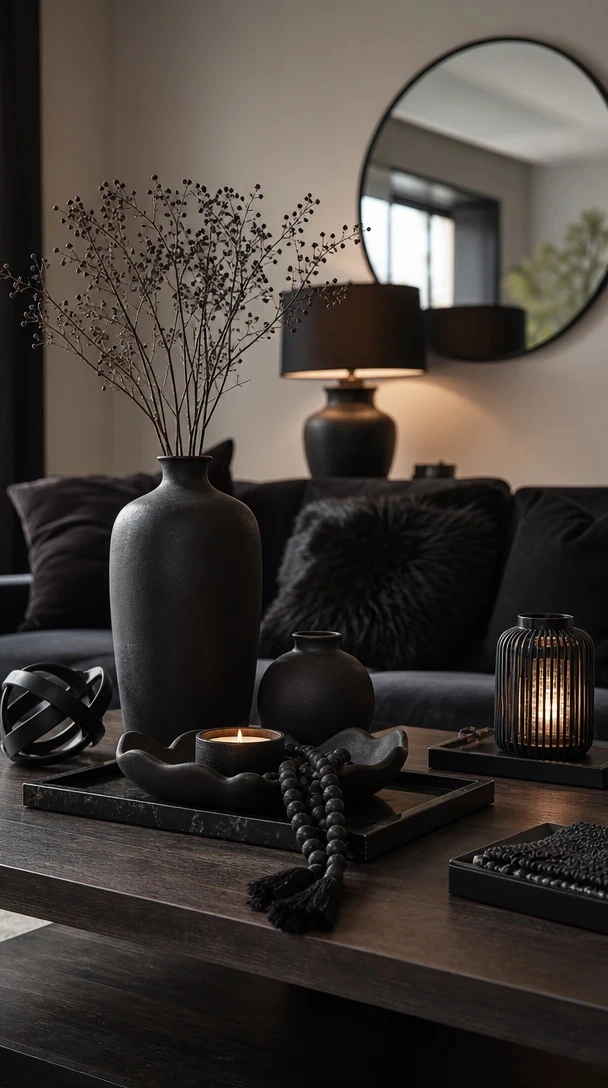
A matte black vase and low tray sit on a wood table. Different heights and finishes give the small dark objects definition without adding bright color.
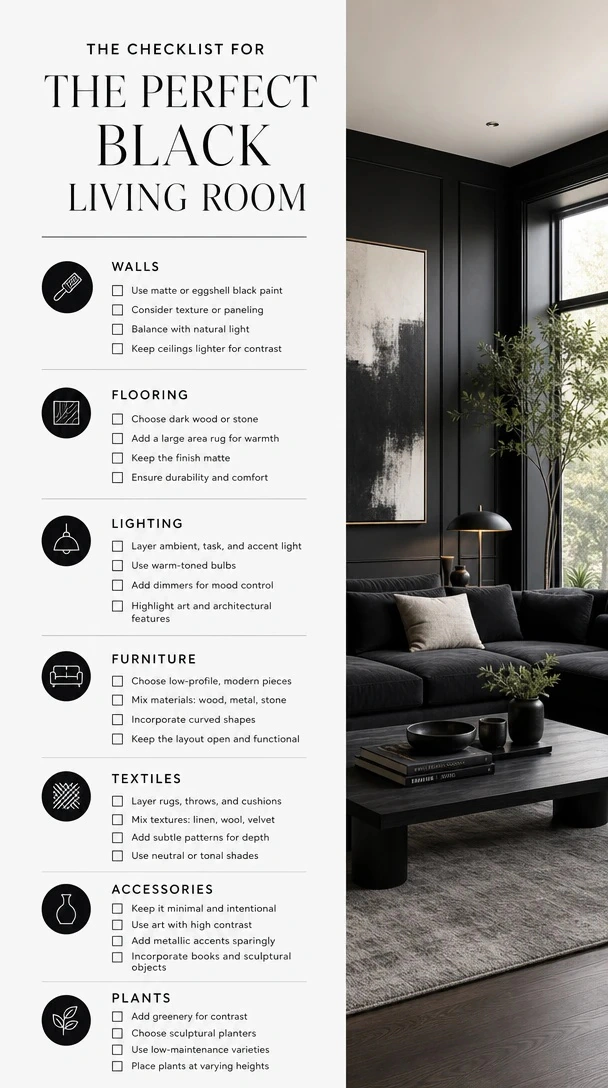
Work through paint, flooring, lighting and furniture before choosing smaller accessories. The illustrated checklist also includes textiles and plants.
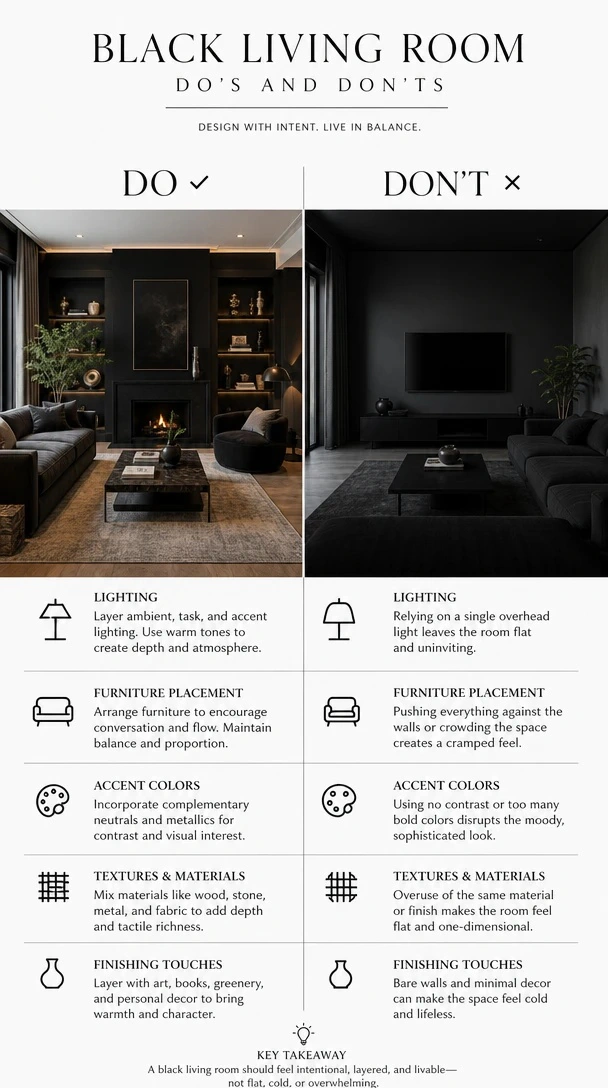
Compare two dark living rooms through their lighting, texture and furniture placement. Notice which surfaces catch light before adding more objects.
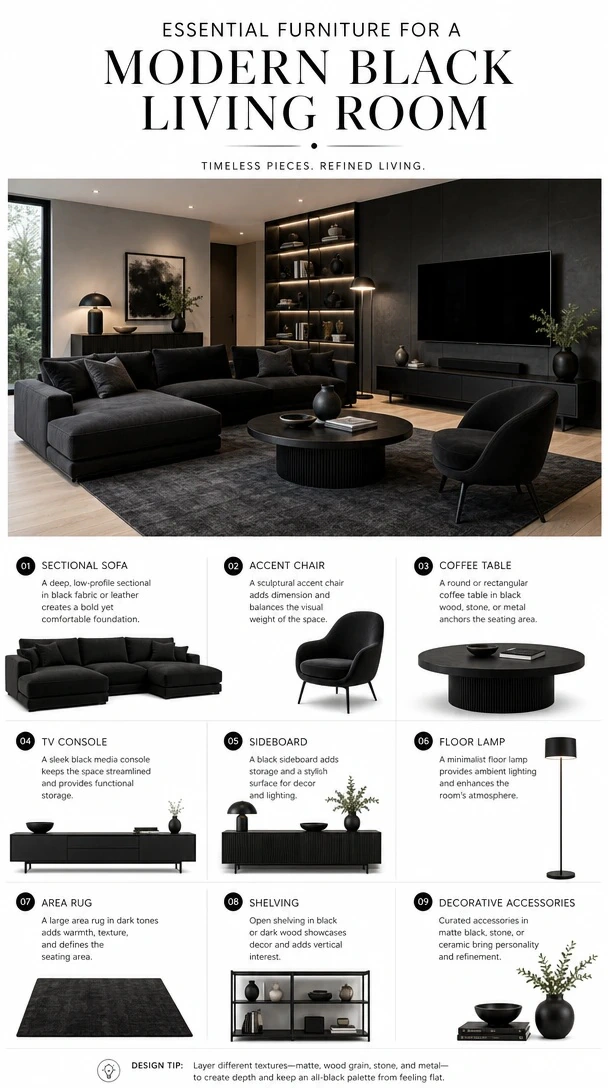
The furniture selection includes a sectional, accent chair and storage. Compare open frames and rounded shapes with the larger upholstered pieces.

Black vases, trays and books stand out against a cream sofa. Choose a few useful pieces to connect the coffee table with other dark details.
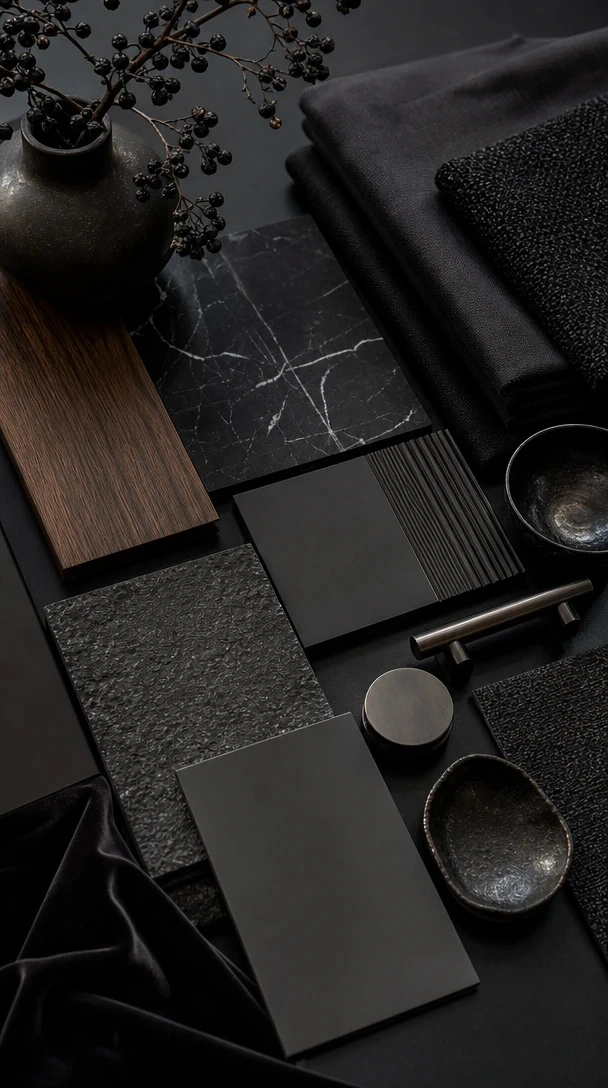
Compare dark stone, wood grain, rough texture and matte samples. Place them near a light source to see how each finish reflects it.
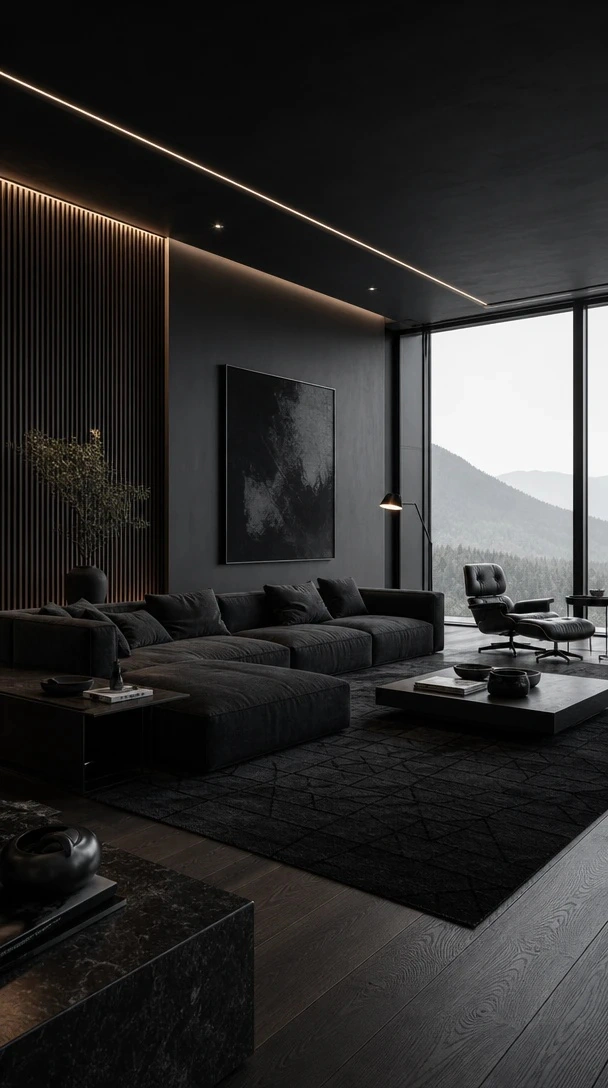
Warm ceiling lines and vertical wood slats frame a dark sectional. The lighting follows the architecture while the window brings in daylight.
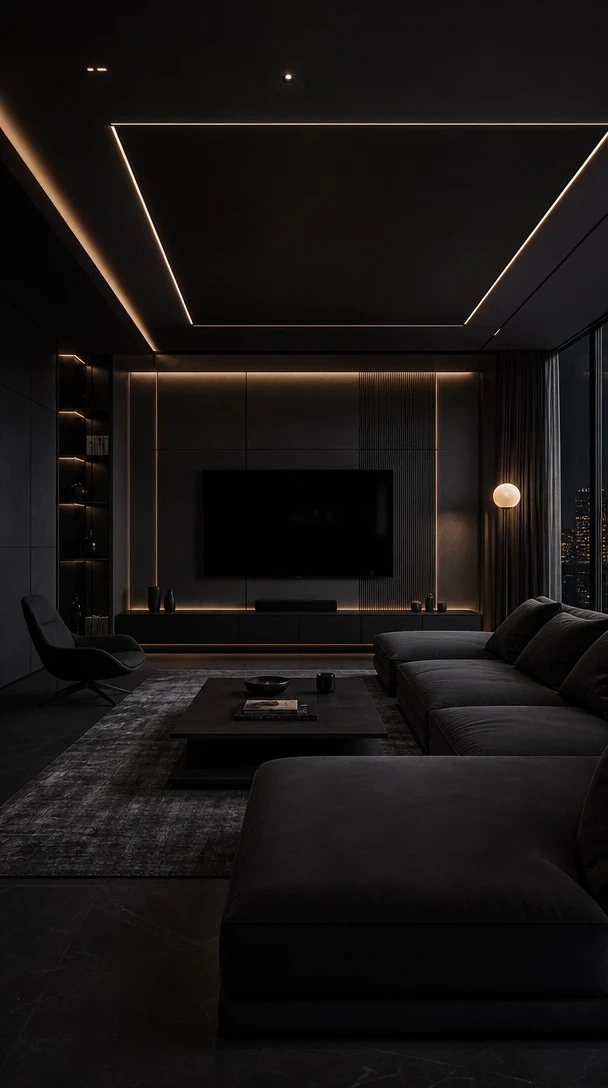
A simple black TV wall and low seating keep the screen central. Perimeter lighting adds a softer option for evenings when the main lights are off.
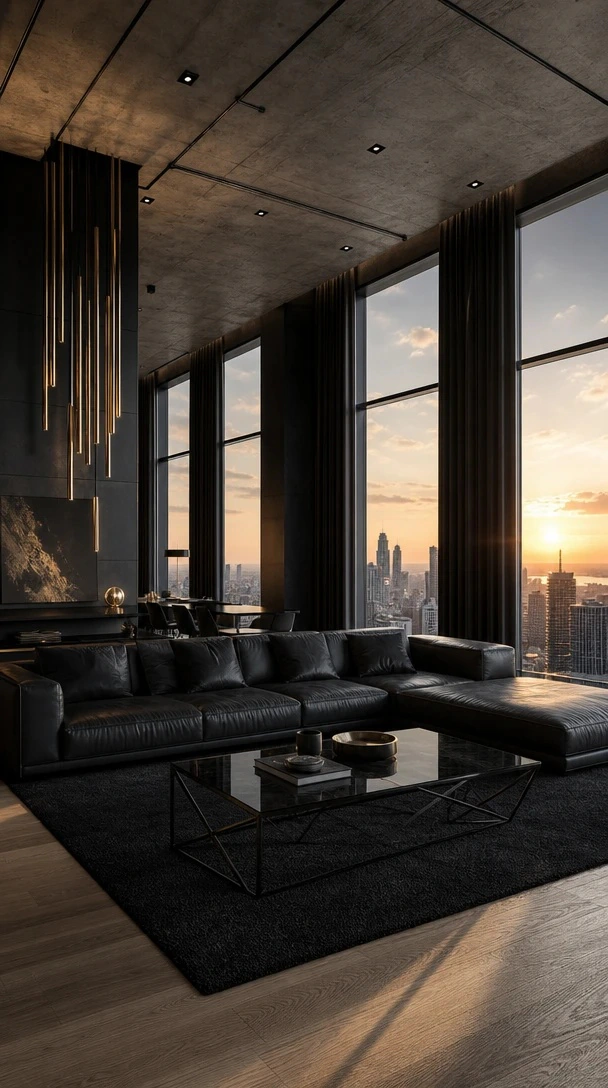
A low black leather sectional faces the city view. Glass, slender frames and warm wood keep the large sofa from closing off the window side.

Cream woven fabrics, brown leather and dark wood sit beside black stone and hardware. Compare the samples together if you want softness without bright color.
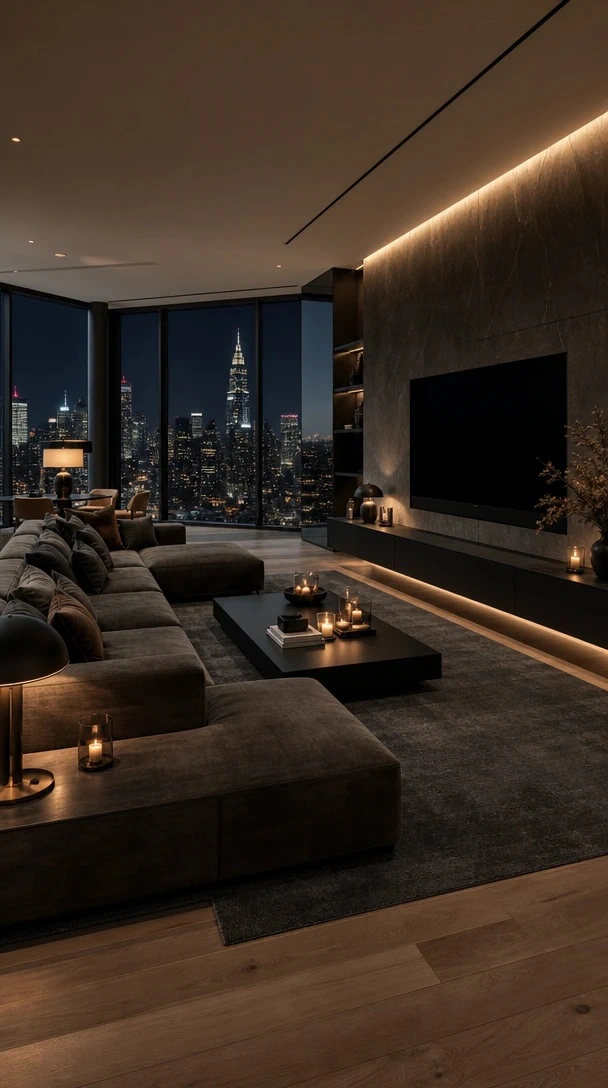
A long dark sectional sits beside a night skyline, with warm light around the TV wall. Consider a separate reading light beside your usual seat.
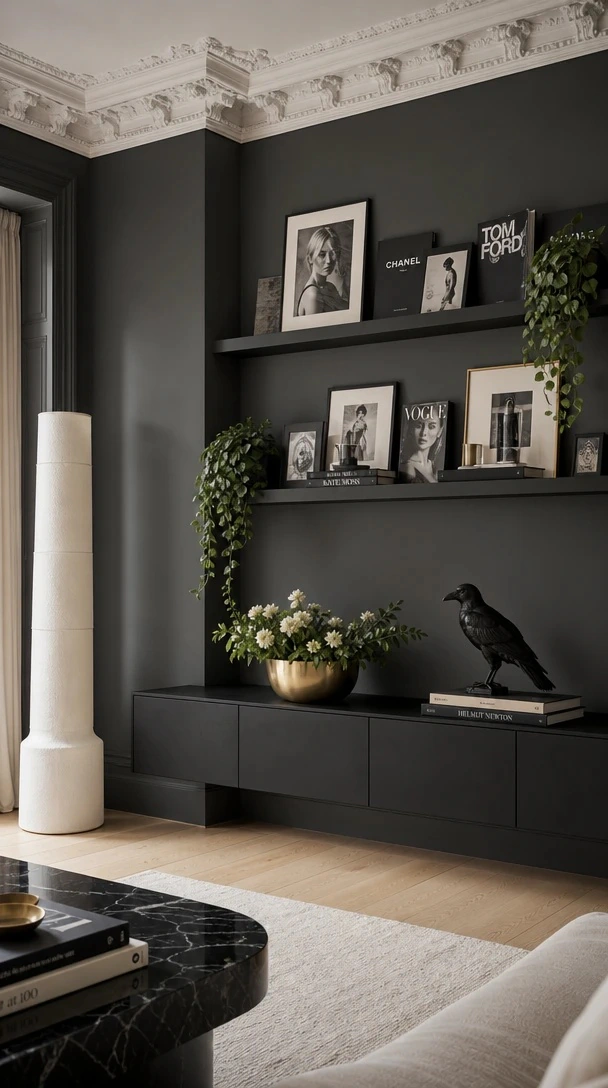
Picture ledges and trailing plants bring variety to a black wall beneath a pale cornice. Closed storage below leaves room to display selected pieces above.

Veined stone, wood grain, matte black and woven fabric create contrast within a restrained palette. Compare samples in your room’s daylight and evening light.
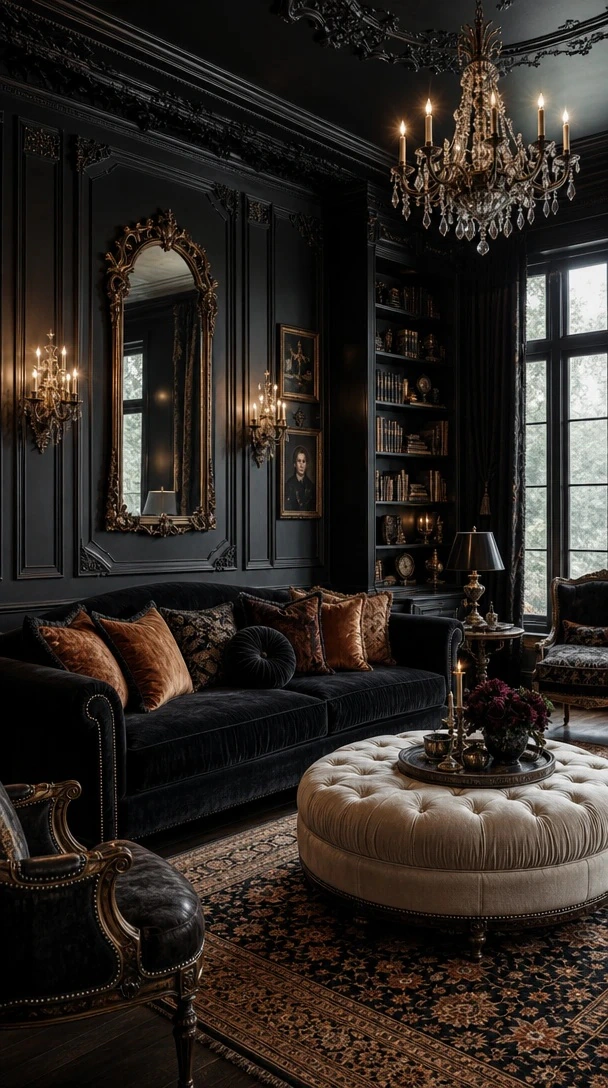
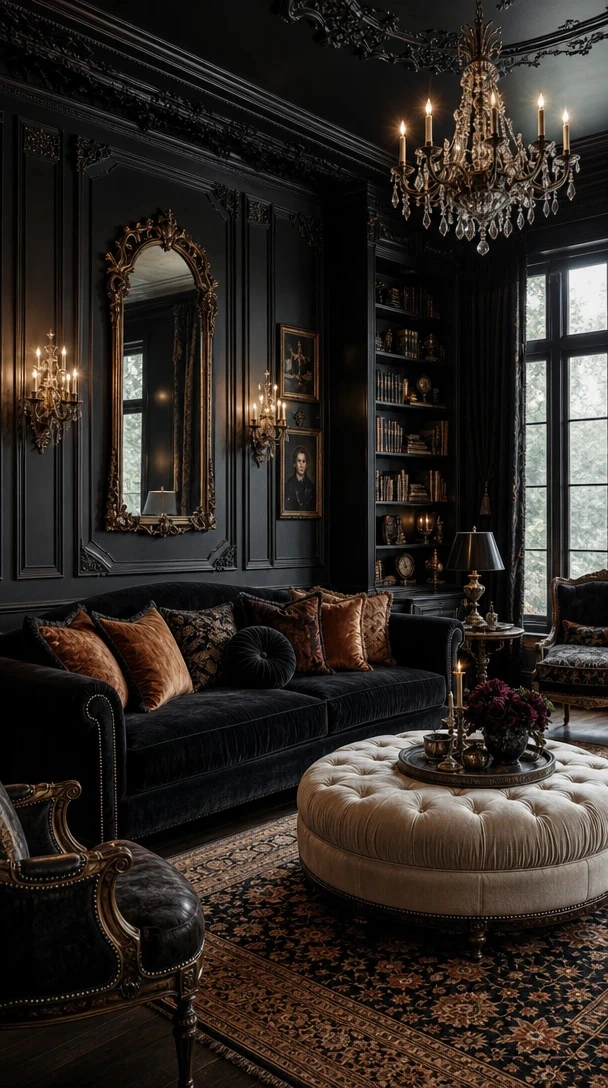
Rust cushions, gilt details and a cream ottoman warm this ornate black room. The middle tones connect the dark furniture with its lighter center.
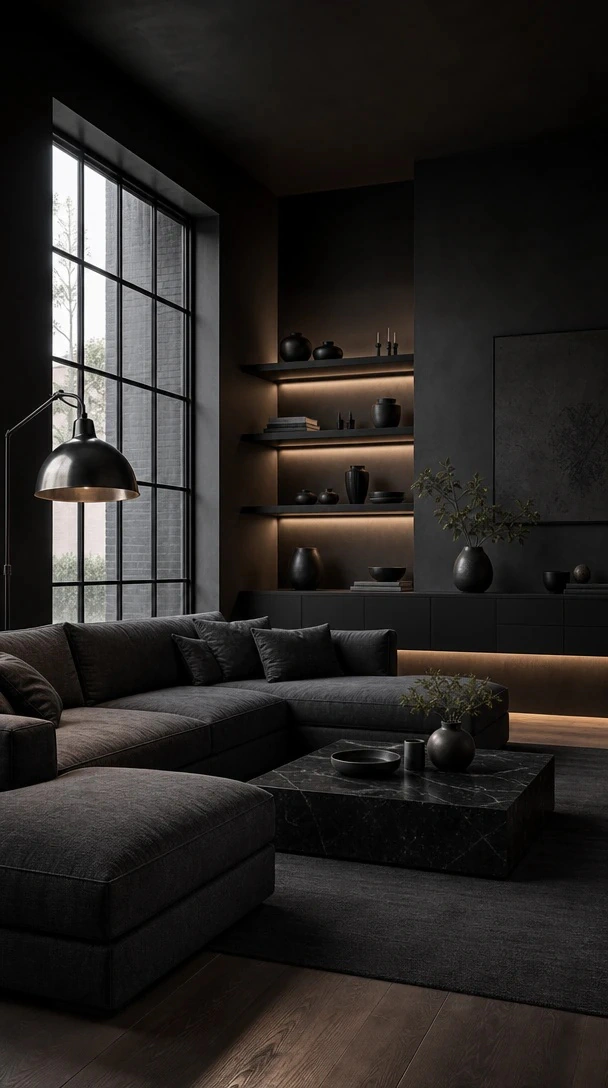
A deep black sectional sits beside veined stone and recessed shelves. Simple textiles let the sofa and illuminated wall remain the main features.
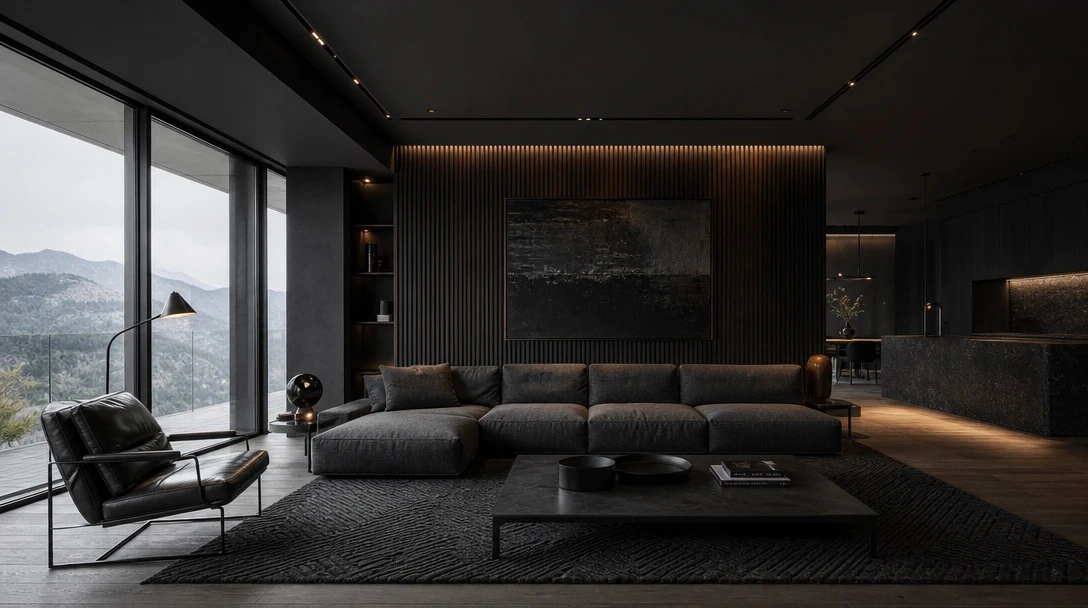
Low black seating and a warm wood feature wall frame the mountain view. Keeping furniture low lets the architecture and landscape stay visible.
A pale ceiling, warm floor and soft cushions surround black walls and seating. The lighter surfaces define the edges of the darker furniture.
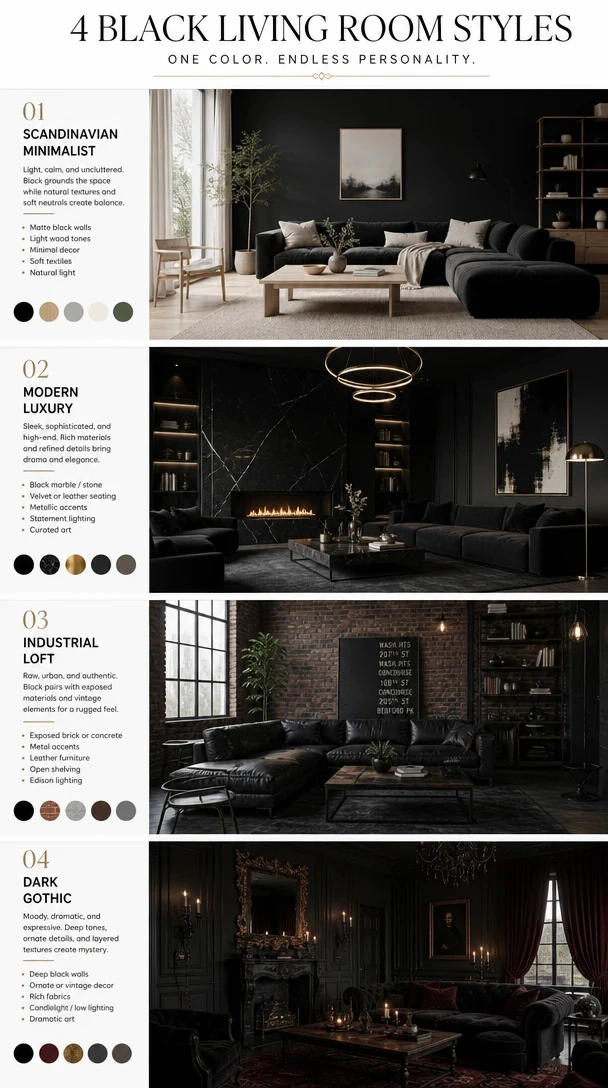
Compare Scandinavian, modern luxury, industrial and gothic directions. Each uses different shapes and materials around a shared dark palette.
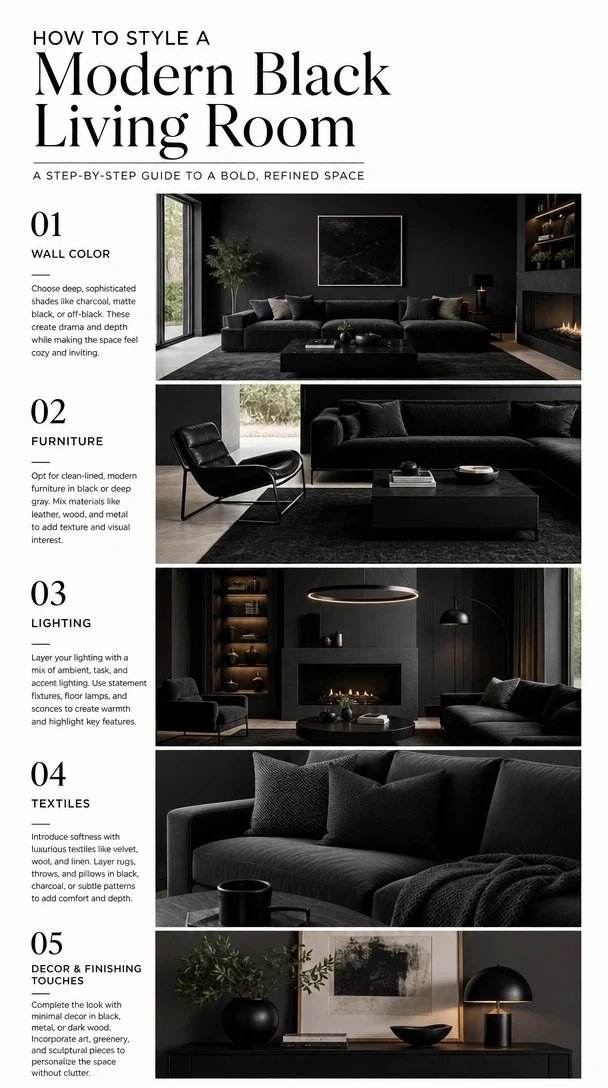
The illustrated sequence moves from wall color and seating to light and textiles. Plan the larger furniture first, then choose the finishing pieces.
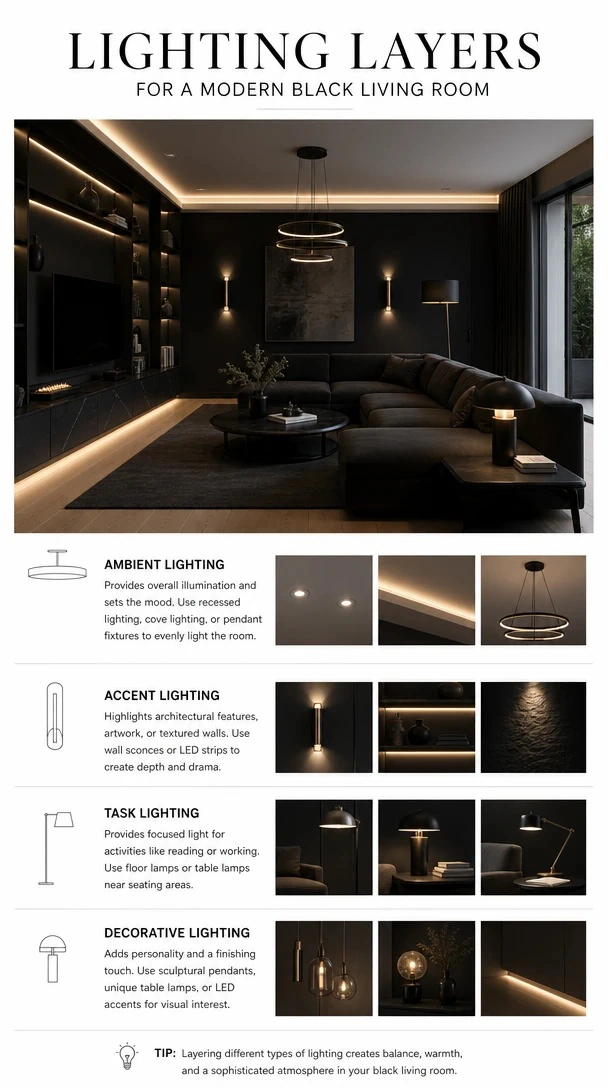
Ambient, task and accent lights serve different purposes in a dark room. The guide shows where light can define a wall or make a seat useful for reading.
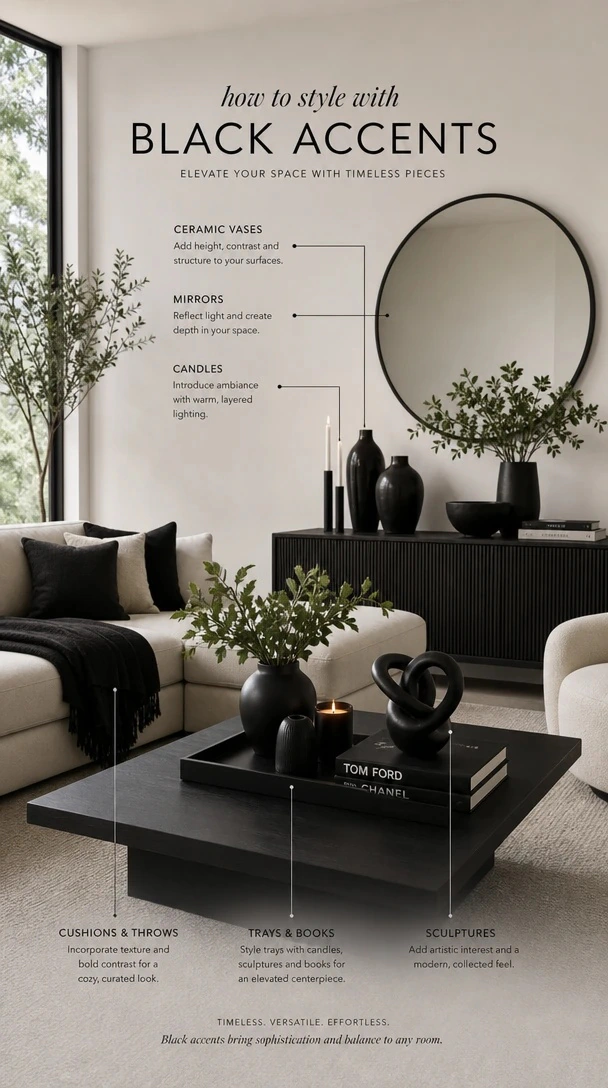
Black cushions, vases and frames stand out against light furniture. Try a few small dark accents before committing to black walls or a large sofa.
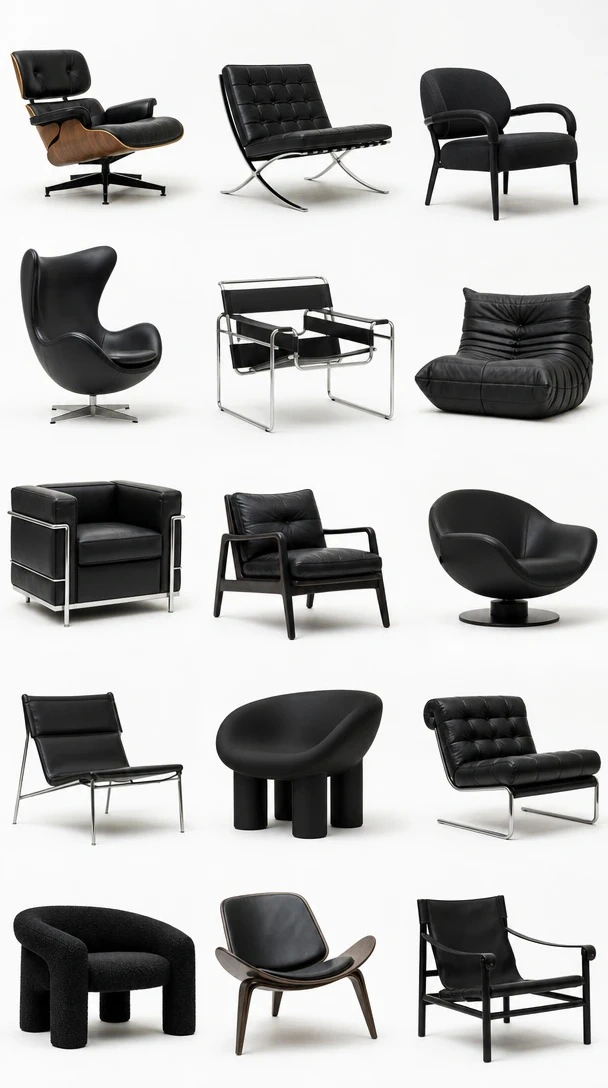
Compare accent chairs by silhouette, frame and upholstery. Open metal, warm wood and fuller upholstered shapes each make a different partner for a sofa.
Go deeper
Step inside complete, editable interiors created with Planner 5D and explore every room in 3D.
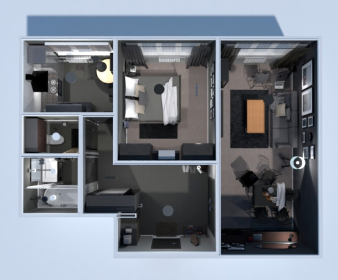
A near-black contemporary lounge softened by a generous grey sectional, full-height drapery and precise perimeter lighting.
View project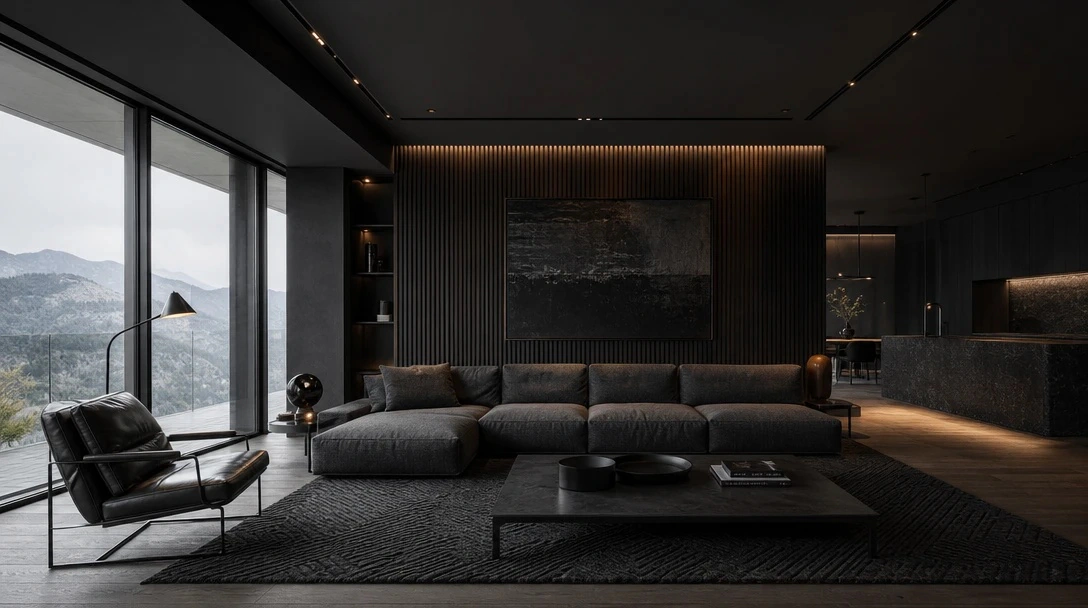
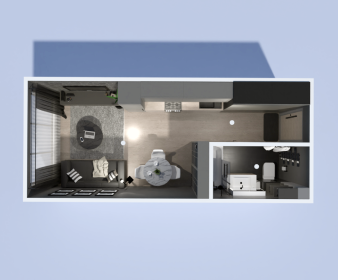
A graphic monochrome interior pairing striped wall panels, mirrored surfaces, sculptural lighting and rounded grey seating.
View project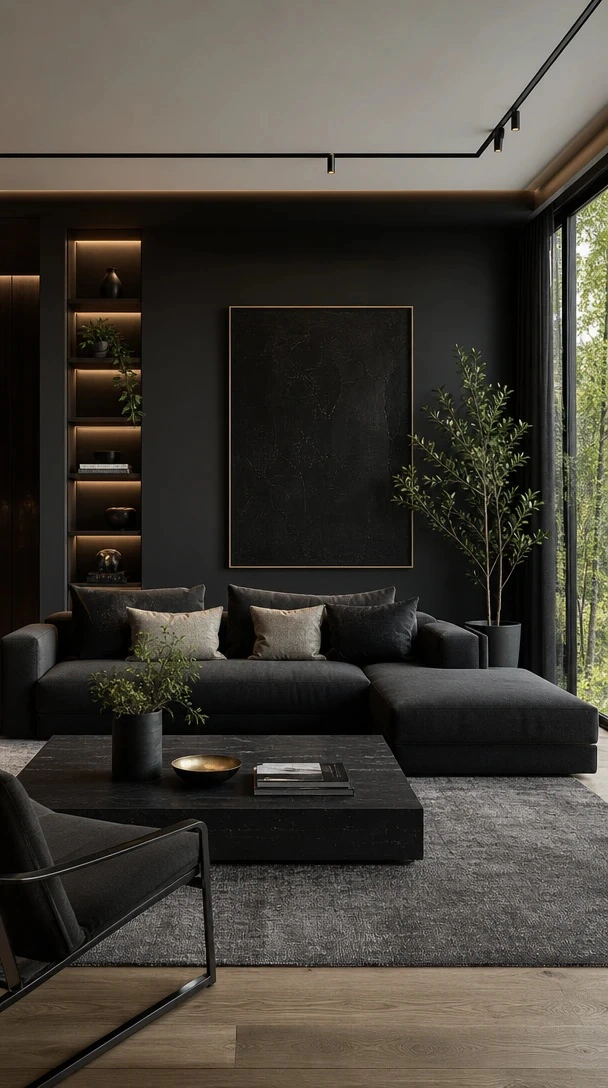
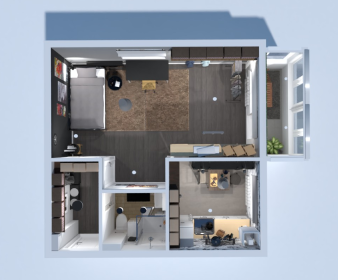
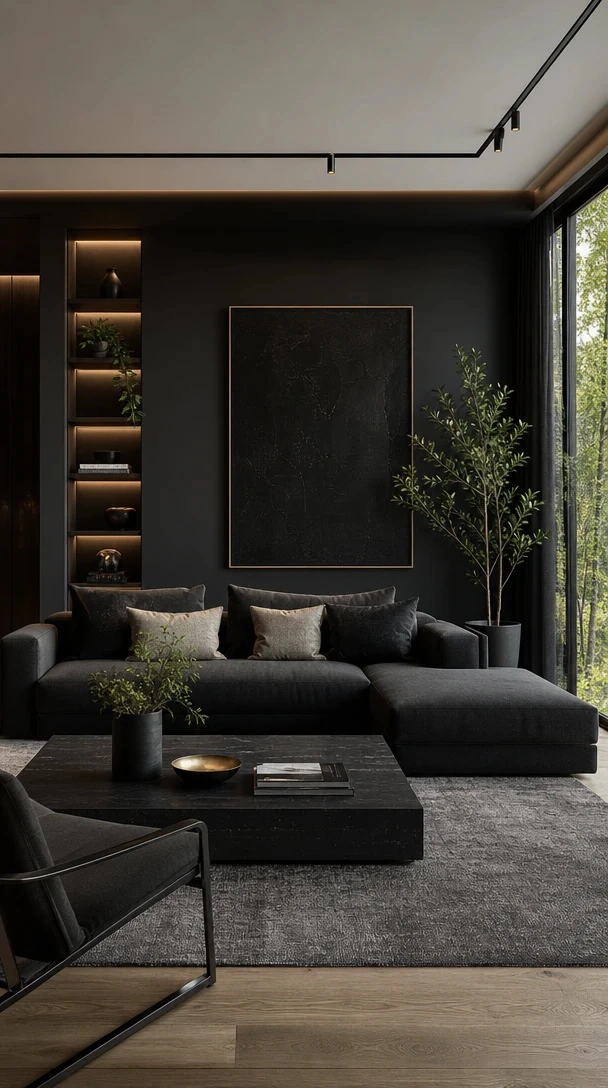
A calm black living room warmed by oak flooring, softly lit shelving, tactile upholstery and a leafy view beyond the glazing.
View projectBuild the room with soft black and charcoal across its largest surfaces.
Introduce walnut, cognac leather and tactile textiles through key furniture.
Use bone, stone and pale fabric to give the eye a place to rest.
Finish with aged brass, glass or restrained greenery to catch the light.
GOOD TO KNOW
Practical answers for planning your space.
Add light where you use the room and introduce contrast through a pale rug, artwork or wood. A glass table or an open-frame chair can also leave more of the floor visible.
Cream and warm white create contrast; walnut, cognac and rust add warmth. Olive or muted green can work as an accent. Compare samples beside the finishes you already have.
Yes. Try a sample on the wall and look at it in both daylight and evening light. Use appropriately sized furniture and plan lighting for the room’s actual activities.
Combine general lighting with a lamp near the reading seat and accent light for art or shelving. Separate controls or dimmers let you change the atmosphere through the day.
A cream, warm gray or patterned rug can define a dark sofa against the floor. Bring home samples if possible and consider a texture and color that suit everyday use.
Add a soft throw, tactile upholstery or a warm wood table where you use them. A reading lamp beside the sofa gives both practical light and a more relaxed evening setting.
Cream, linen-colored or warm gray curtains can soften the contrast around a window. Compare the fabric with your wall paint in daylight and consider the privacy and light control you need.
Start with a picture frame, a lamp, a small table or cushions. Repeat a dark detail in another part of the room if you want the accents to feel connected.

Planner 5D Experts
Work with Planner 5D’s professional design team on a complete, functional room concept—from an editable 2D and 3D layout to realistic 4K renders and a 360° walkthrough.
Editable home plans
Fully prepared by designers for real homes—copy a plan and adapt it to your space, lifestyle and needs in Planner 5D.