How a Gym Planner Can Improve Fitness Equipment Ecommerce
Give customers a better way to plan home and commercial gym designs using products from your catalogue in realistic 2D and 3D layouts.
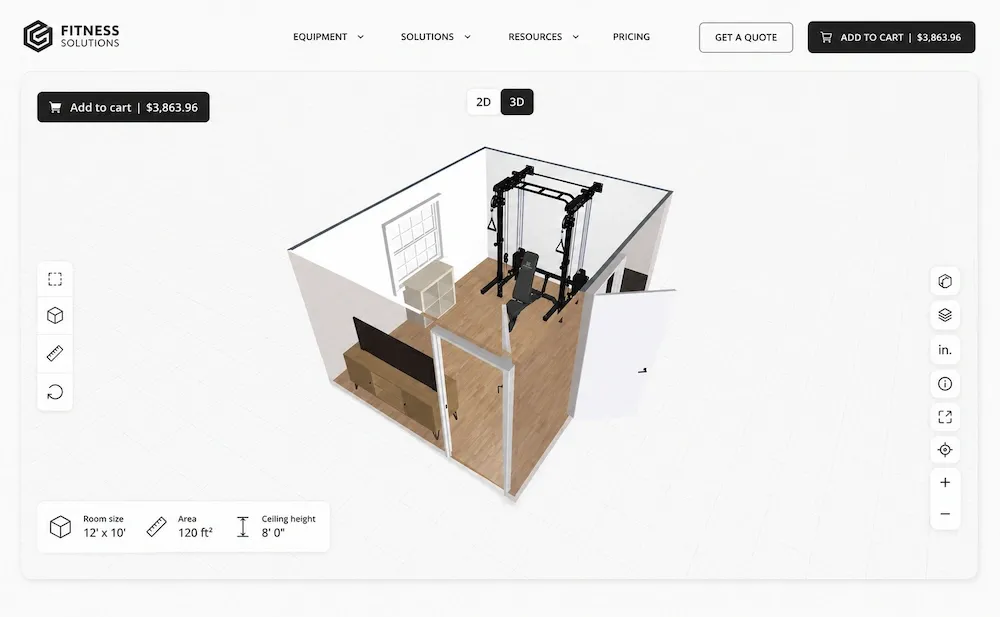
When someone shops for gym equipment online, product specifications answer only part of the question. Buyers also need to know whether several machines will fit in the available space, how much clearance they will have, and whether the final setup will work for the way they plan to train.
For fitness equipment manufacturers and ecommerce retailers, this gap between product information and spatial planning can make complex purchases harder to complete. It becomes especially relevant when customers are buying several pieces of equipment or planning spaces such as home gyms, hotel fitness rooms, or larger commercial facilities.
A 2D and 3D gym planner can bring this planning stage directly into the ecommerce journey. Customers can create their space, test products from a retailer's catalogue, compare configurations, and review the complete gym layout before moving on to a purchase, quote request, or sales conversation.
The traditional ecommerce journey
A typical ecommerce journey for gym equipment often involves a lot of information gathering. A customer may open several product pages, compare dimensions and specifications, check reviews, calculate costs, and then try to determine how everything will work together in their room.
But even detailed product pages cannot easily answer questions such as:
- Can I fit a rack, bench, treadmill, and storage in this space?
- Will there be enough clearance around each machine?
- Which combination of products works best for the available room?
- Do I also need flooring, plates, mirrors, accessories, or storage?
- Would a larger machine work, or is the compact version more appropriate?
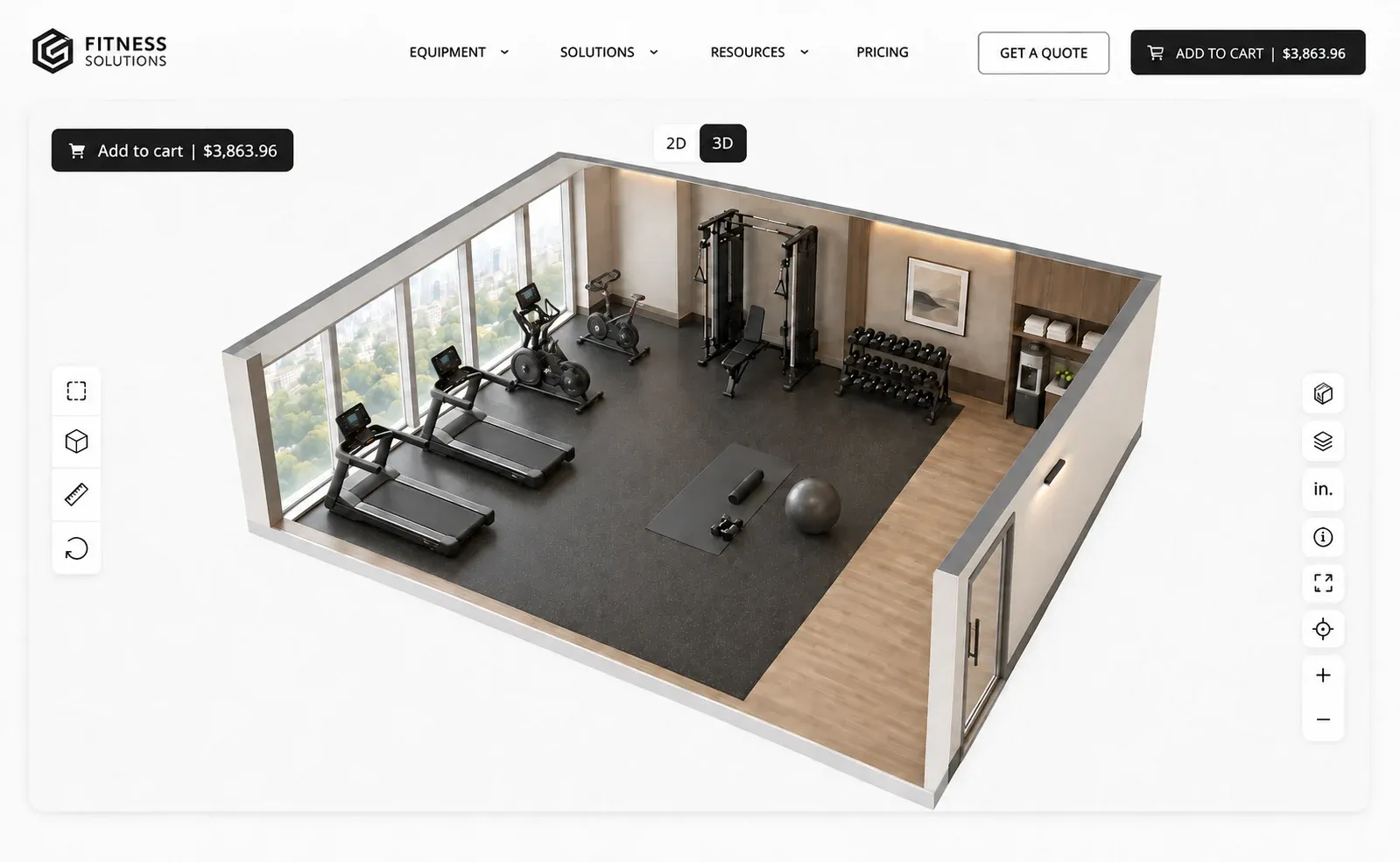
For a multi-product order or a complete gym design, these questions can have a significant influence on the buying decision. Customers may postpone the decision, reduce the size of the order, or contact sales without enough information for a productive conversation.
How a 2D and 3D gym planner changes the buying experience
A 2D and 3D gym layout planner allows customers to evaluate equipment as part of a complete space rather than as isolated products. Depending on the ecommerce experience, shoppers can:
- Create a room using its actual dimensions.
- Add products from the brand’s catalogue.
- Compare different equipment combinations.
- Review spacing, access, and training flow.
- Explore the completed gym in 3D.
- Save or share the project.
- Continue to a basket, request a quote, or contact the sales team.
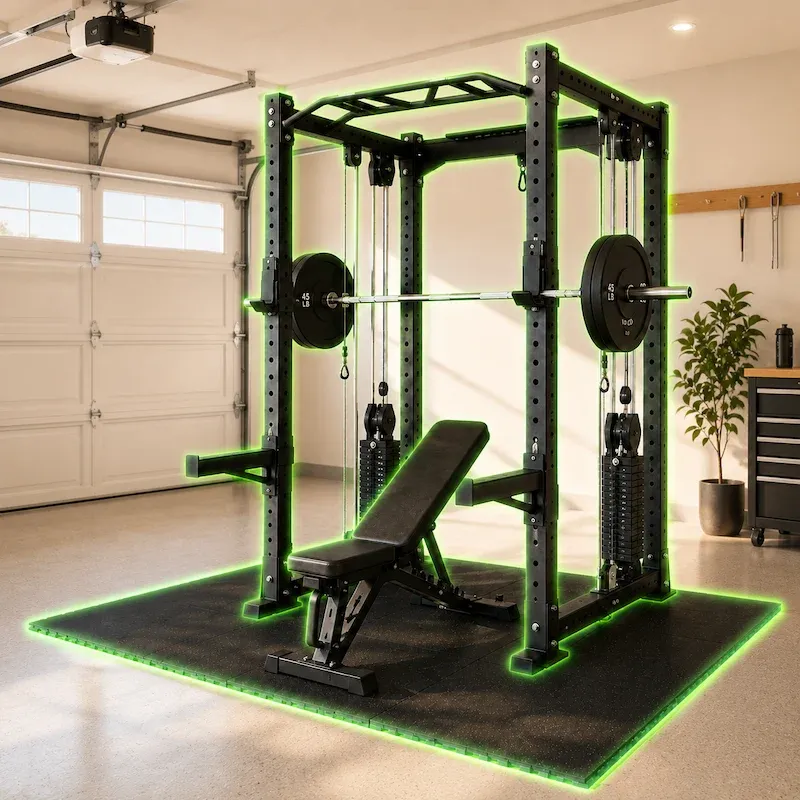
This gives customers more context before they commit to a purchase. Instead of asking, “Which machine would you like to buy?”, the brand helps customers answer a more useful question:
“What is the right setup for my space, goals, and budget?”
From individual products to a complete training setup
One of the limitations of a conventional ecommerce catalogue is that customers have to assemble the final setup mentally. With a planning tool, they can place compatible equipment together and see the full setup. That can also create more natural opportunities to introduce:
- Benches and attachments
- Flooring and protective mats
- Weight plates and barbells
- Storage systems
- Mirrors and accessories
- Cardio equipment
- Mobility and recovery equipment
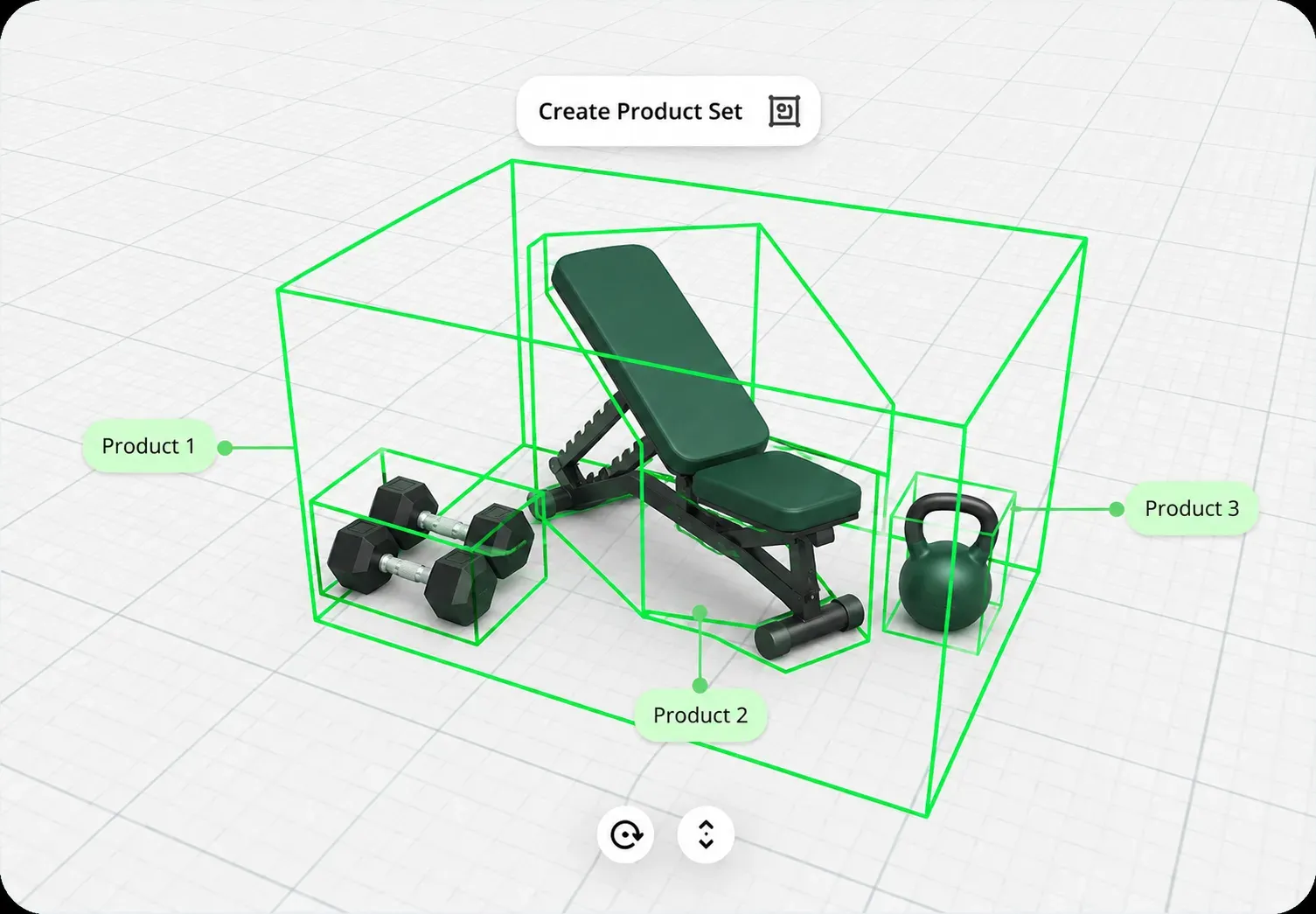
Rather than showing the same generic bundle to every visitor, retailers can help shoppers identify products that make sense for the specific space they are planning.
Put equipment dimensions into context
Dimensions are essential when selling gym equipment online, but numbers alone do not show how a product will behave inside a room. A treadmill may technically fit between two walls while leaving too little circulation space around it. A rack may fit according to its footprint but require additional clearance for loading plates or performing exercises comfortably.
With a visual planning tool, customers can evaluate equipment alongside the rest of the room. This can be useful across very different projects, including compact home gyms, personal training studios, hotel fitness rooms, residential developments, and commercial gym design projects.
Use gym design to identify higher-intent shoppers
A conventional lead form may capture a name, email address, company, and short message. A submitted gym design can provide much richer context:
- Room dimensions and layout
- Type of training space
- Selected products
- Product quantities
- Preferred equipment arrangement
- Approximate project scope
- Intended next step
A visitor who has spent time creating a complete layout is doing more than casually browsing. They are actively defining a possible purchase. This makes the planning experience valuable not only as an ecommerce feature, but also as a lead-generation channel.
Turn your equipment catalogue into an interactive gym planning experience.
Help customers design their space and move closer to purchase.
Create more relevant product recommendations
Most ecommerce recommendation systems are based on product categories, popularity, or previous browsing behavior. A gym planner adds another type of context: the project itself.
For example, a compact room may benefit from foldable or multi-purpose equipment. A boutique studio may require several training stations. A hotel gym may prioritize cardio, accessibility, and visual presentation.
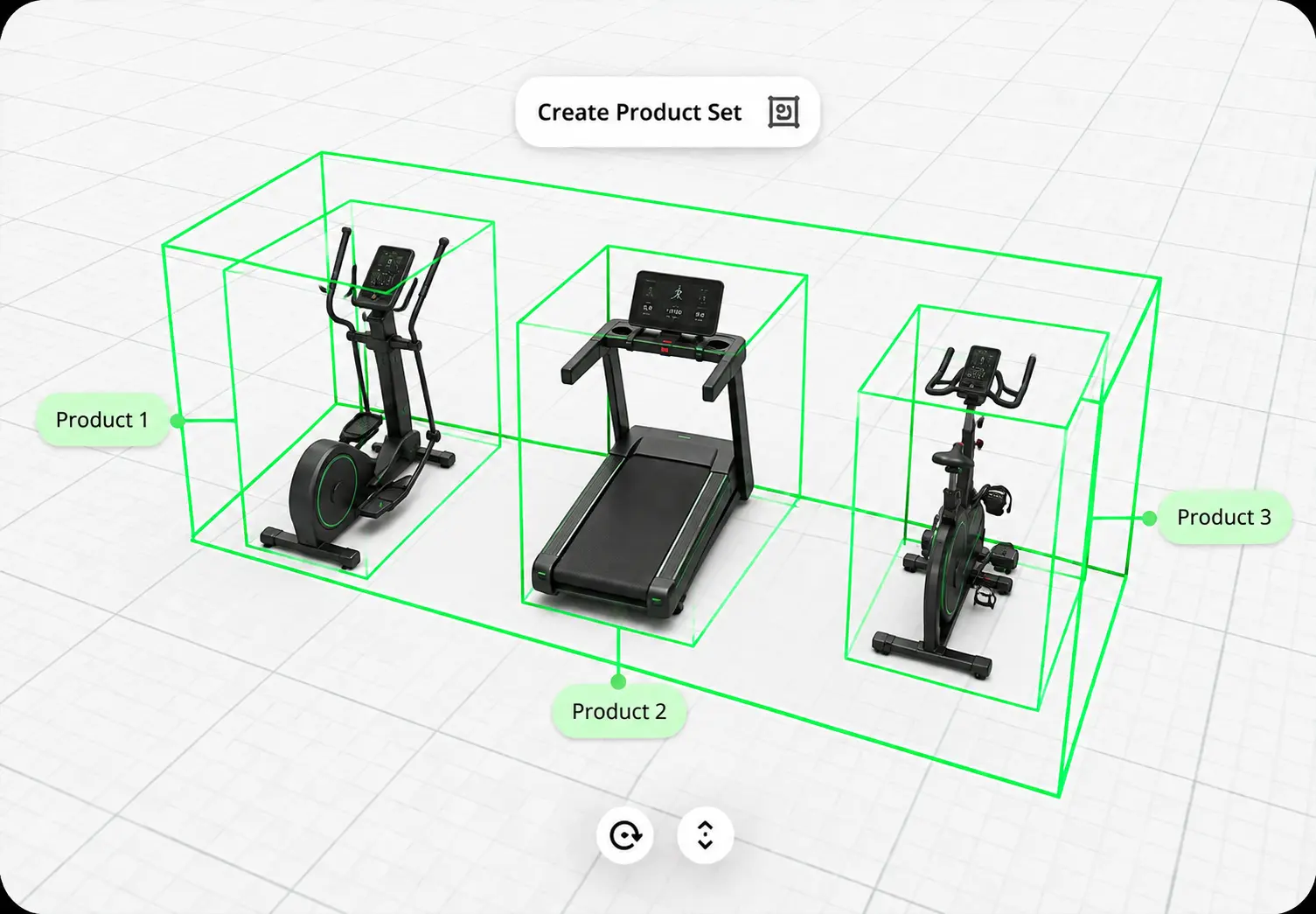
Retailers can also provide starting templates for common project types, such as:
- Garage strength gym
- Compact home gym
- Personal training studio
- Functional training space
- Hotel fitness room
- Workplace gym
- Physiotherapy or recovery room
- Residential development gym
Templates can reduce the amount of work required to start a project while helping customers discover product combinations that are relevant to their use case.
Give sales teams more project context
When a customer submits a traditional inquiry, sales often has to begin with basic discovery:
- How large is the space?
- What type of facility is it?
- Which products are being considered?
- What is the expected budget?
- When does the customer want to proceed?
When the inquiry includes a visual plan, the conversation can start further ahead. Sales teams can focus on improving the layout, checking product choices, recommending alternatives, completing the package, or preparing a quote.
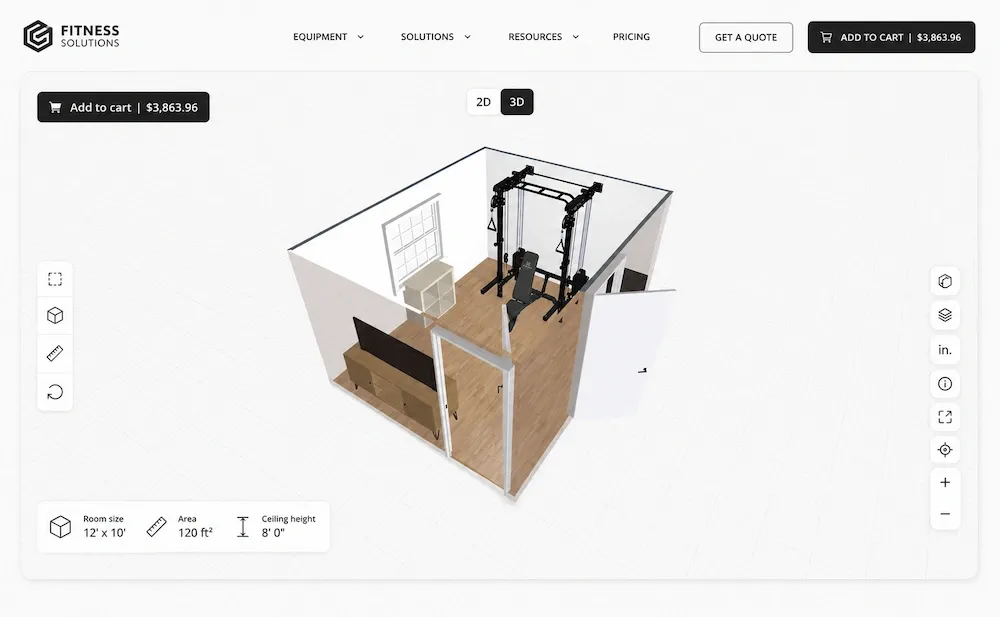
This is particularly useful for projects that sit between self-service ecommerce and a fully managed commercial fit-out.
What ecommerce teams should measure
A 2D or 3D planner should not be treated only as an engagement feature. Its commercial contribution should be measured from launch.
Relevant metrics include:
- Percentage of visitors who start a project
- Number of completed or saved gym designs
- Average time spent planning
- Products placed per project
- Design completion-to-lead rate
- Design completion-to-basket rate
- Average basket value for planner users
- Lead-to-quote conversion rate
- Quote-to-order conversion rate
- Time required to qualify submitted projects
- Return or cancellation rates for planner-assisted orders
These metrics can help teams understand whether planning activity is contributing to product discovery, larger projects, qualified inquiries, or completed purchases.
The next evolution of fitness ecommerce
Fitness-equipment brands have spent years improving product discovery through better photography, video, reviews, financing, comparison tools, and detailed specifications. The next step is giving customers a way to bring products together, test them in context, and make a decision about the entire space.
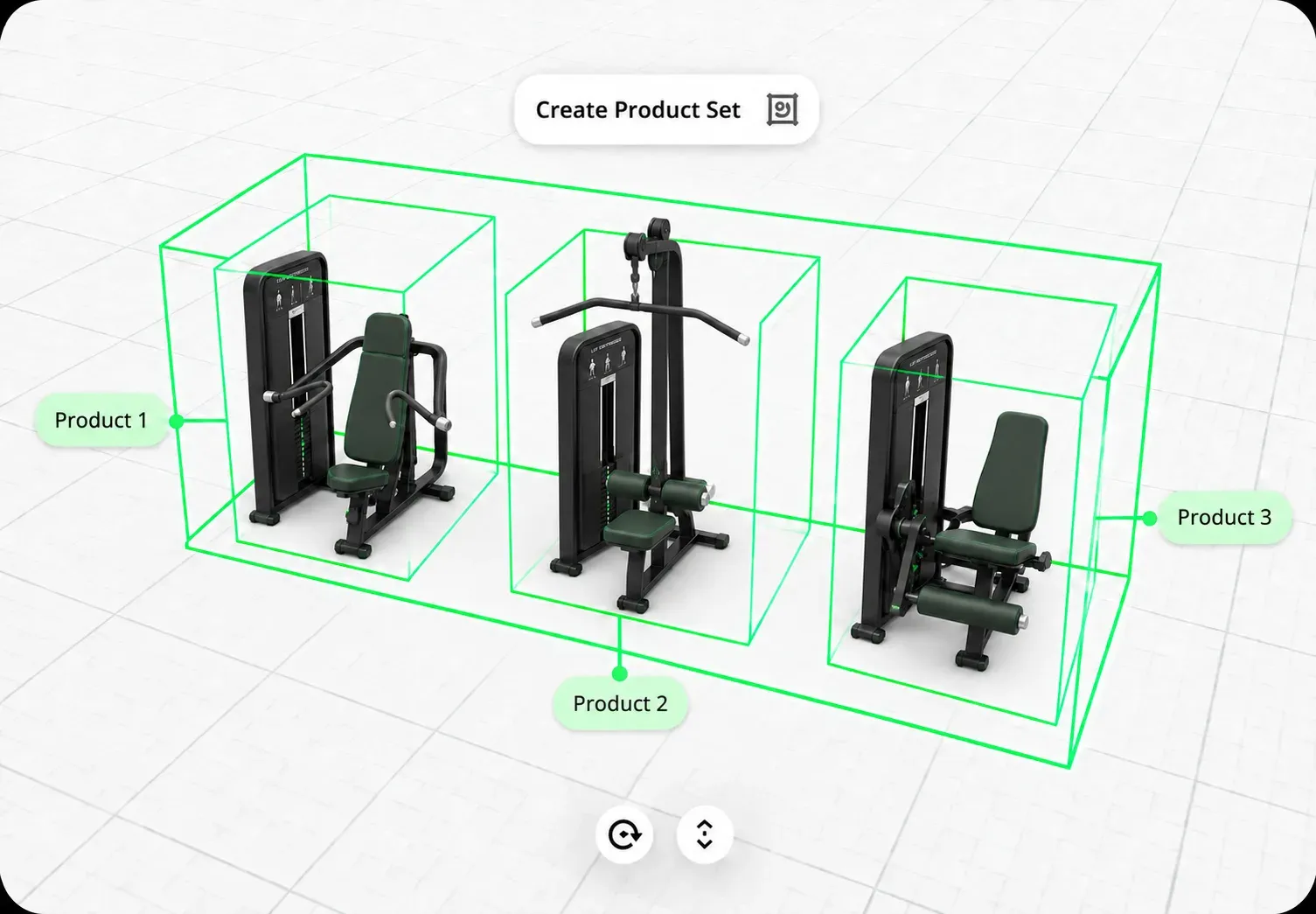
A 2D and 3D planner can connect several stages of the customer journey. Marketing teams can use interactive planning as part of product discovery, ecommerce teams can provide more context around multi-product purchases, and sales teams can receive inquiries that include useful project information.
For the customer, the benefit is simpler: they can evaluate a complete gym setup before committing to the equipment.
Bring your equipment catalogue into the customer's space
Planner 5D creates white-label 2D and 3D planning experiences for fitness equipment manufacturers and retailers.
Customers can create a real gym layout using products from your catalogue, review the design in 2D and 3D, and then continue to a basket, quote request, or sales conversation.