What Is Japandi Interior Style?
Discover the key elements of Japandi interior design, from warm neutrals and natural materials to simple furniture.
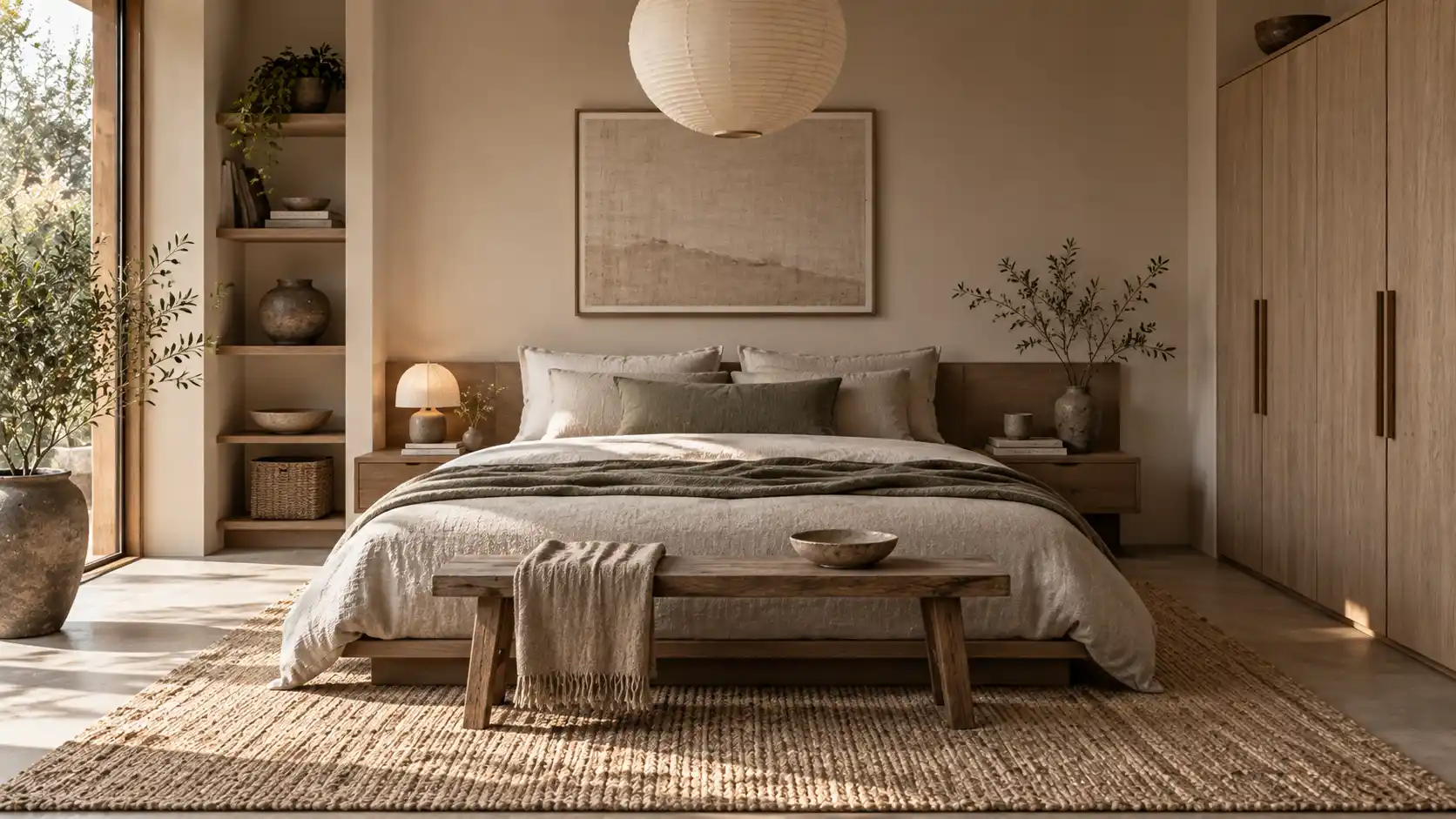
Japandi is an interior design style that combines Japanese minimalism with Scandinavian functionality and comfort. It features clean lines, natural materials, warm neutral colors, simple furniture, and carefully chosen decor.
The result is a calm, uncluttered interior that feels warm rather than stark. Japandi design principles focuses on craftsmanship, functionality, and creating a stronger connection with nature.
Where does Japandi style come rom?
Japandi style combines elements of traditional and contemporary Japanese design with the practical simplicity of Scandinavian interiors.
Japanese influence can be seen in the emphasis on balance, natural materials, uncluttered rooms, and carefully chosen objects. Japandi is also closely associated with wabi-sabi, the appreciation of imperfection, simplicity, age, and natural variation.
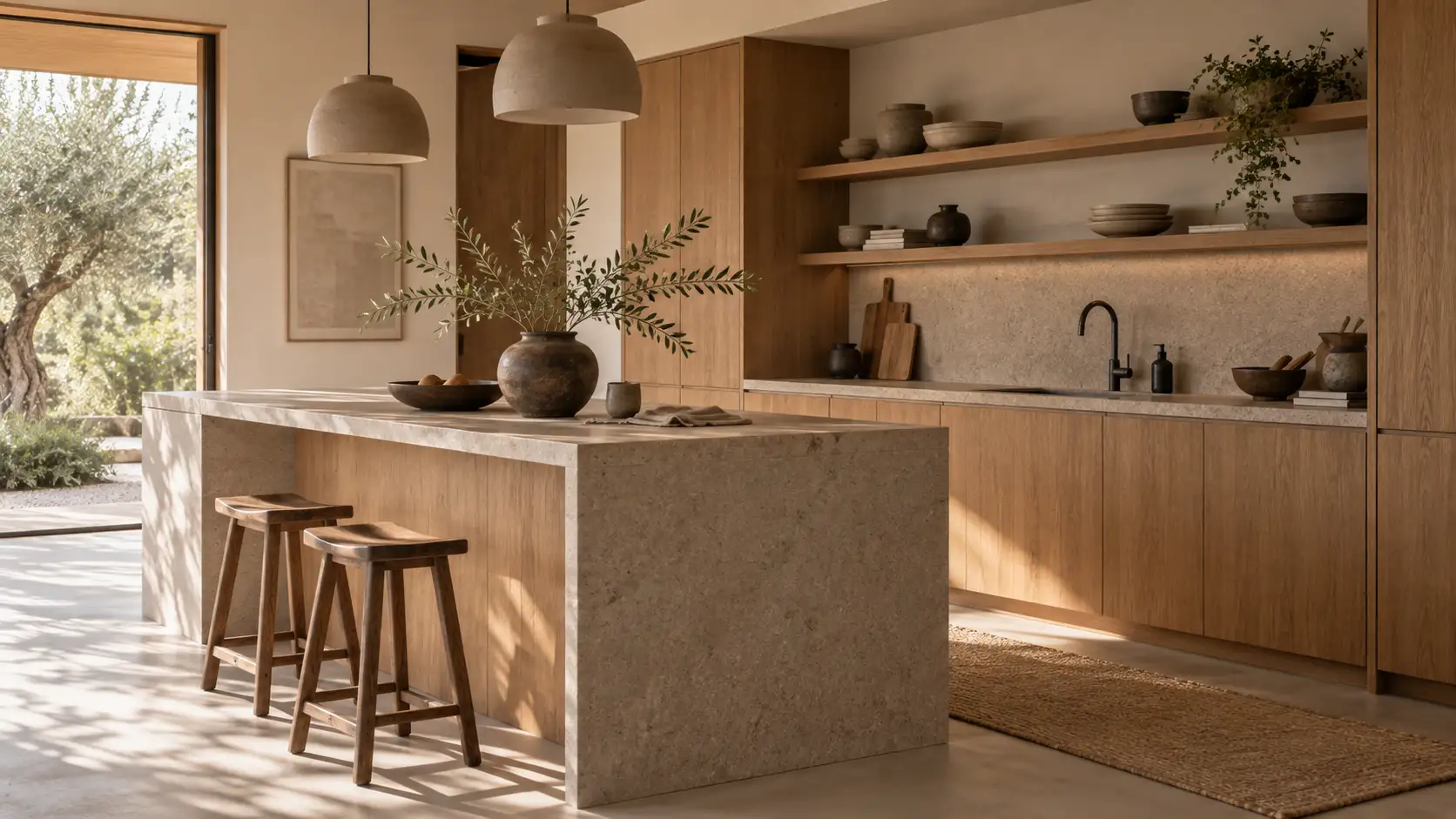
The Scandinavian side contributes functional furniture, light-filled spaces, comfort, and the idea of hygge—creating an environment that feels warm, comfortable, and pleasant to live in.
What are the main characteristics of Japandi interior design?
You can usually recognize a Japandi interior by its sense of visual calm. There may be relatively few objects in the room, but the space shouldn't feel unfinished. Some of the most common characteristics include:
- Minimal, uncluttered spaces: Furniture and decor have room to breathe rather than filling every available surface.
- Clean lines and simple forms: Pieces tend to have uncomplicated silhouettes without excessive ornamentation.
- Natural materials: Wood, stone, linen, wool, ceramics, and woven fibers introduce texture and warmth.
- Warm neutral and earthy colors: Soft beige, brown, taupe, gray, green, and cream usually replace bright or highly saturated colors.
- Functional furniture: Pieces are selected for how well they work as much as for how they look.
- Quality over quantity: One well-made chair or ceramic vase can have more impact than several decorative accessories.
- A connection to nature: Plants, natural light, organic forms, and visible wood grain help bring outdoor elements inside.
- Handcrafted and imperfect details: Slight variations in pottery, wood, stone, or textiles can make the room feel more authentic.
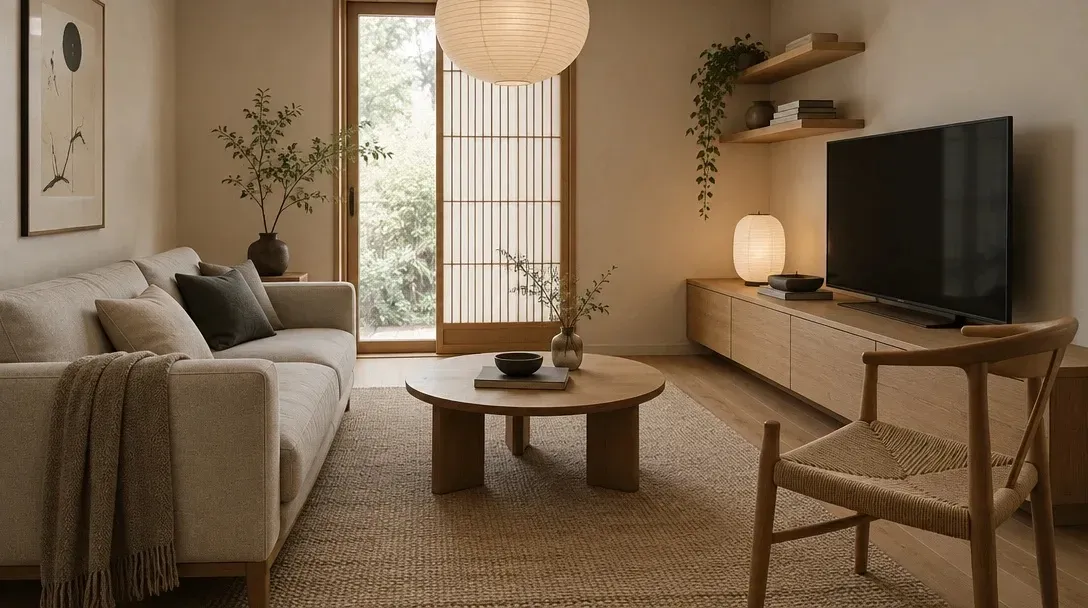
What colors are used in Japandi interiors?
Japandi colors are warm, muted, and inspired by nature. Beige, cream, taupe, warm gray, brown, and soft green are common, often paired with black or dark wood for contrast. Simple combinations include:
- Warm white + light oak + beige + black
- Cream + walnut + muted olive
- Taupe + dark brown + natural stone
- Sand + oak + terracotta accents
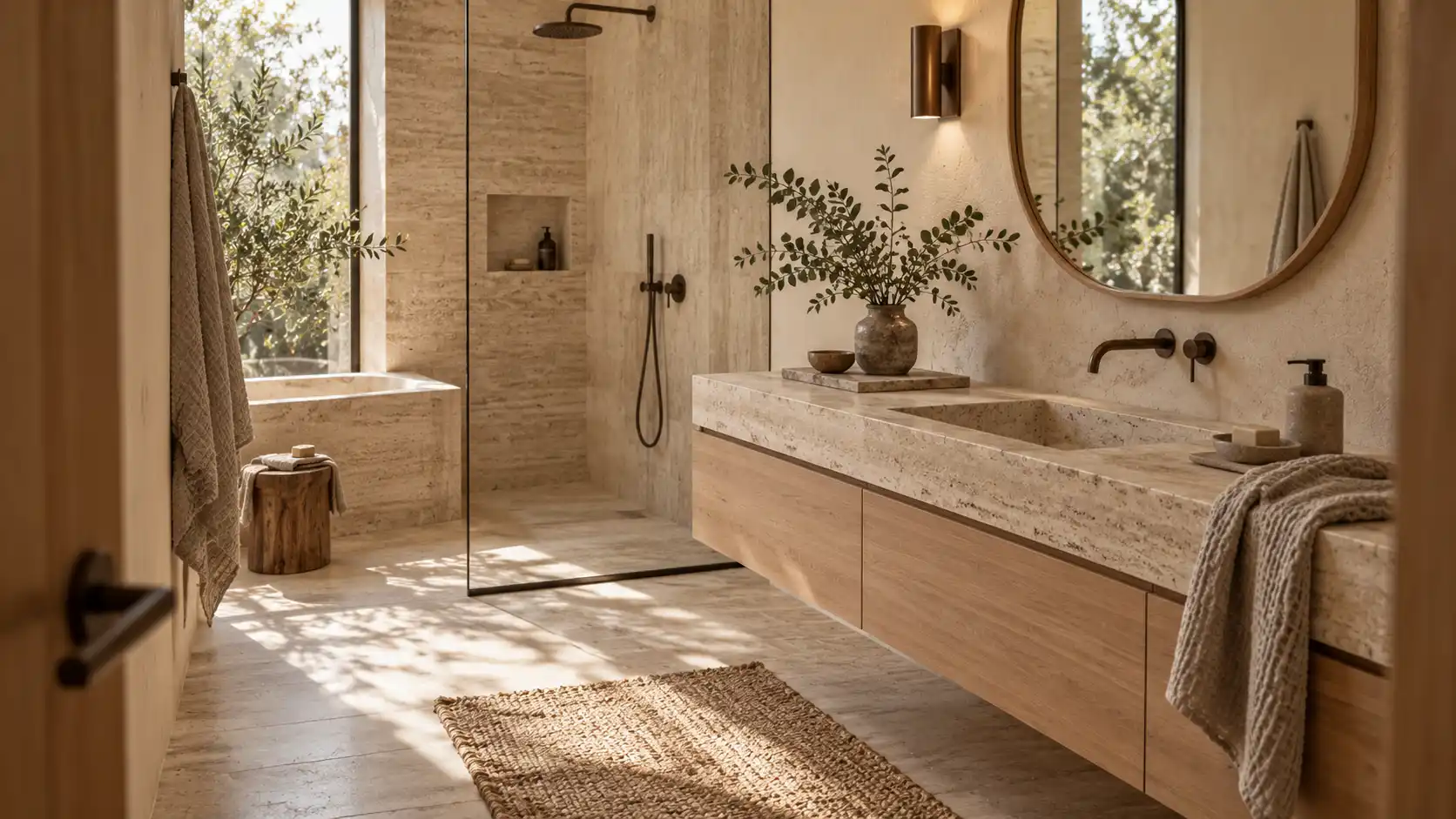
The palette should feel cohesive and understated. Instead of adding many colors, use variations in wood tones, textiles, and natural textures to create depth.
What materials define Japandi style?
Materials are especially important in Japandi design because much of the visual interest comes from texture rather than ornament.
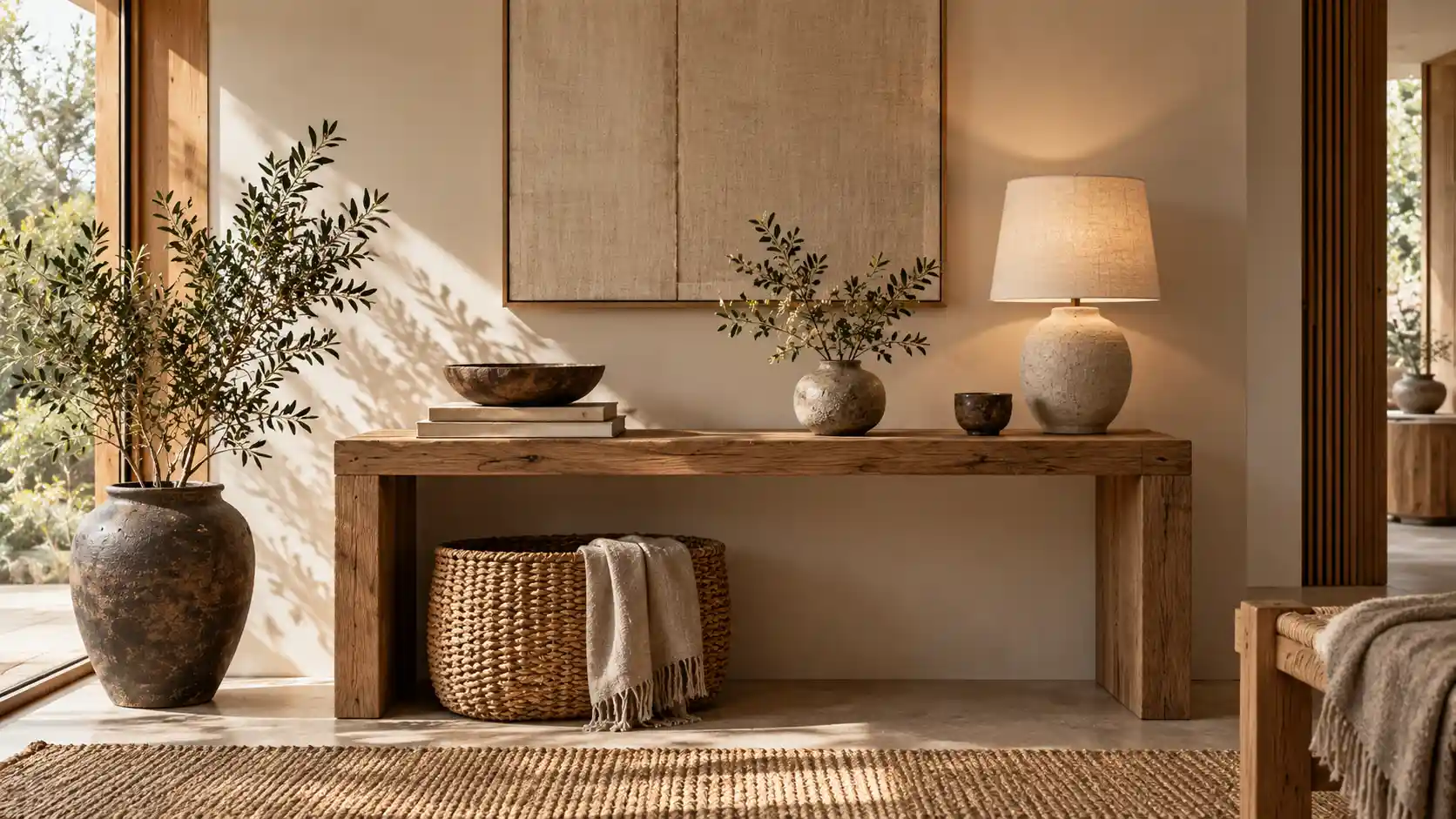
Wood is one of the most recognizable elements. Light woods can reference Scandinavian interior design, while darker tones introduce a stronger Japanese influence. Using both can keep a room from looking too uniform.
Other common materials include:
- Bamboo
- Natural stone
- Linen
- Cotton
- Wool
- Ceramics
- Rattan
- Cane and other natural fibers
Natural variation is part of the appeal. Visible wood grain, textured linen, handmade pottery, honed stone, and woven fibers add dimension without making the room feel busy.
This is also where wabi-sabi comes into play. A slightly irregular ceramic bowl or a wooden table that develops character over time can suit the style better than something that looks perfectly polished.
What does Japandi furniture look like?
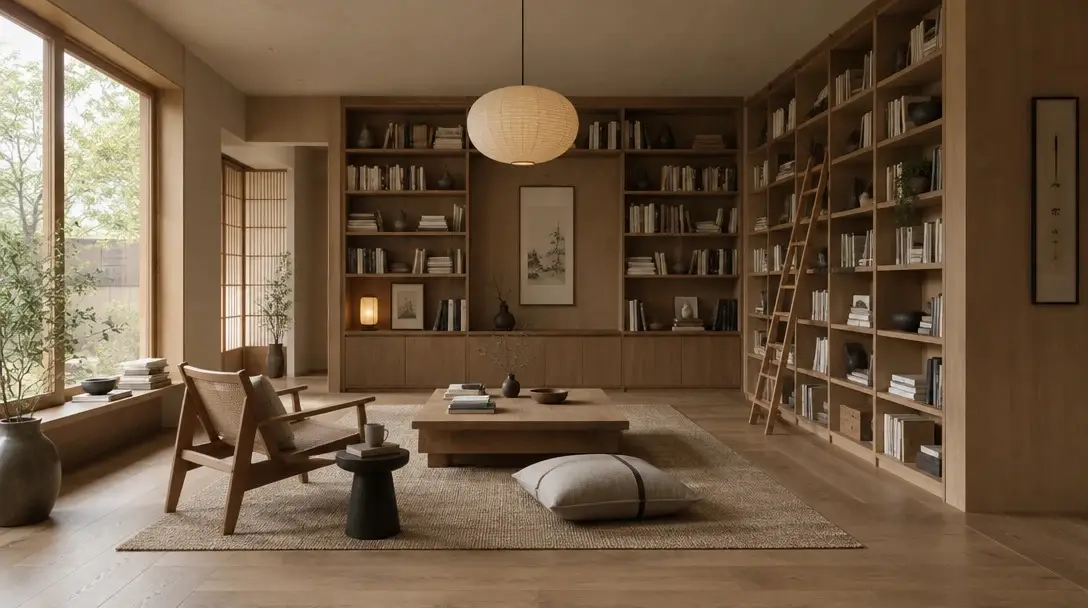
Japandi furniture is simple, functional, and usually made from natural materials. Clean silhouettes, low profiles, and minimal ornamentation are common. Typical pieces include low sofas, platform beds, benches, streamlined storage, and simple wood tables.
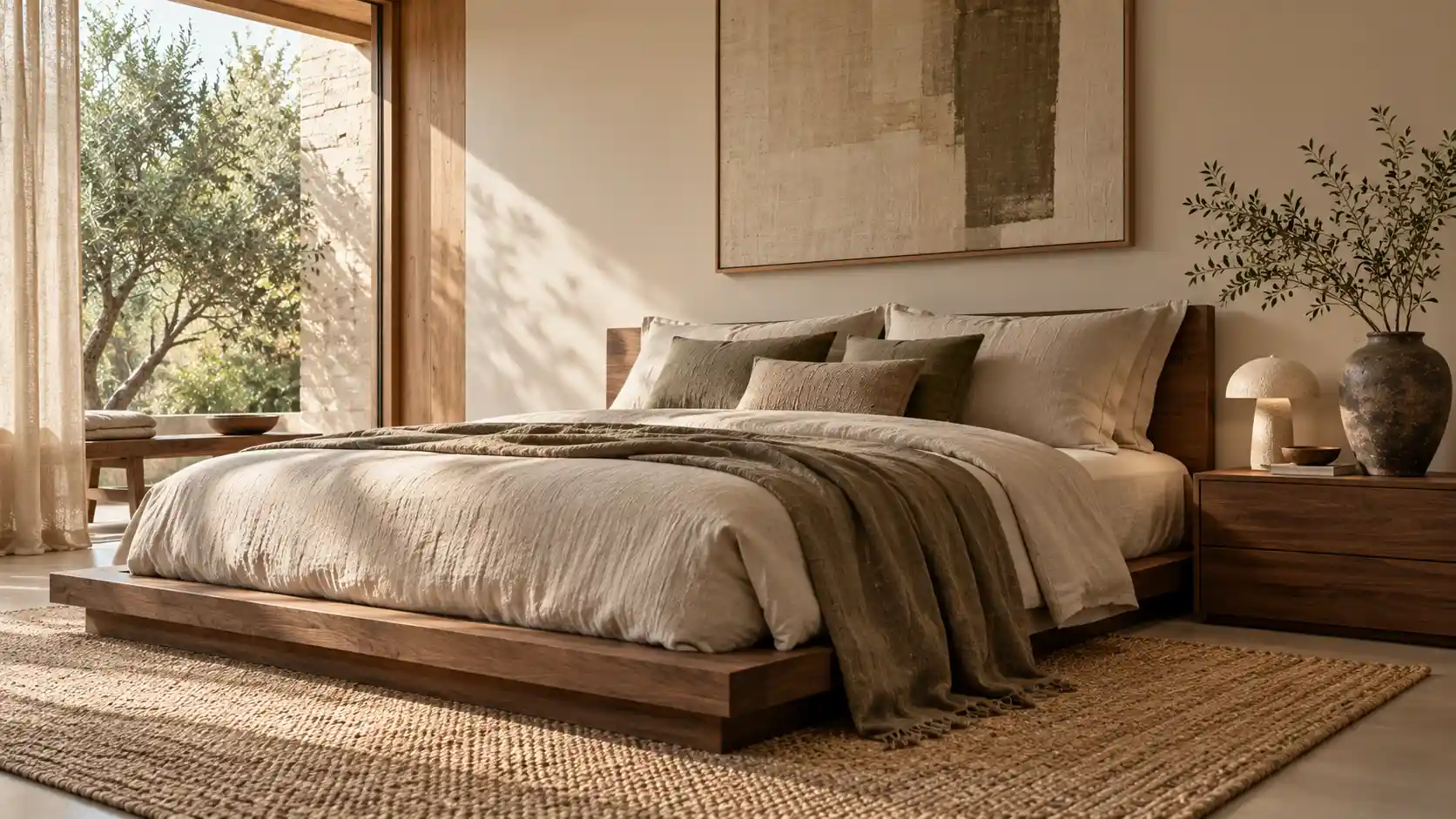
Wood tones don't need to match. Combining light oak with darker walnut or stained wood can add contrast while reflecting both Scandinavian and Japanese influences.
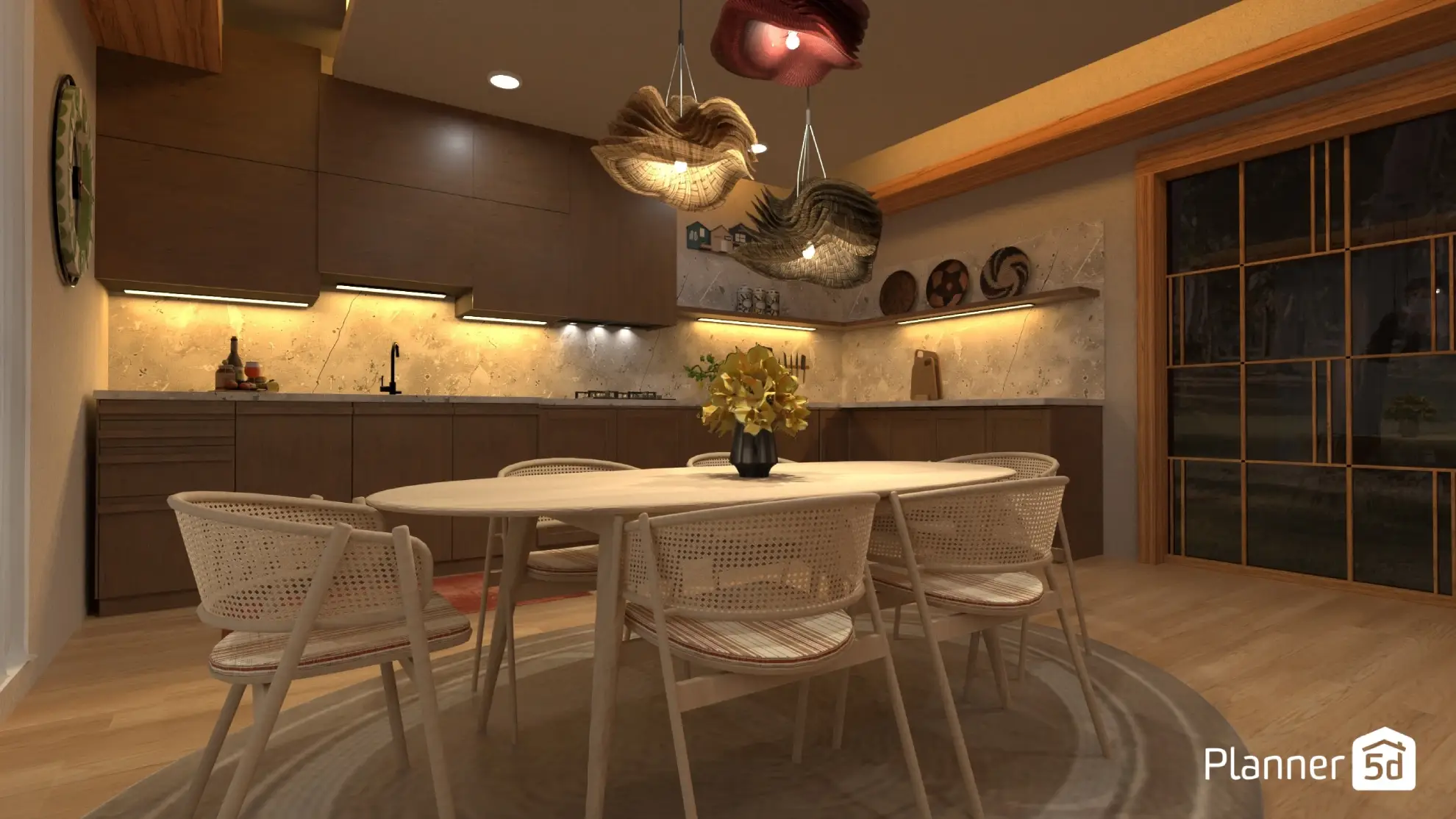
When choosing Japandi furniture, prioritize simple forms, practical use, good proportions, and durable materials over decorative details or short-lived trends.
How to decorate in Japandi style
- Reduce visual clutter: Remove unnecessary accessories and avoid overcrowding shelves and surfaces.
- Choose a few meaningful pieces: Use ceramics, art, baskets, or objects with interesting shapes, texture, or personal value.
- Add handcrafted details: Slightly imperfect pottery or handmade decor works especially well with the wabi-sabi influence.
- Introduce plants: A few well-placed plants can add softness and reinforce the connection to nature.
- Use natural textiles: Linen curtains, wool throws, cotton bedding, and textured rugs add warmth without making the room feel busy.
- Keep patterns subtle: Let material, grain, and texture create visual interest instead of relying on bold prints.
- Leave surfaces relatively clear: Empty space is part of the composition and helps individual pieces stand out.
Japandi vs scandinavian style: what's the difference?
Japandi and Scandinavian design have plenty in common. Both favor functional layouts, simple furniture, natural materials, and uncluttered spaces. The main difference is in how those elements are used.
| Japandi style | Scandinavian style | |
|---|---|---|
| Colors | Warm neutrals, earth tones, muted greens, darker contrast | Whites, creams, pale neutrals, and soft colors |
| Wood tones | Mix of light, medium, and dark wood | Often dominated by lighter woods |
| Furniture | Simple, often low-profile and restrained | Simple and functional, often lighter and more casual |
| Decor | Minimal, intentional, and often handcrafted | Simple but generally more relaxed and layered |
| Texture | Raw, organic, and visibly imperfect materials | Cozy textiles and natural finishes |
| Atmosphere | Calm, grounded, and refined | Bright, relaxed, and cozy |
Scandinavian interiors often feel lighter and more casual. Japandi typically introduces darker contrasts, stronger Japanese influences, and a more restrained approach to decoration.
Japandi vs minimalist interior design
Minimalist design broadly focuses on simplicity, reducing visual clutter, and eliminating unnecessary elements. Depending on the interpretation, a minimalist room might use sharp architectural forms, polished materials, a monochrome palette, or almost no decoration.
Japandi takes a warmer approach. Natural materials, wood, textiles, and earthy colors keep the room from feeling clinical. Texture also plays a major role, even when the color palette is limited.
Craftsmanship and imperfection matter too. Instead of hiding every irregularity, interiors can celebrate handmade surfaces and natural variation.
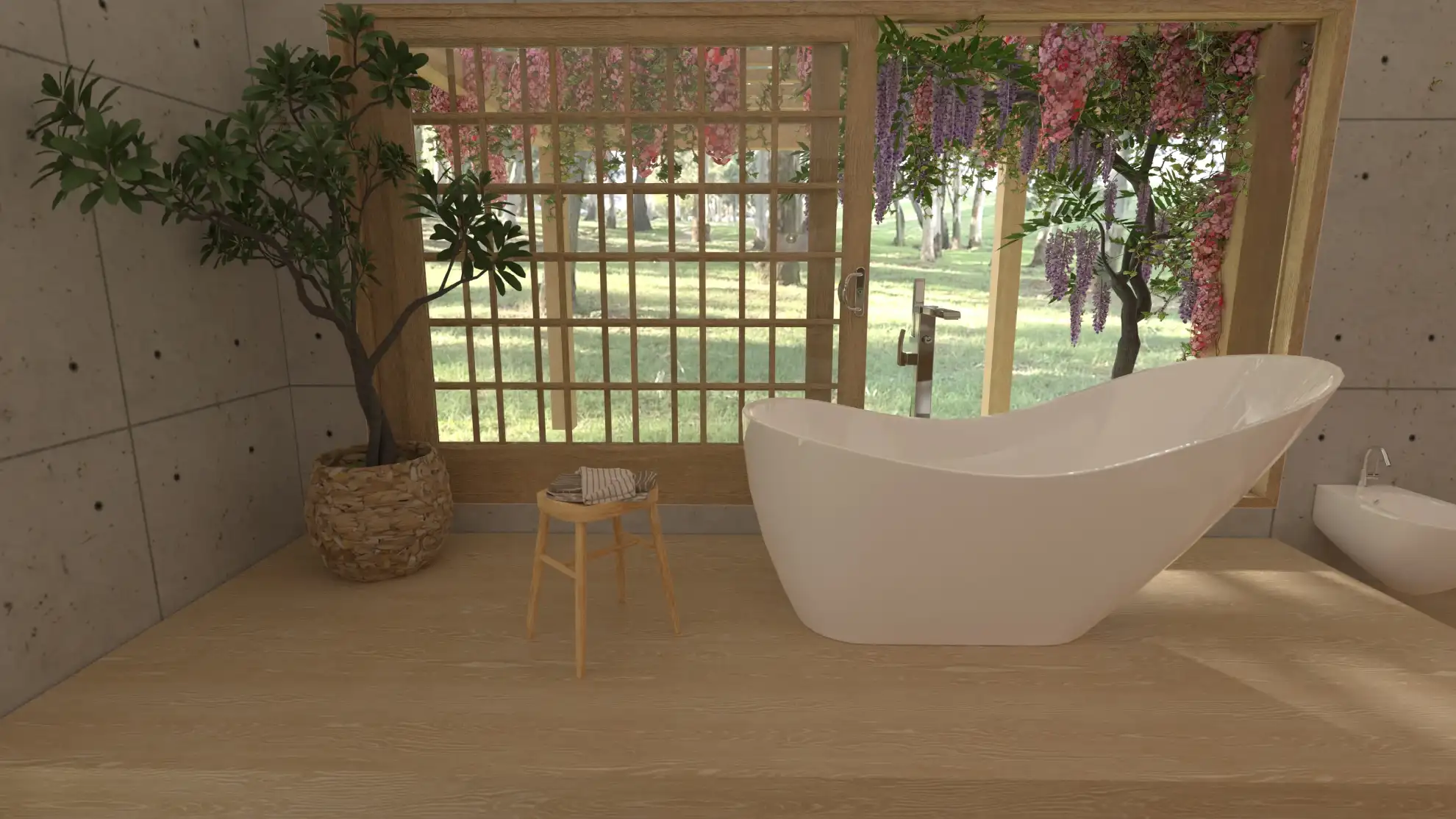
In practical terms, think of Japandi as warm, nature-focused minimalism with an emphasis on craftsmanship and comfort.
How to create a Japandi interior at home
You don't need a complete renovation to introduce Japandi style. Start with the elements that make the biggest visual difference and refine the space gradually.
- Simplify the room. Remove furniture and objects that make the space feel crowded, especially items that aren't useful or meaningful.
- Build a warm neutral palette. Use beige, cream, taupe, warm gray, and similar shades as a calm base for walls, furniture, rugs, and textiles.
- Bring in natural materials. Add wood, linen, stone, ceramics, woven fibers, and wool to create texture without relying on bold decoration.
- Choose simple, well-proportioned furniture. Clean silhouettes and enough open space around each piece help create the balanced look associated with Japandi interiors.
- Use fewer, stronger accessories. A ceramic vase, sculptural lamp, large plant, or handmade bowl can have more impact than several small decorative objects.
- Soften the room with warm lighting. Diffused light helps highlight natural textures and keeps the minimalist look from feeling too stark.
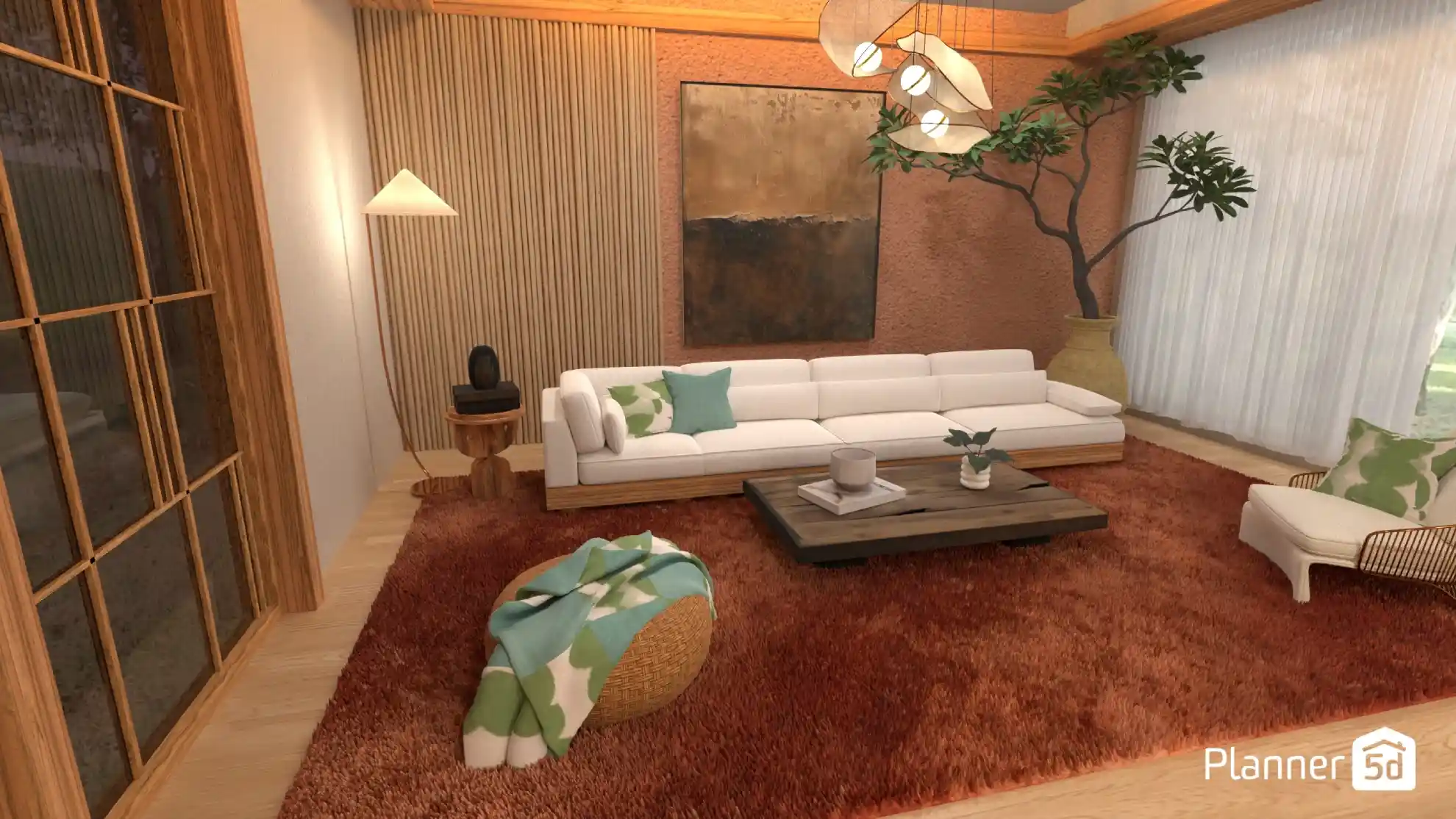
Once the basics are in place, the next challenge is seeing how the colors, materials, and furniture work together before making real changes.
Planner 5D can help you test different Japandi palettes, wood tones, room layouts, and furniture combinations in 2D and 3D, so you can refine the look before applying it to your space.
Planner 5D: The Future of Interior Design
Experience the power of AI-driven design with Planner 5D. Our innovative tools, including the AI Studio, Smart Wizard, and AI floor plan recognition, make bringing your dream home to life easier than ever. Transform your vision into reality and unlock a world of design possibilities today.
Start designingFAQ
What does Japandi style mean?
Japandi combines Japanese and Scandinavian design, bringing together minimalism, functionality, natural materials, and a warm, understated aesthetic.
What are the main colors in Japandi design?
Japandi colors usually include beige, cream, taupe, warm gray, brown, and muted green, often balanced with darker wood or black accents.
What is the difference between Japandi and Scandinavian style?
Scandinavian interiors are usually lighter and more casual. Japandi tends to use darker contrasts, fewer decorative objects, and stronger Japanese influences.
What kind of furniture is used in Japandi interiors?
Japandi furniture is simple, functional, and often made from natural wood. Low-profile pieces, clean silhouettes, and minimal ornamentation are common.
Is Japandi style still popular?
Yes. Japandi remains popular because its focus on natural materials, simplicity, comfort, and timeless design works well across different types of homes.
How can I make my home look Japandi?
Start with a warm neutral palette, reduce visual clutter, and add natural materials such as wood, linen, stone, and ceramics. Keep furniture simple and decor intentional.
