What Is Art Deco Design? Interior Style Explained
Learn the main features of Art Deco interior design and how to bring its bold patterns, colors and finishes into your home.
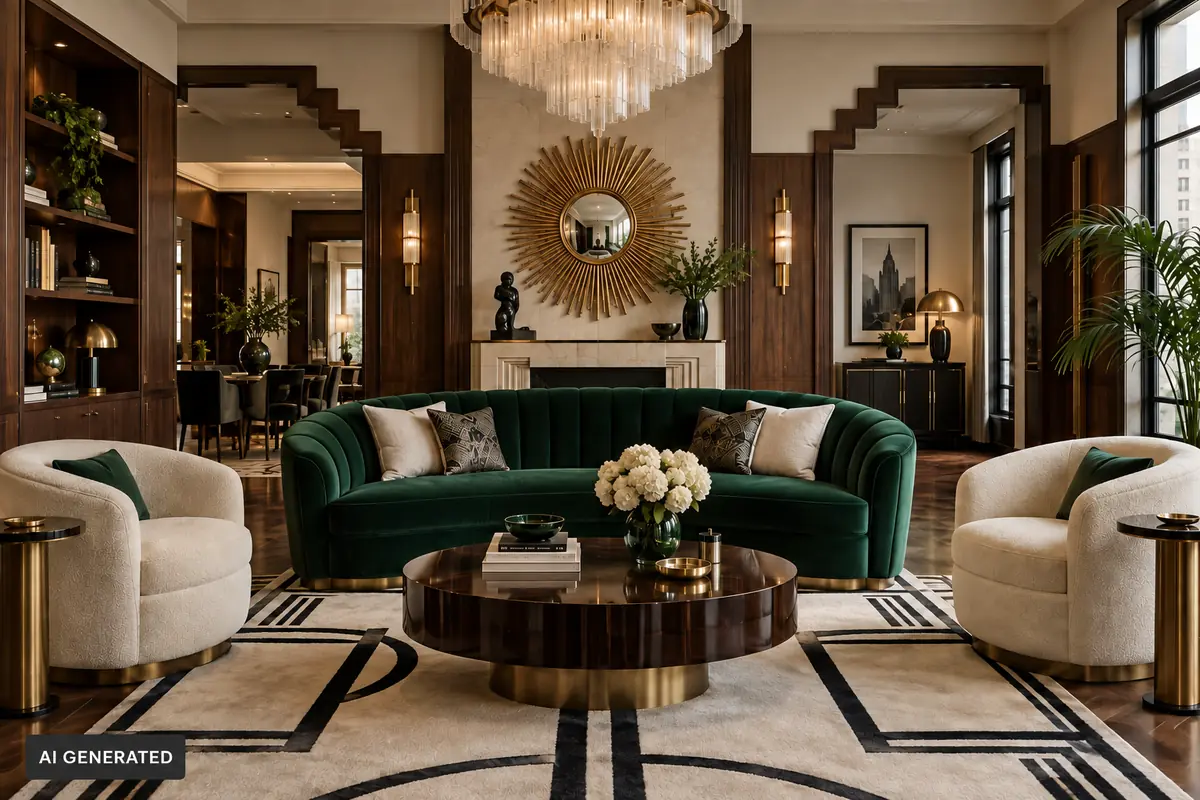
Art Deco interior style is characterized by bold geometry, symmetry, luxurious materials, polished finishes and dramatic decorative elements. The style emerged in the 1920s and 1930s, bringing together glamour, craftsmanship and the growing fascination with modern forms and materials.
In interiors, Art Deco is easy to recognize but doesn't depend on a single decorative feature. Strong shapes appear alongside rich colors, reflective surfaces, sculptural furniture and carefully balanced arrangements. The result can feel sophisticated and theatrical, but also remarkably structured.
What are the main characteristics of Art Deco interior design?
Understanding what is Art Deco interior style starts with recognizing the visual language behind it. Rather than relying on casual or organic arrangements, Art Deco interiors often look intentional. Shapes repeat, furniture is positioned deliberately and materials are chosen to catch the eye.
Geometric shapes and patterns
Chevrons, zigzags, sunbursts, fan shapes, stepped forms and repeating lines appear across everything from architecture to furniture and textiles. In a room, these patterns might show up on a rug, wallpaper, cabinet doors, tile or decorative screen.
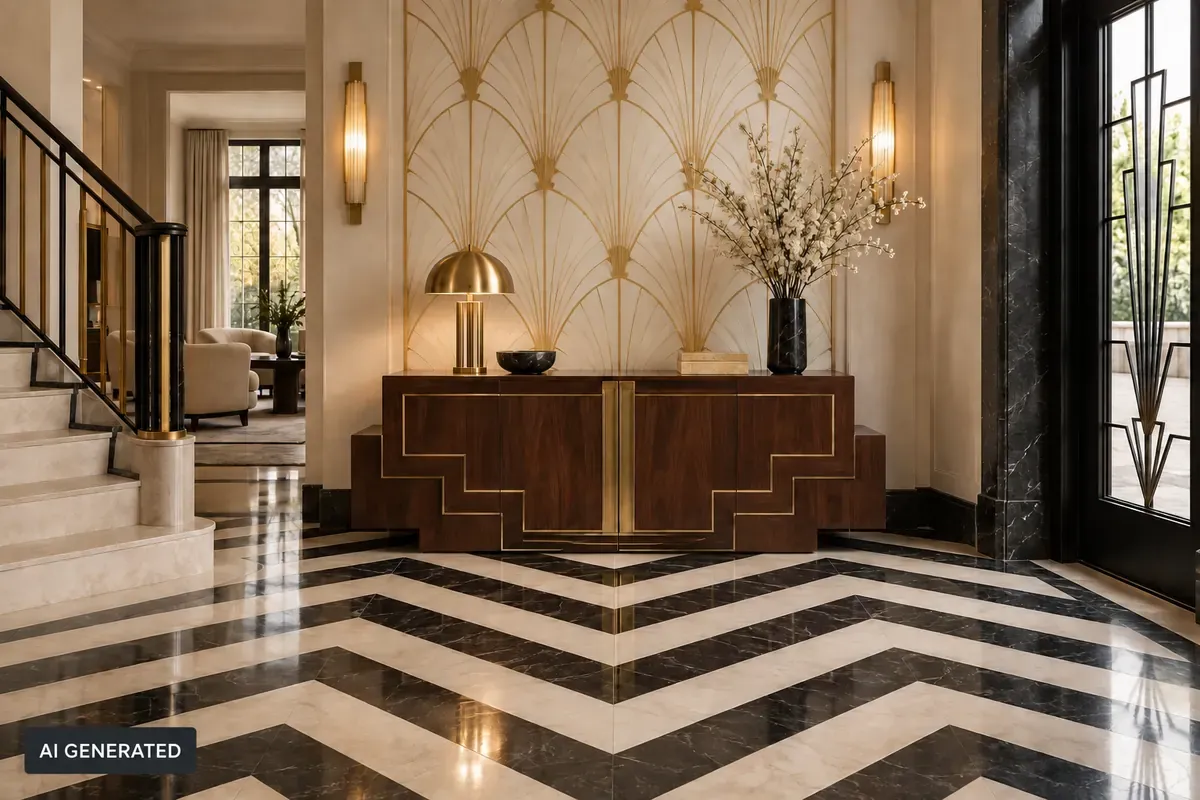
The pattern doesn't necessarily need to dominate the entire space. A geometric rug beneath simple furniture or a patterned wall behind a bed can establish the Art Deco influence without covering every surface in ornament.
Rich colors and contrast
Art Deco interiors often use color with confidence. Deep tones such as emerald green, navy blue and burgundy work particularly well against black, cream, ivory and warm metallic finishes.
Contrast is just as important as the individual colors. Black and gold can create a distinctly glamorous effect, whereas cream paired with dark wood and brass gives the room a softer interpretation of the style.
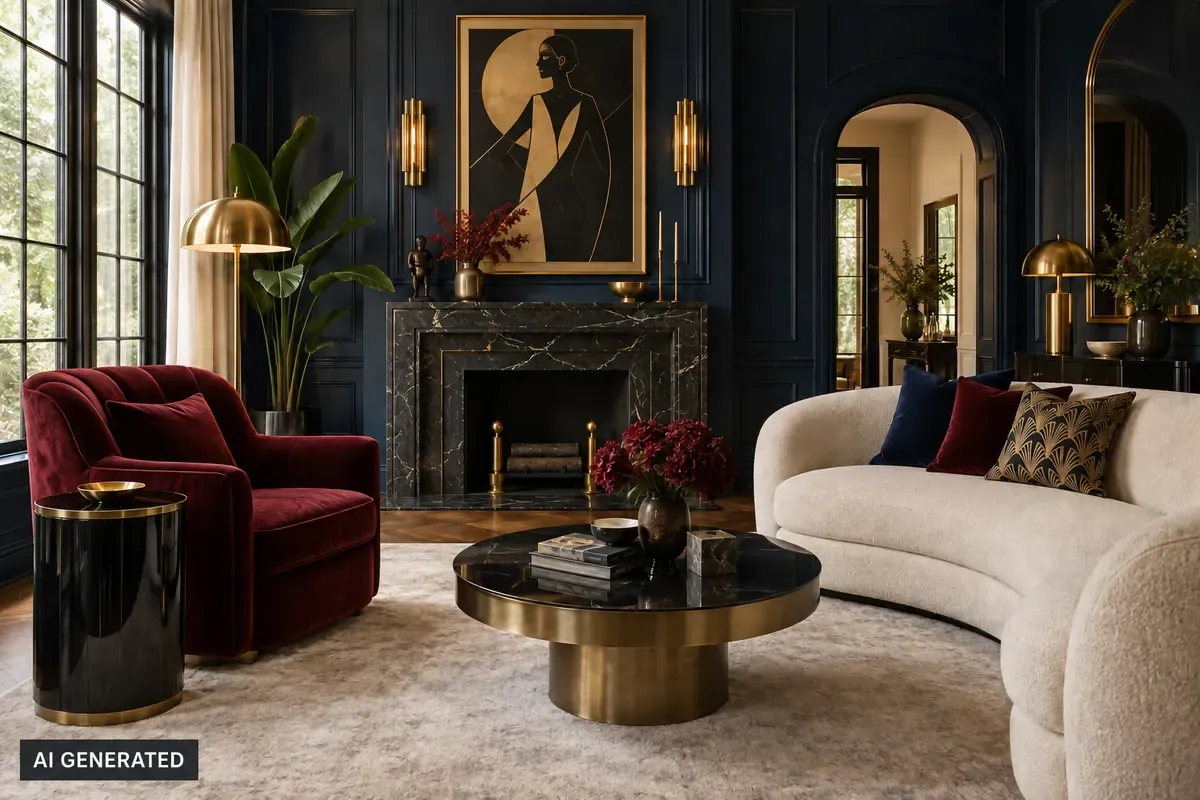
For a more contemporary result, one saturated color can become the focal point instead of using several bold shades throughout the room.
Luxurious materials
Materials give Art Deco much of its visual richness. Traditional interiors made extensive use of polished wood, marble, glass, chrome and lacquer, often combined with tactile upholstery such as velvet. Brass and other metallic details brought additional shine to furniture, mirrors and lighting.
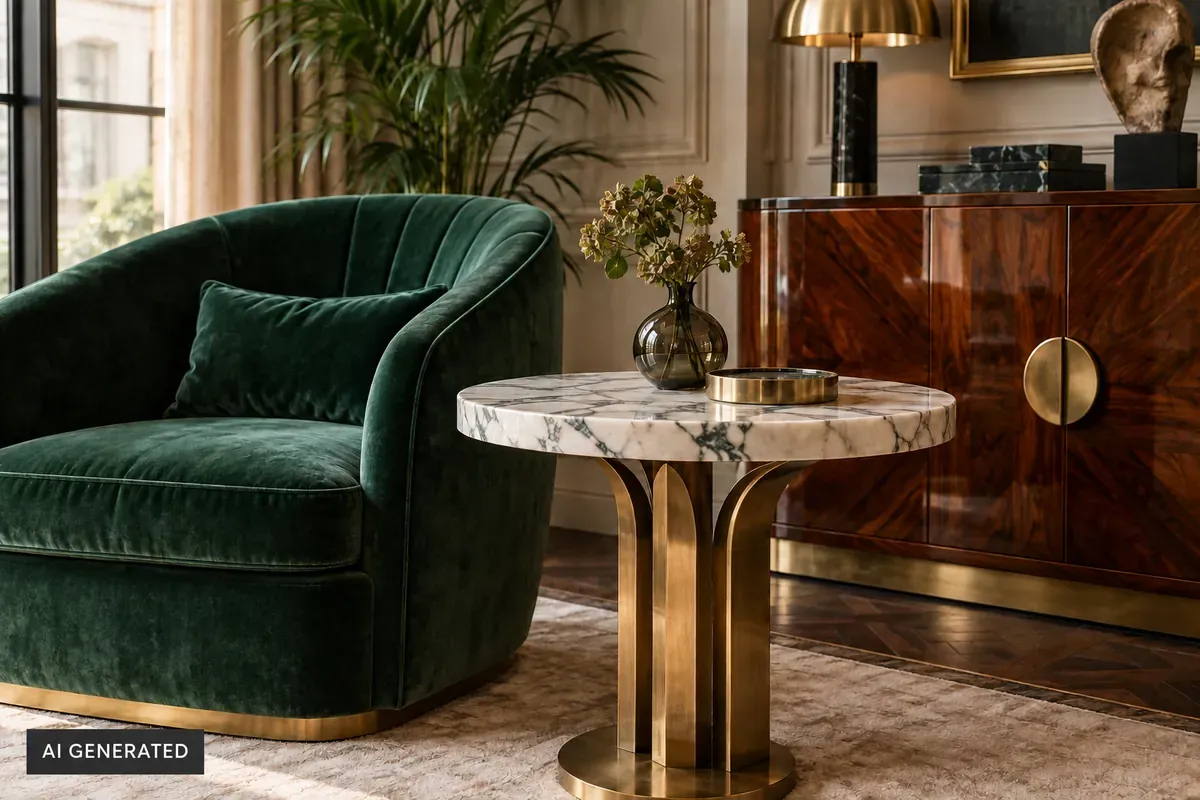
Some characteristic combinations include:
- marble with brass or chrome;
- velvet upholstery against polished wood;
- glass tables with sculptural metal bases;
- lacquered cabinetry with contrasting hardware;
- mirrored or glossy surfaces used as accents.
The common thread is finish. Art Deco tends to favor materials with visual depth, texture or sheen rather than deliberately rustic surfaces.
Symmetry
Art Deco rooms often have a strong sense of balance. Furniture may be arranged around a central feature such as a sofa, dining table or bed.
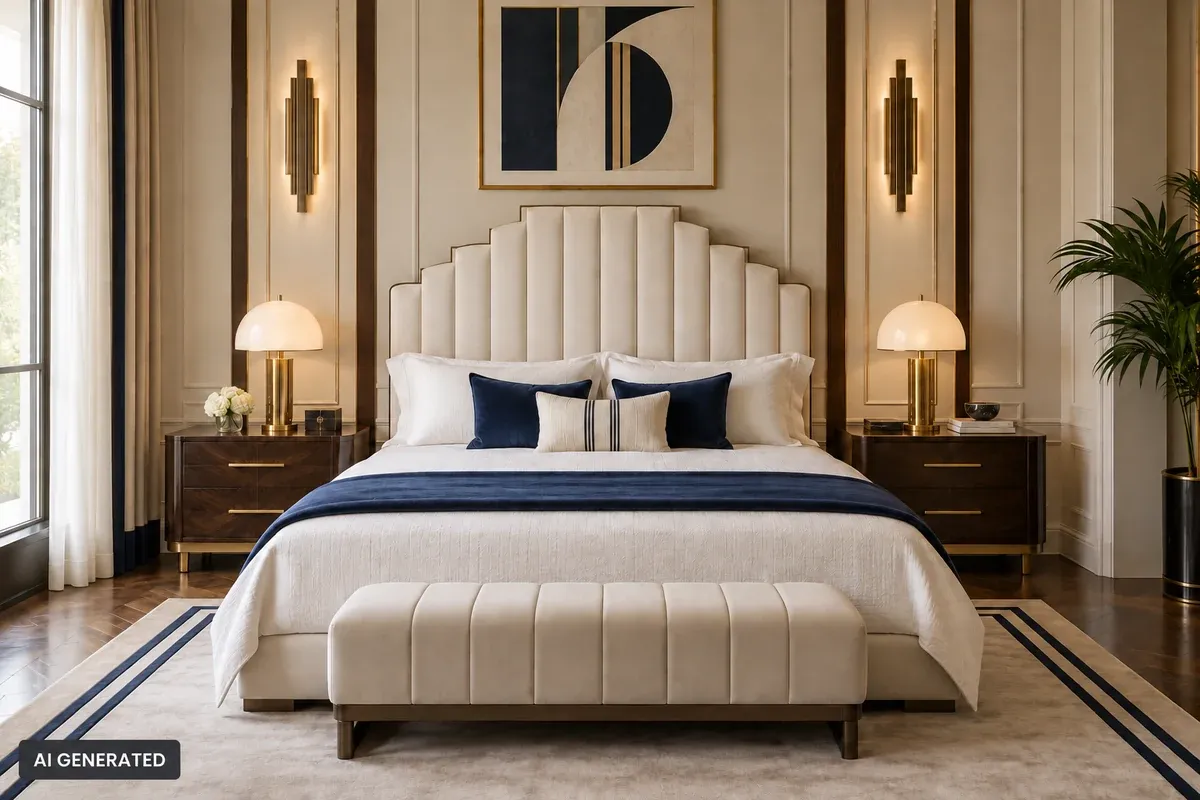
Matching bedside tables and lamps are a simple example. In a living room, two armchairs positioned opposite or beside a central sofa can establish the same visual order. This symmetry is one reason Art Deco interiors often feel formal even when the furniture itself includes rounded or expressive shapes.
Statement lighting
Lighting is rarely treated as an afterthought in an Art Deco room. Fixtures often function as decorative objects in their own right. Geometric chandeliers, tiered pendants, glass globes, wall sconces and metallic finishes all fit naturally into the style.
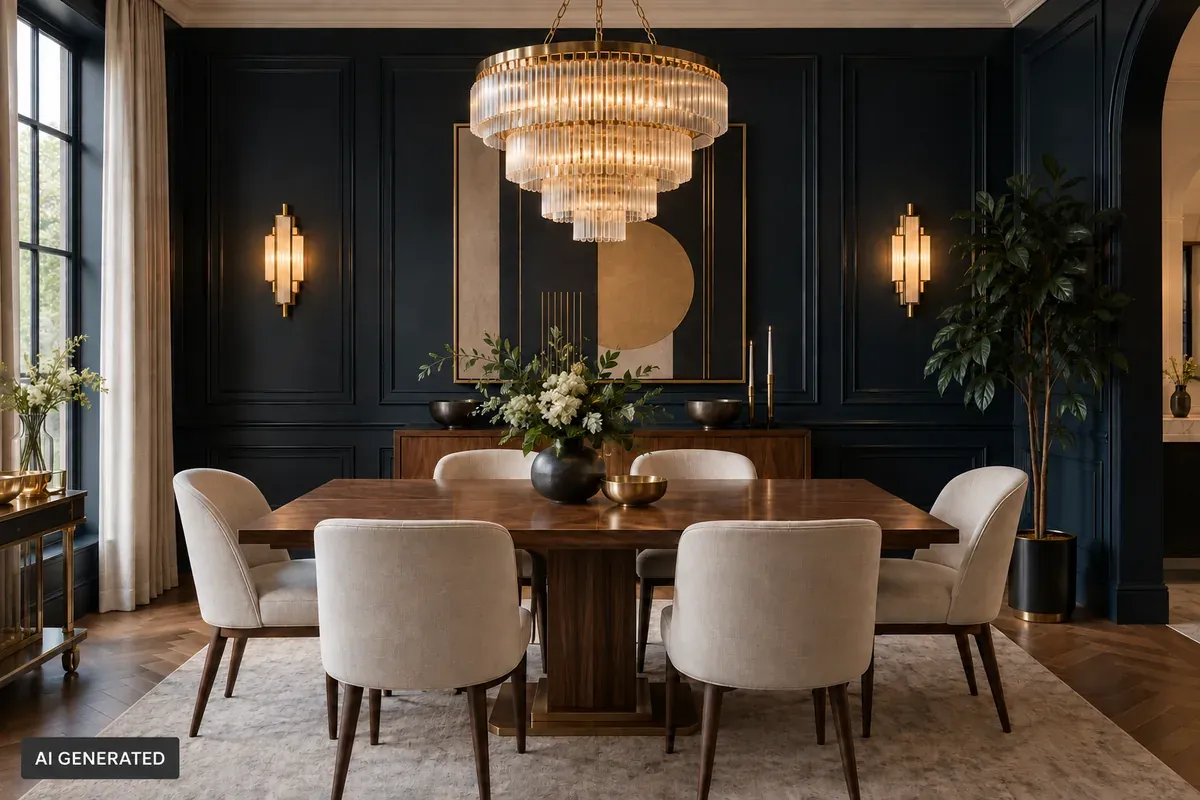
Frosted, smoked or ribbed glass can add another layer of detail without relying on elaborate ornament elsewhere. A strong ceiling fixture can also be an effective way to introduce Art Deco into an otherwise modern interior.
What furniture is used in Art Deco interiors?
Art Deco furniture sits somewhere between geometric precision and sculptural softness. Strong lines are common, but so are rounded backs, curved sofas and smooth edges. Recognizable pieces include:
- Curved sofas: Often upholstered in velvet or another rich fabric, with a rounded silhouette that adds softness to an otherwise structured room.
- Velvet armchairs: Deep jewel tones can turn a relatively simple chair into a strong decorative element.
- Lacquered cabinets: Glossy finishes, dark wood tones and metallic handles reinforce the polished character of the style.
- Mirrored furniture: Console tables, cabinets and side tables can introduce reflective surfaces without requiring large decorative mirrors.
- Geometric side tables: Circular, stepped or angular bases bring Art Deco geometry into smaller furniture pieces.
- Brass or chrome details: Metal may appear in legs, handles, frames, shelving or decorative trims.
How to decorate in Art Deco style
Decorating in Art Deco style becomes easier if you build the room around a few deliberate choices rather than trying to reproduce every characteristic at once.
1. Start with one strong color combination
Choose a palette before adding patterns and metallic finishes. Navy and brass, emerald and cream, burgundy and black, or ivory with dark wood can all provide a clear foundation.
2. Introduce geometric patterns
Use geometry where it has enough space to be noticeable. A rug, wallpapered accent wall, tiled floor or upholstered headboard can work better than scattering many small patterns around the room.
3. Add metallic or glossy finishes
Brass, chrome, mirrors, lacquer and glass help create the polished look associated with Art Deco. These elements can be relatively small: lamp bases, cabinet hardware or table frames may be enough.
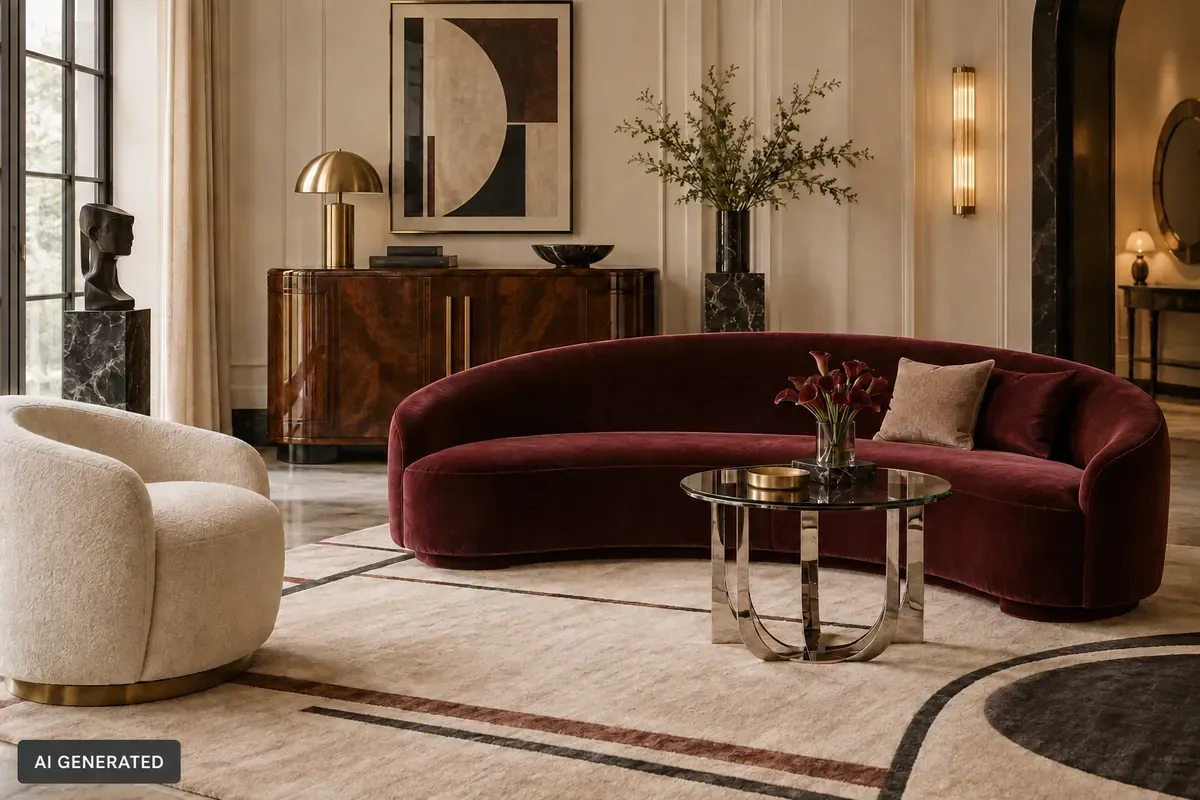
4. Choose one or two statement furniture pieces
Instead of filling the room with heavily stylized furniture, give one or two pieces more visual weight. A curved velvet sofa, sculptural cabinet or distinctive dining table can establish the direction of the room.
5. Use dramatic lighting
Consider lighting as part of the decor. A geometric pendant above a dining table, symmetrical sconces beside a mirror or a decorative chandelier can become a central design feature.
6. Bring structure to the arrangement
Look at the room from its main viewpoint and identify its visual center. Furniture placed deliberately around that point will usually feel closer to the structured character of Art Deco than an irregular arrangement.
Modern Art Deco vs. traditional Art Deco
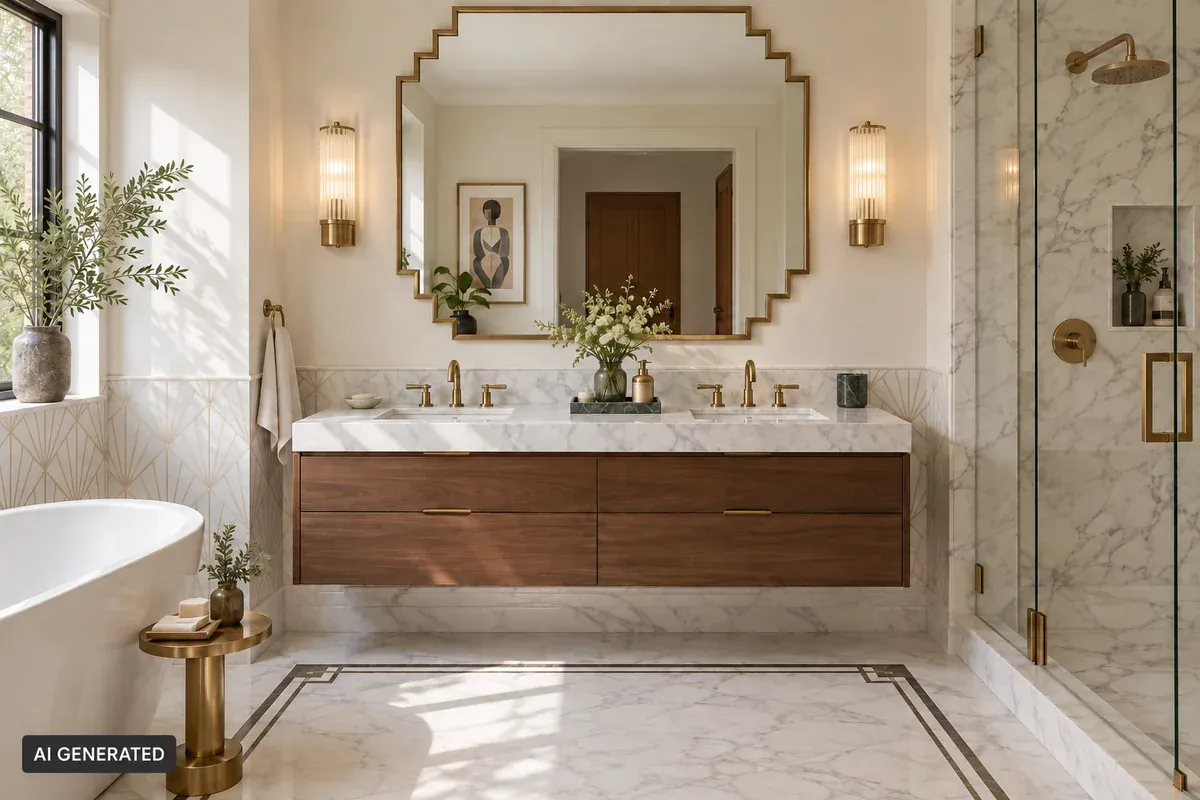
Traditional Art Deco interiors could be highly decorative, combining patterned surfaces, polished furniture, luxurious materials, sculptural lighting and strong color throughout the same space.
Modern homes usually take a more selective approach. Instead of recreating a complete 1920s or 1930s interior, contemporary Art Deco design often borrows a few recognizable features and combines them with simpler architecture and furniture.
If you want to explore how Art Deco could work in your own space, Planner 5D's AI tools can help you test different directions before committing to a design. AI Studio can generate visual concepts with different colors, materials, furniture and decorative details, while Planner 5D Copilot can help you develop and refine the project directly inside the editor using natural-language instructions.
Focus on your ideas. Put Copilot to work.
Describe what you want to create and let Planner 5D Copilot help turn your ideas into an editable 2D and 3D design.
Try Planner 5D Copilot →FAQ
What colors define Art Deco interior design?
Emerald green, navy, burgundy and black are common choices in Art Deco design, often combined with cream, ivory, gold, brass or chrome. Modern versions may use a more restrained neutral palette with one strong accent color.
What materials are commonly used in Art Deco?
Typical Art Deco materials include marble, velvet, polished wood, brass, chrome, glass, mirrors and lacquer. Smooth, glossy and reflective finishes are especially characteristic of the style.
What is the difference between Art Deco and Art Nouveau?
Art Nouveau developed earlier and is known for flowing lines, botanical motifs and organic forms. Art Deco generally favors stronger geometry, symmetry, stepped shapes, polished materials and a more structured appearance.
Can Art Deco work in a modern home?
Yes. Modern Art Deco interiors usually incorporate selected elements rather than reproducing the style completely. Geometric patterns, curved furniture, statement lighting or metallic finishes can introduce the look without changing the entire room.
How do you make a room look Art Deco?
Begin with a defined color palette, then introduce geometric shapes, polished materials and one or two statement pieces. Symmetrical furniture placement and decorative lighting can strengthen the Art Deco character without requiring every element in the room to follow the style.
