Glossary: 25 Architecture Terms You'll Find Useful
These words will help introduce you to the world of architecture. From ancient Greece to contemporary architecture, discover 25 essential architectural terms.
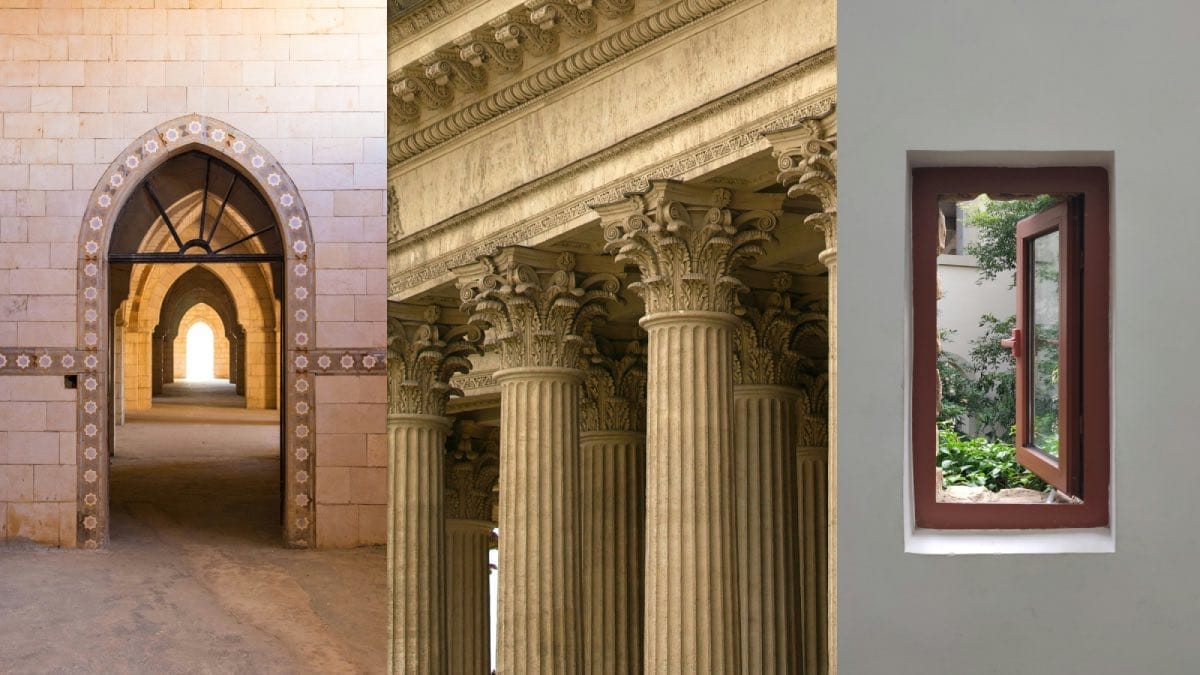
As in any other sector, there are countless terms in architecture and construction that help professionals and enthusiasts express ideas, describe projects, and define styles. In this article, we collect 25 of those architecture words you should know: from construction trends to architectural details or technical issues.
From A to Z, 25 Essential Architecture Words
Arch
An arch is a structure (usually curved) that spans a door, window, or passage, transmitting the weight of the upper wall and roof to the lateral supports. Throughout history, different architectural movements have given life to multiple types of arches with various silhouettes. Some of the most striking arches include:
- Semicircular arch: Typical of Roman and Romanesque architectural works.
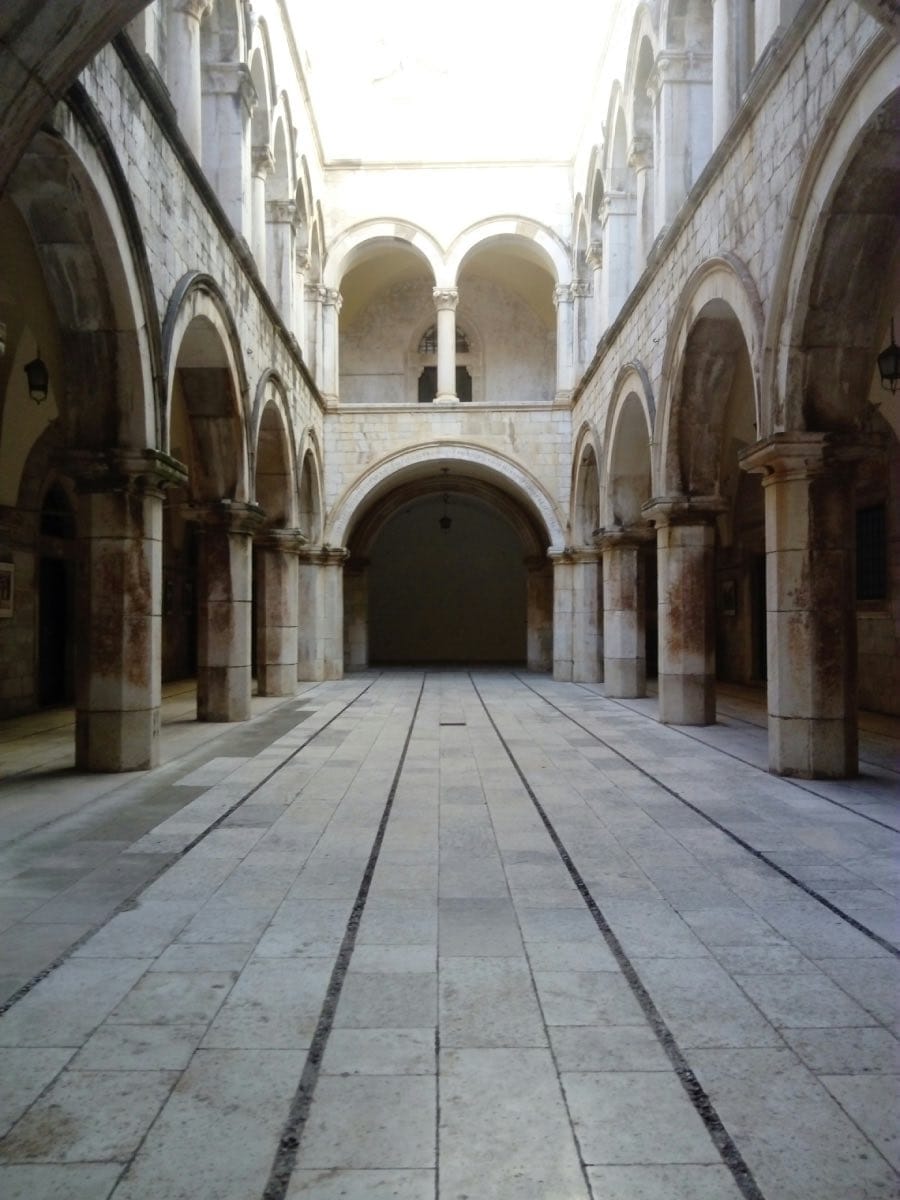
- Ogive or pointed arch: With a point at the upper end. Characteristic of the Gothic style, these arches allowed for greater heights and structural lightness.
- Polylobed arch: With several lobes or interior curves, common in Islamic architecture.
- Flat arch: Not curved, but completely straight and horizontal, formed by a horizontal lintel over two supports. It is considered an arch because it is built through independent pieces (known as voussoirs) instead of a single upper beam.
Brutalism
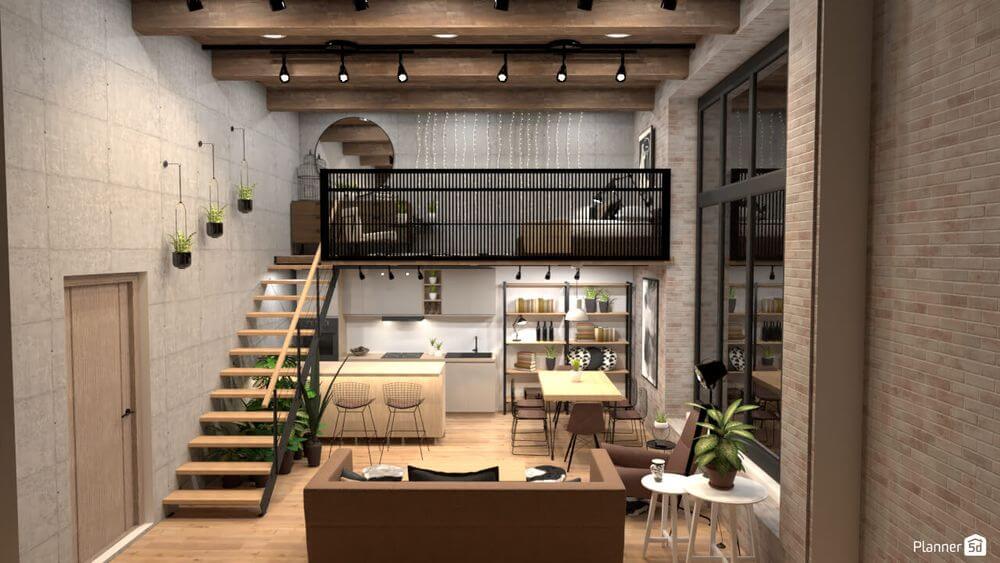
Brutalism is an architectural style that emerged in the mid-20th century, characterized by the use of raw concrete (French béton brut), imposing volumes, and simple geometric shapes. Brutalist architecture explores the concept of structural honesty by leaving the original textures of materials and installations like pipes and other supports exposed.
Buttress
A buttress is an extra section of wall or attached pillar added to the exterior of another wall to resist the lateral thrust of a vault or roof. It is a very frequent detail in Gothic architecture, whether on its own or accompanying a flying buttress. Buttresses provide stability and monumentality to structures.

CAD or Computer-Aided Design
The term CAD—Computer-Aided Design—refers to the use of specialized software tools to create plans, 3D models, or simulations of structures. It is an essential tool in contemporary architecture, engineering, and modern urbanism. It allows for maximum precision, speed, and even digital collaboration between professionals.
Planner 5D: The Future of Interior Design
Experience the power of AI-driven design with Planner 5D. Our innovative tools, including the Design Generator, Smart Wizard, and AI floor plan recognition, make bringing your dream home to life easier than ever. Transform your vision into reality and unlock a world of design possibilities today.
Start designing your dream homeCross-bracing
Cross-bracing is a contemporary structural system consisting of the use of diagonal or transverse elements that reinforce a structure, preventing its deformation under heavy loads or pressures such as winds and other movements. It is common in bridges, large warehouse roofs, towers, or tall buildings, and is fundamental in modern and contemporary architecture.
Deconstructivism
Deconstructivism is a movement of contemporary architecture that emerged around the 80s. It is characterized by playing with fragmented forms, complex geometries, and dynamic, twisted structures. Zaha Hadid, Frank Gehry, or Peter Eisenman are some of the figures who have explored this trend, with works as famous as Gehry's Guggenheim Museum in Bilbao.
Diagram
A diagram is a simplified visual representation that explains the structure, functioning, or relationships of an architectural project. It helps to understand the spatial concept or the flow of movements within a building.
Dimension, in technical drawing
In technical drawing, a dimension is a line that indicates the scale, dimensions, heights, or real distances of an object or building represented on a plane. It is essential for communicating scale and proportions in architectural plans.
Dome
The dome is an architectural structure of hemispherical shape that covers a circular or polygonal space. It is a system originating from Roman and Byzantine architecture but was widely used later in the Renaissance and Baroque periods. There are many emblematic examples, but some stand out, such as St. Peter's Dome or that of the Pantheon, in the Vatican and Rome respectively.
Eave
In architecture, the eave is the lower part of the roof that projects beyond the line of the facade, protecting the walls from rain, sun, or snow. Its main function is to prevent rainwater and direct sun from falling directly onto the walls, thus prolonging the life of the building. Eaves can be simple or decorated in different ways, according to the style of the construction. In warmer climates, it is common to see houses with very deep or overhanging eaves to protect windows and facades from the sun's rays.
Elevation
The elevation is a type of architectural drawing: it is the graphic representation of a facade or vertical view of a building. It allows one to understand the external appearance—height, proportions, windows, doors, and decorative details—as it would be seen from a front or side point of view. In the glossary of architecture terms, it is an essential tool for communication between architects, engineers, builders, and clients.
Fenestration
Fenestration refers to the arrangement, shape, style, and proportion of windows on a facade. The design of a building's fenestration depends on its style, its interior layout, the desired natural lighting, ventilation needs, and its aesthetics.
Flying Buttress
A flying buttress is a sort of arch placed on the exterior of a building. It is an external structural element that transmits the lateral thrust of a vault or roof toward a buttress. Very characteristic of Gothic architecture, it allowed for the construction of high cathedrals and thinner walls filled with stained glass windows.
Frieze
A frieze or decorative band runs along the top or bottom of a wall, ceiling, curtain, or furniture. It can be painted, carved, embroidered, or made with tiles, and its function is mainly aesthetic, although it also helps to finish off spaces. They are a very classic detail, used from antiquity to the present day.
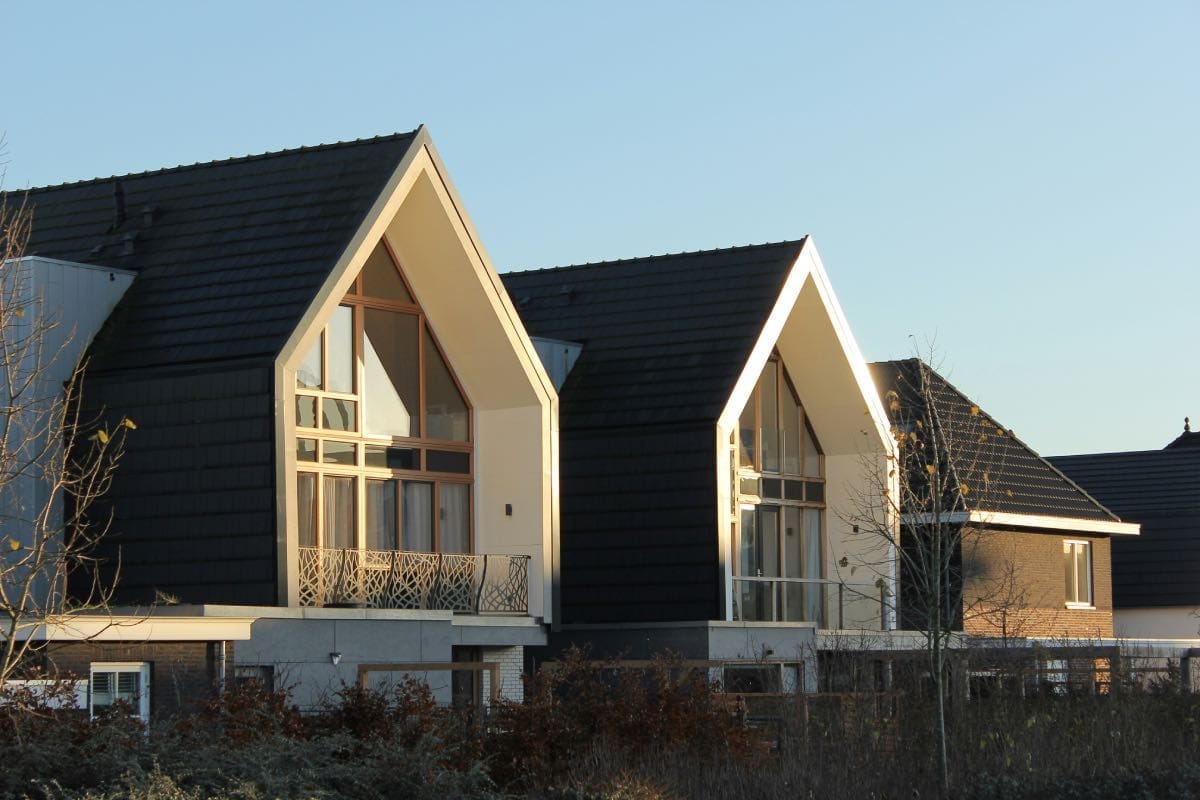
Gabled Roof
A gabled roof is a type of roof formed by two inclined planes that start from a central line and descend outward, causing rainwater to flow down the sides. This is one of the most common types of roofing, but there are also other types of roofs, such as shed roofs (one inclined plane), hipped roofs (four inclined planes), flat roofs, butterfly roofs (inclined toward the center), or mansard roofs (four-sided with different slopes for an interior attic), each with its own structural and aesthetic characteristics.
Horizontality
In architecture, we speak of horizontality when low volumes and horizontal lines predominate over vertical ones. Generally, these forms convey a sense of stability and serenity. Some of the most famous examples include Frank Lloyd Wright's Prairie Houses, true icons of 20th-century modern architecture.
Lintel
A lintel is a beam or horizontal piece that covers an opening—such as a door or window—resting on two vertical supports. It is the oldest system for covering openings, predating the development of the arch. It is present throughout the entire history of architecture, from classical to modern or contemporary architecture.

Modular
The term modular refers to design systems based on repeating units (modules) that can be combined to create larger structures. It is used in architecture as well as urbanism and industrial design, where modular furniture has become a significant trend in recent years.
Open Floor Plan
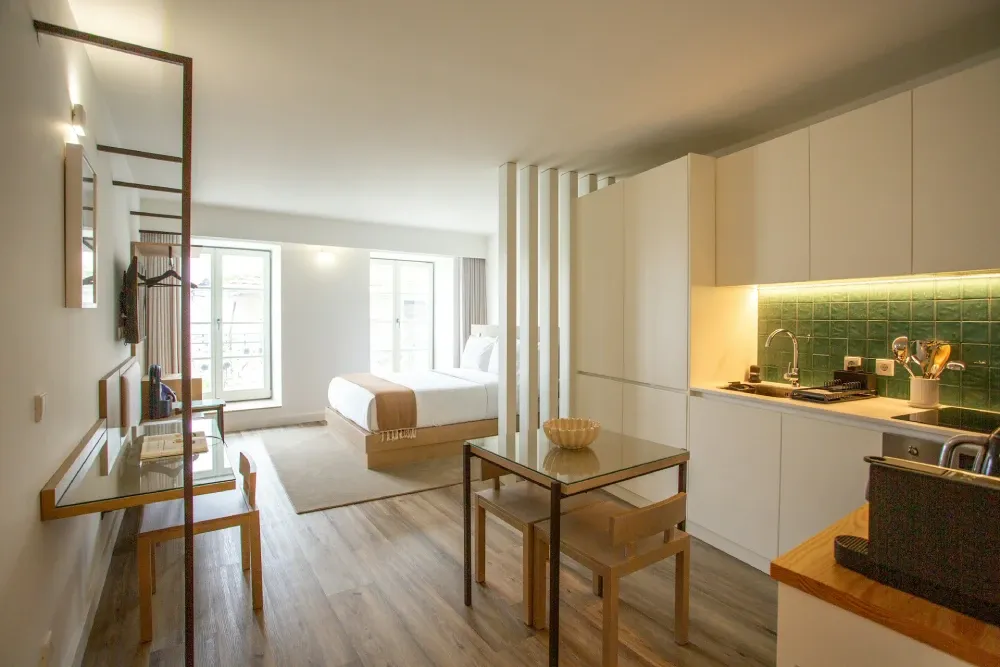
The open floor plan is a design principle that eliminates interior structural walls, offering great spaciousness and spatial flexibility. Introduced by some of the leading architects of the 20th century, such as Le Corbusier, the open floor plan is essential in modern architecture, especially in contemporary offices and homes.
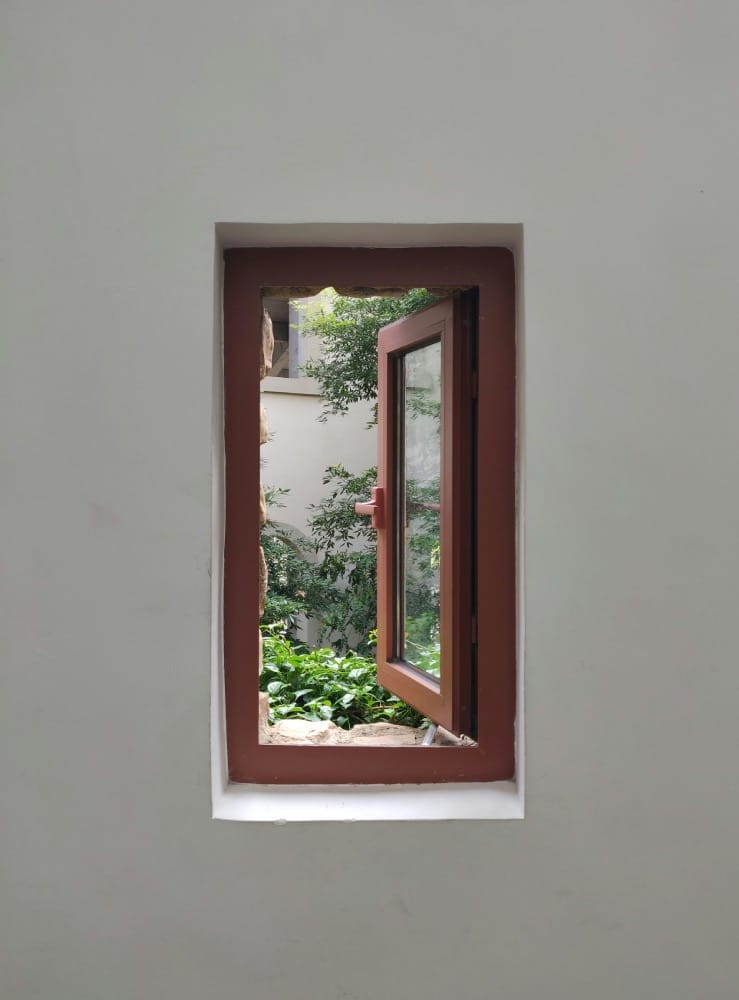
Opening
An opening is the open space in a wall or between two structural elements (for example, between two pillars). It can be a door, window, or arch. Its design directly influences the lighting, ventilation, and aesthetics of any building.
Sketch
A sketch is a quick, freehand drawing used to capture an architectural idea or a spatial concept. It does not require the technical precision of a detailed plan but communicates the essence of the project. In any dictionary of architecture terms, the sketch is considered the first stage of the creative process.
Tension
In structural terms, tension is the force caused by gravity and the weight of materials that tends to stretch or pull apart elements of a structure. Its control is a key part of any engineering or architectural project, especially in bridges, roofs, and heavy structures.
Vault
A vault is the structure that results from extending an arch—a curved architectural structure used to cover a space. Its shape allows loads to be distributed efficiently between two lateral supports, freeing the ends. Like arches, vaults have developed different silhouettes throughout history:
- Barrel vault: Semicircular and continuous, typical of classical Roman and Romanesque architecture.
- Groin vault: Formed by the intersection of two barrel vaults, it allows for covering square spaces.
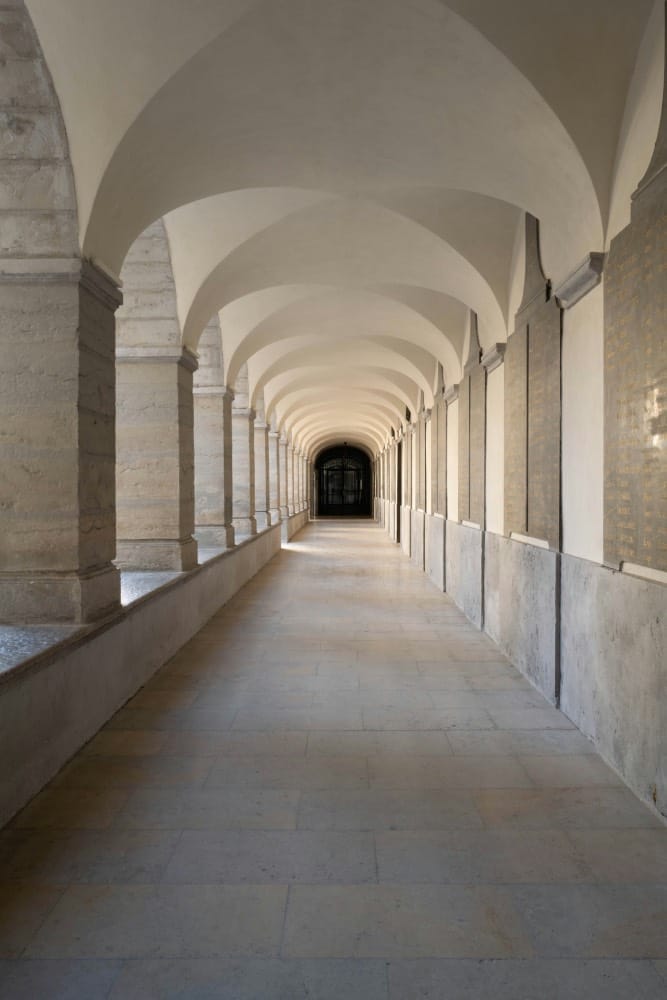
- Rib vault: Characteristic of Gothic, with ribs that reinforce the structure and provide lightness.
Verticality
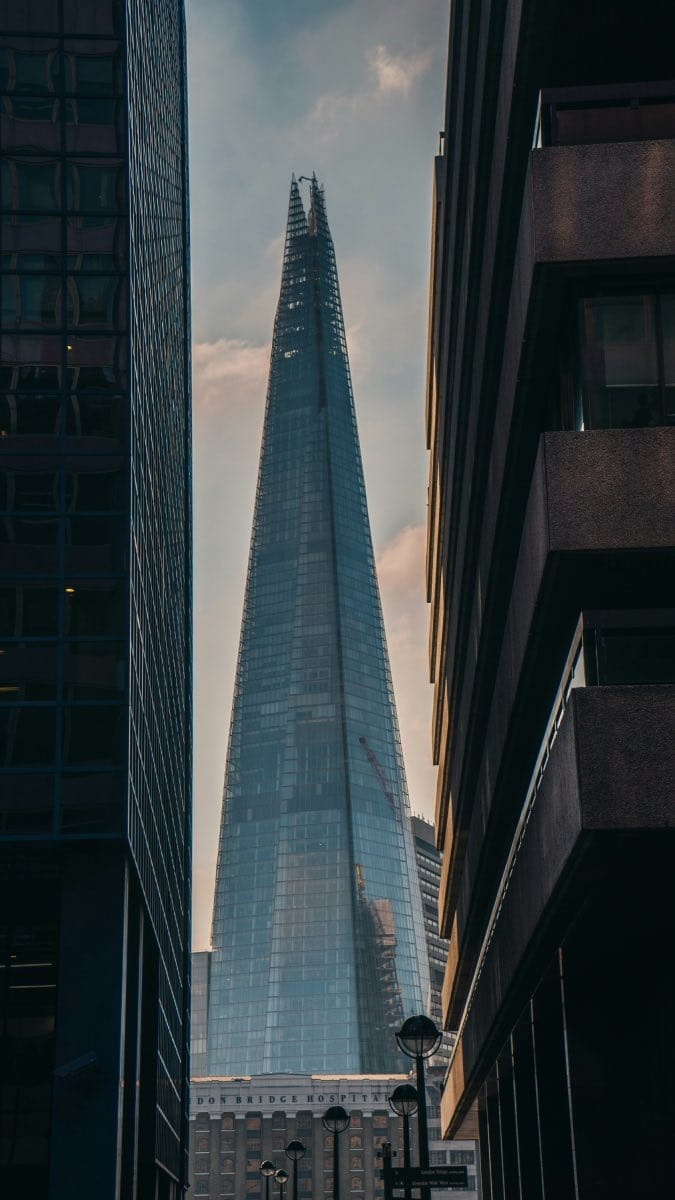
Contrary to horizontality, verticality is the tendency of a construction to express maximum height, with emphasis on vertical lines extending toward the sky. The best expression of this effect is modern and contemporary skyscrapers, although the effect of verticality was already sought during the Middle Ages with the Gothic style.
Wall Surface
The wall surface is the visible face of a wall, whether exterior or interior. It can be smooth, coated, or decorated, and based on the type of bricks, slabs, or stones, it reflects the architectural style and construction techniques of each era.
Frequently Asked Questions
Where does the term architecture come from?
The origin of the word architecture comes from the Latin architectura, itself derived from the Greek arkhitékton, which means "chief of builders" or "master builder."
What to do after finishing an architecture degree?
After finishing an architecture degree, you can work in architectural firms, interior design, or even specialize in specific areas such as sustainability or urbanism.
At what age is an architecture degree finished?
It normally takes between 5 and 6 years to complete an architecture degree.