Standard Height for Kitchen Counters Explained
Learn the standard kitchen counter height in inches and cm, plus tips for bar, baking, and custom heights for the perfect fit.
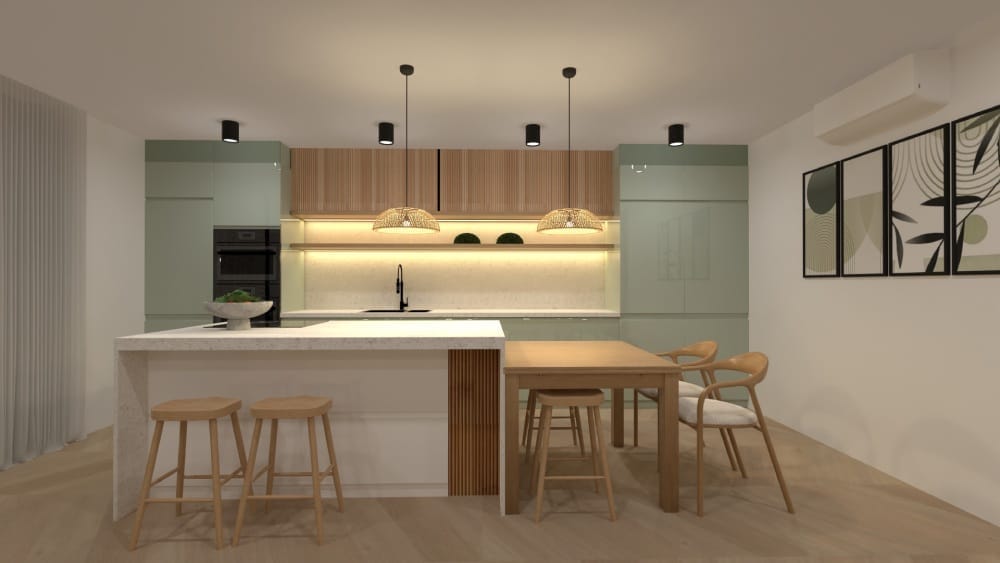
When you’re designing or renovating a kitchen, the standard kitchen counter height is one of the first numbers to lock in. Getting it right ensures comfort, efficiency, and a kitchen that works for everyone in your home.
What is the standard kitchen counter height?
In most modern kitchens, the standard height of a kitchen counter is 36 inches, which equals 91.5 centimeters.
This measurement includes the countertop thickness, not just the cabinet box. It’s a height that suits most adults for tasks like chopping vegetables, mixing ingredients, or unloading the dishwasher.
Want to design your dream kitchen faster?
Let AI do the heavy lifting with Planner 5D.
Why 36 inches? Over decades, kitchen design standards evolved to fit the average person’s comfort zone when standing. It’s high enough to reduce back strain when prepping food, but low enough for most people to use comfortably.
Quick answer:
- Standard kitchen counter height: 36 in (91.5 cm)
- Fits most people between 5'3" and 5'8" (160–173 cm) tall
- Works with standard appliance heights
Height in inches vs. centimeters
If you’re working with metric plans, here’s a quick reference for standard kitchen counter height in cm and related measurements:
| Counter type | Inches | Centimeters |
|---|---|---|
| Standard counter | 36 in | 91.5 cm |
| Bar-height counter | 42 in | 107 cm |
| Lower baking surface | 30 in | 76 cm |
Remember, even a 1–2 cm difference can affect comfort if you spend a lot of time cooking.
Bar height and lower counters
Not every surface in the kitchen follows the same rule. Some layouts incorporate different heights for style and function.
Bar counters:
- A standard counter height kitchen often pairs a 36-inch prep surface with a higher bar counter at 42 inches (107 cm). This creates a visual divide and is comfortable for bar stools.
Lower baking surfaces:
- For dedicated baking stations, the counter height often drops to 30 inches (76 cm). This makes it easier to knead dough or roll pastry without overreaching, especially for shorter users.
Mixing heights adds flexibility to your kitchen and can make it more ergonomic for specific tasks.
Want to design your dream kitchen?
Try the Planner 5D kitchen designer today
When to adjust counter height
While the standard height of a kitchen counter works for most people, there are times when you should customise:
- Taller users: If most users are over 6 feet (183 cm) tall, raising counters to 37–39 inches (94–99 cm) can reduce stooping.
- Shorter users: If most are under 5'3" (160 cm), lowering counters to 34–35 inches (86–89 cm) improves reach and comfort.
- Accessibility needs: For wheelchair users, counters often range between 28–34 inches (71–86 cm), depending on chair height and clearance.
- Specialised tasks: Baking or seated prep areas can benefit from lower sections.
Tip: Before committing to a custom build, simulate the height of the counter. Stack cutting boards or plywood on a table, or adjust a workbench, then test for a few days. This small step can save you from long-term discomfort.
Conclusion
The standard kitchen counter height of 36 inches (91.5 cm) works for most homes, but it’s not a one-size-fits-all rule. Think about who will use the kitchen, what tasks they do most, and whether different heights could improve comfort and function. A little planning here will pay off for years.
FAQ
Is kitchen counter height the same everywhere?
Not exactly. While 36 inches is standard in North America, some European kitchens vary slightly, especially in older homes.
Does counter height include the countertop?
Yes. The 36-inch measurement includes both the cabinet and the countertop thickness.
Can I mix counter heights in one kitchen?
Absolutely. Many kitchens combine standard prep height with bar or baking stations for flexibility.
Planner 5D: The Future of Interior Design
Experience the power of AI-driven design with Planner 5D. Our innovative tools, including the Design Generator, Smart Wizard, and AI floor plan recognition, make bringing your dream home to life easier than ever. Transform your vision into reality and unlock a world of design possibilities today.
Start designing your dream home