How to Decorate a House with an Open Floor Plan
Unsure about how to decorate your open-concept floor plan? Here are a few tips to help you.
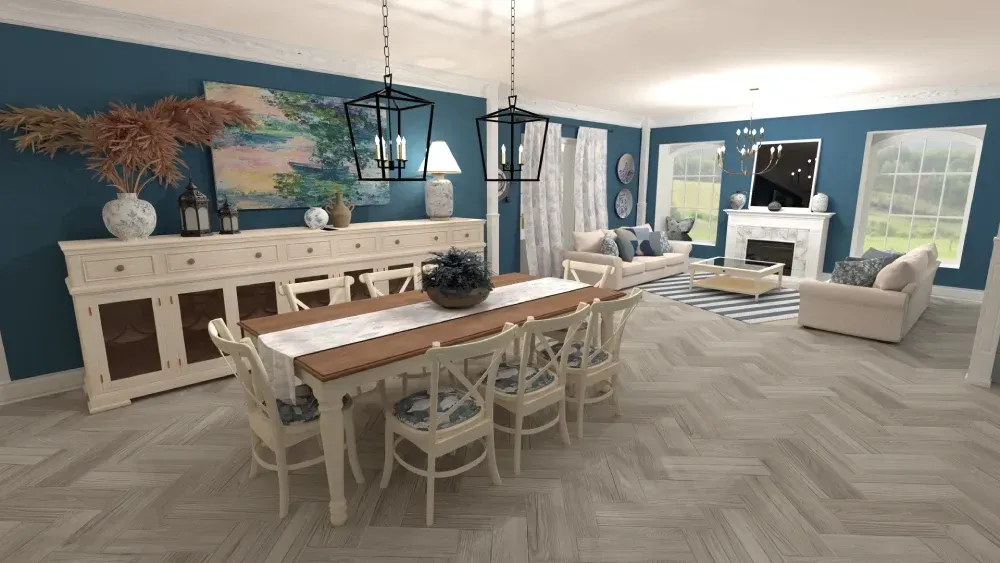
Open concept floor plans have become the heart of modern homes, and it's easy to see why. These spaces feel bigger, brighter, and bring families together in ways that traditional layouts can't match. But here's the thing - having all that open space doesn't automatically make it easy to decorate.
Many homeowners find themselves staring at their large, open area, wondering where to put the sofa, how to separate the kitchen from the living room, or why their beautiful space feels more like an empty warehouse than a cozy home.
The good news? You can transform your open floor plan into a well-organized and cohesive space that suits your lifestyle. This guide will teach you to think like a professional organizer, breaking down the key strategies that make open concept spaces both beautiful and functional.
Open floor plan vs open concept - what's the difference?
You'll often hear these terms used interchangeably, but they have slight differences worth knowing. An open floor plan refers to a basic layout where walls between common areas, such as the kitchen, dining room, and living room, have been removed or never existed.
Want to design your dream home faster?
Let AI do the heavy lifting with Planner 5D.
Open-concept design takes it a step further. It's the design philosophy that treats these connected spaces as one flowing area. While an open floor plan is about the structure, an open concept is about how you approach decorating and living in that space.
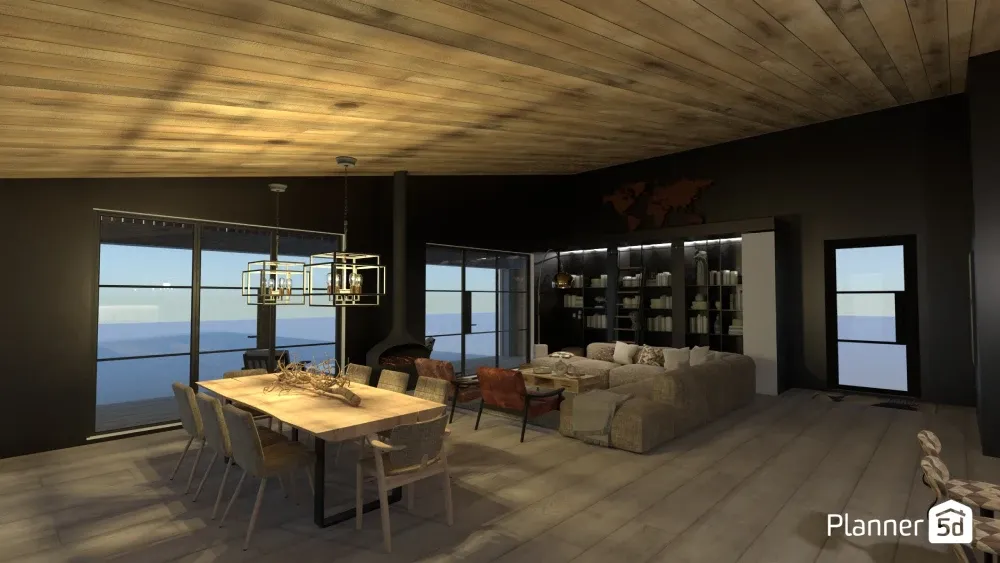
Both terms describe the same basic idea - fewer walls, more connections. Most people use them the same way, and that's perfectly fine. What matters more is making your space work for you.
Benefits of an open concept floor plan
Open concept spaces offer real advantages that make them popular with families and entertainers. The biggest benefit is how they make homes feel larger. Without walls blocking your view, even smaller spaces feel more spacious and airy.
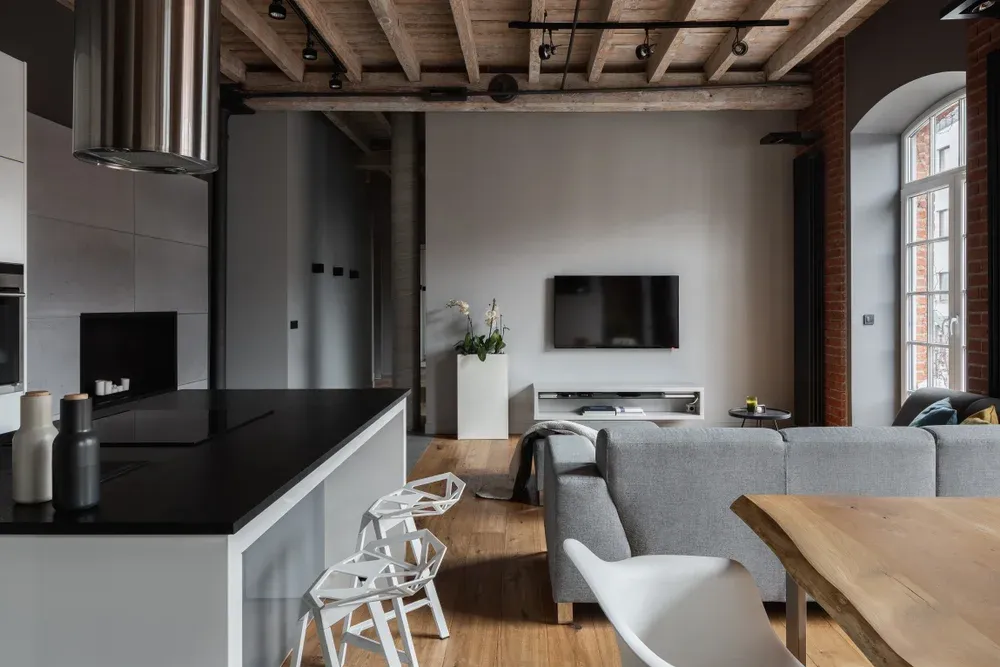
These layouts also improve natural light flow. Light from windows can reach deeper into your home, reducing the need for artificial lighting during the day. This creates a brighter, more welcoming atmosphere throughout your living areas.
Drawbacks of an open concept design
Open concept floor plans aren't perfect, and they don't work for everyone. The lack of walls means noise travels freely throughout the space. Cooking smells, TV sounds, and conversations all mix together, which can feel overwhelming at times.
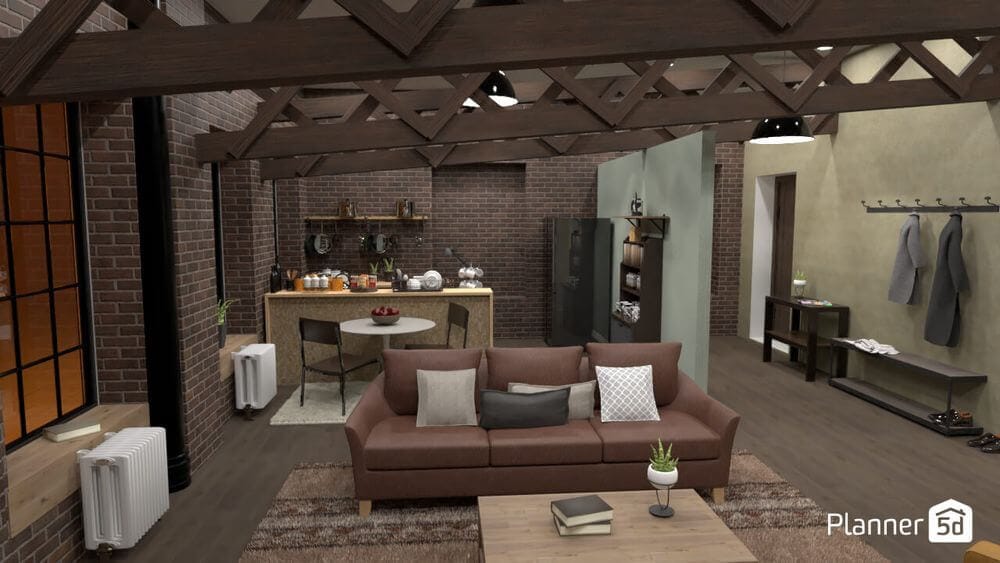
Storage can also be a challenge. Traditional layouts give you walls for built-ins and furniture placement. Open concepts require more creative storage solutions to keep everything organized without creating visual clutter.
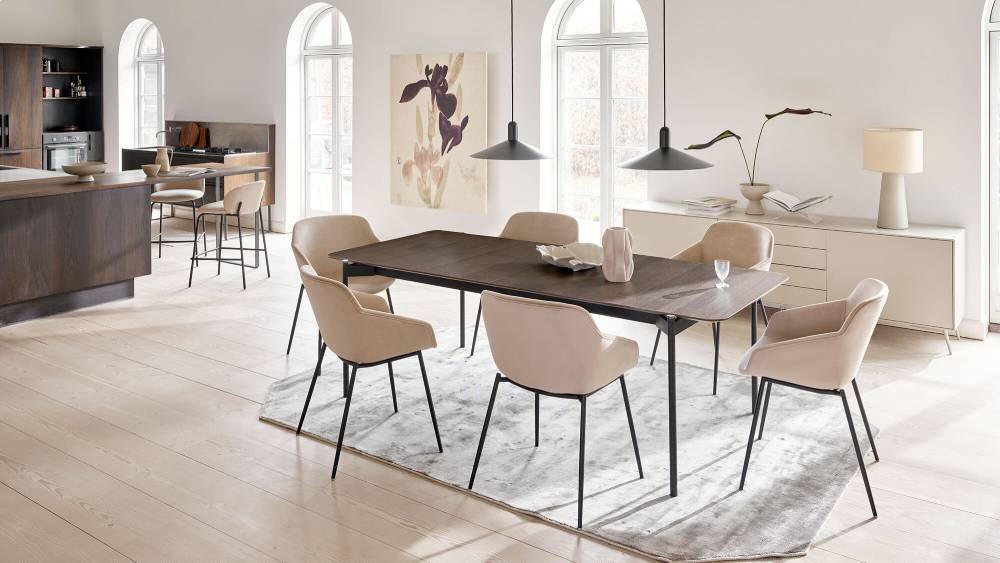
Privacy is another consideration. Sometimes you want to hide the messy kitchen while entertaining, or create a quiet spot to work while others watch TV. Open concepts make it harder to separate activities and control what guests see.
10 Pro tips for how to decorate open floor plan layouts
The key to successful open-concept decorating comes down to three main interior design ideas: defining zones and creating flow, maintaining cohesion and style, and adding personality and function. These principles guide every decision you make about your furniture, color, and decor.
1. Use area rugs
Area rugs are your secret weapon for creating separate zones in an open space. Place a large area rug under your seating area to anchor the living room furniture and define that space. Use another rug under your dining table to establish the eating area.
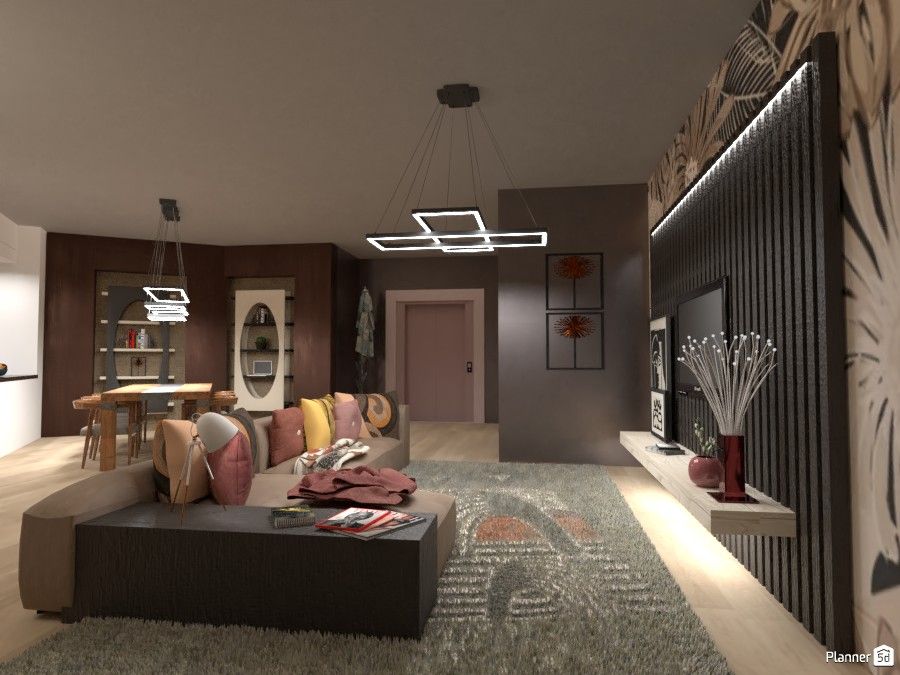
The key is to choose rugs that complement each other without being identical. Stick to the same color family or style, but vary the patterns or textures. This creates visual interest while maintaining cohesion throughout your open plan space.
2. Strategic furniture placement
Your furniture becomes the walls in an open concept layout. Use the back of your couch as a natural divider between your living area and dining area. Position a console table behind the couch to create a clear boundary while adding storage and display space.
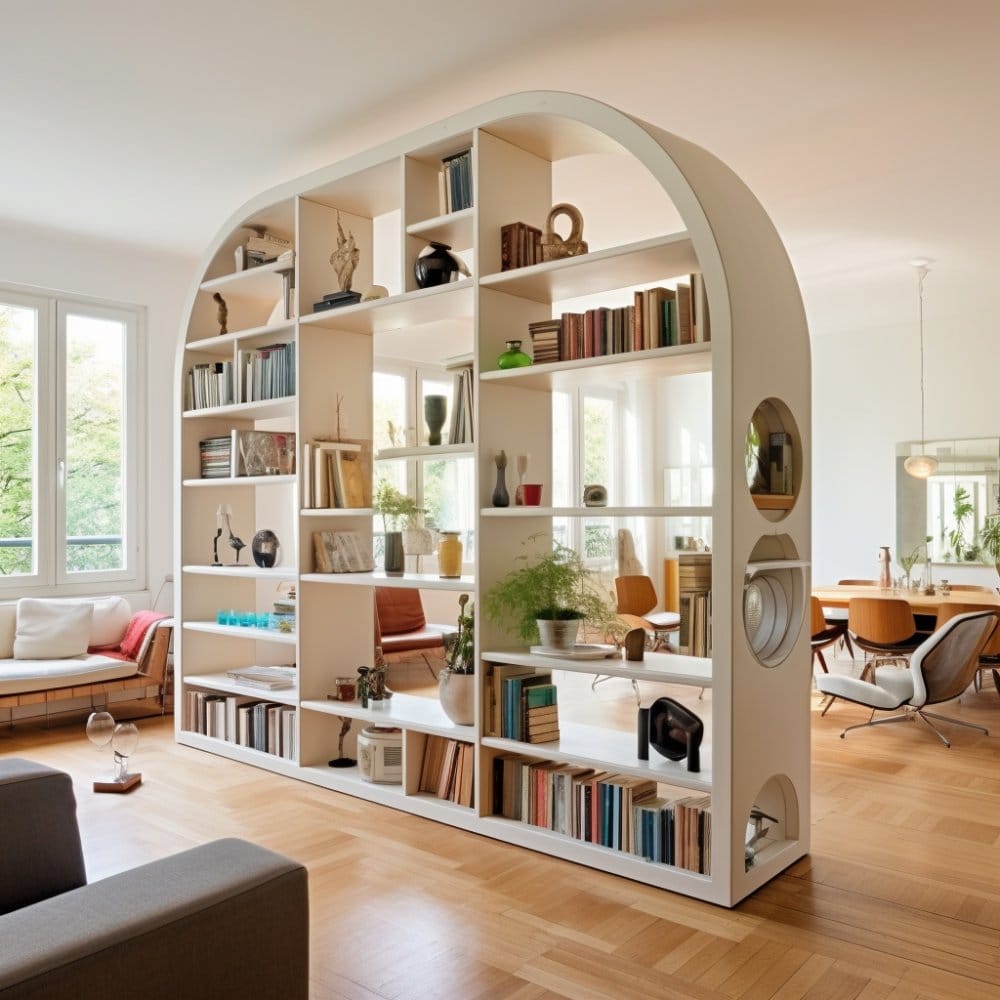
Avoid pushing all furniture against the walls. Instead, float pieces in the center of the room to create intimate conversation areas. This approach makes better use of your large room and creates more interesting sight lines throughout the space.
3. Consider foot traffic
Plan your furniture layout around how people naturally move through the space. Keep main pathways clear and wide enough for easy flow between areas. The route from your front door to the kitchen should feel natural and unobstructed.
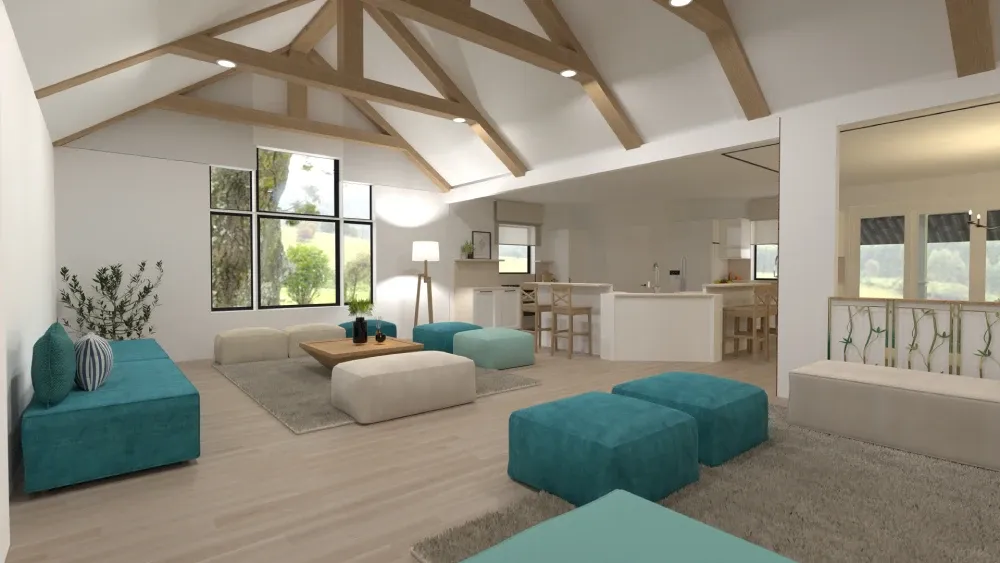
Pay attention to how people will move during daily activities and dinner parties. You want guests to flow easily from the kitchen to the seating area without having to squeeze between the coffee table and sofa or walk around awkwardly placed furniture pieces.
4. Use a consistent color scheme
A cohesive color scheme ties your entire open concept design together. Stick to neutrals like soft whites, grays, or beiges for your walls and large furniture pieces. Then add two to three accent colors throughout the space in pillows, artwork, and accessories.
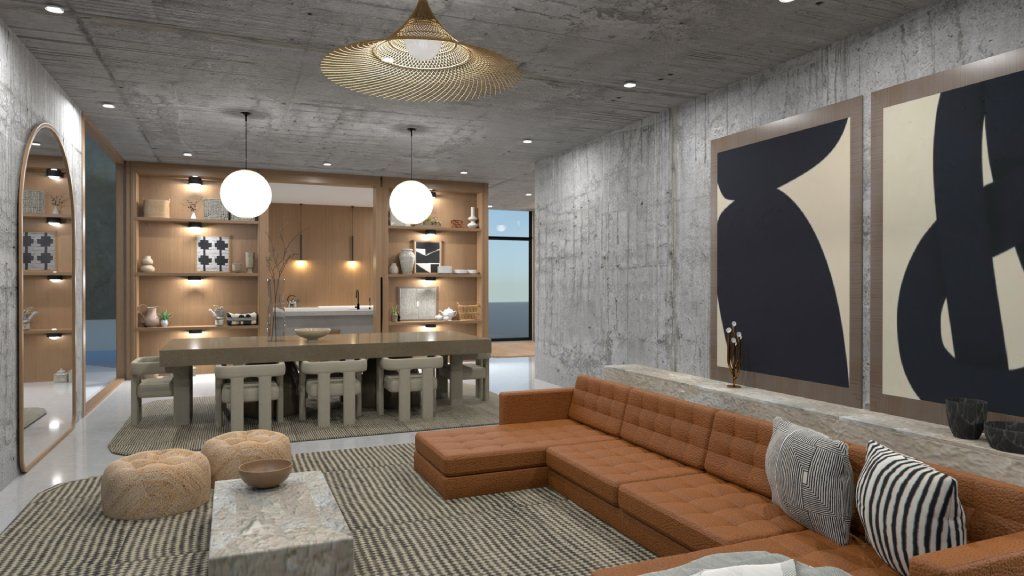
This doesn't mean everything has to match exactly. You can use different shades of the same color or vary the intensity. The goal is to create a visual connection that makes the two spaces feel like one harmonious room rather than separate areas.
5. Repeat textures and materials
Using similar materials and textures throughout your open-plan room creates visual flow and adds warmth. If you have a wooden coffee table in your living area, echo that wood tone in your chairs or bar cart. Mix metals like brass and black iron, but use them consistently across both spaces.
Add variety with different textures, like smooth leather, rough woven baskets, soft throw pillows, and sleek metal accents. The key is balance. Too much of one texture makes the space feel flat, while too many different materials can feel chaotic.
6. Unify spaces with a style
Choose one design style and stick to it consistently throughout your space. Whether you prefer modern minimalism, a cozy farmhouse, or an eclectic Bohemian style, maintaining a consistent theme makes the entire area feel intentional and pulled together.
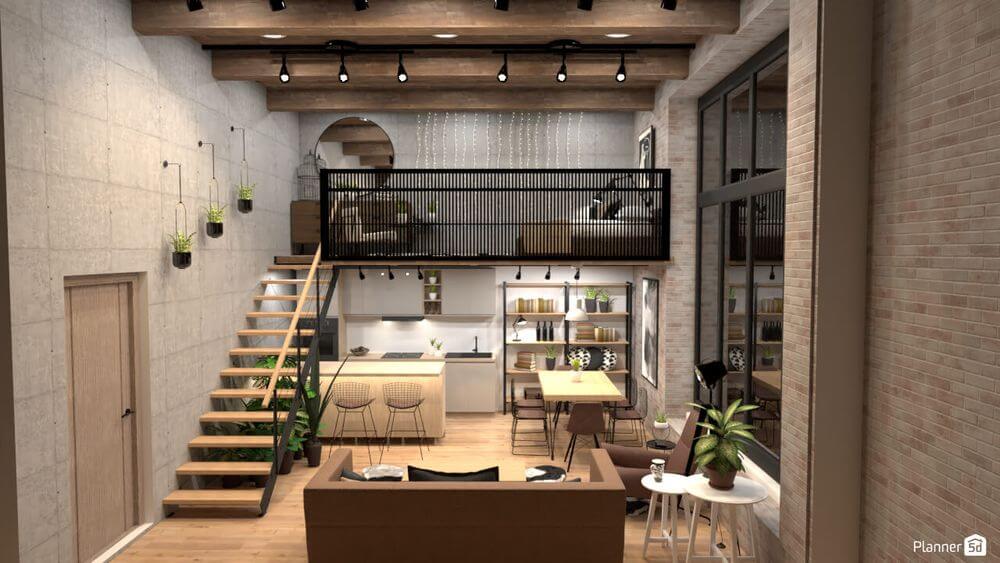
This doesn't mean every piece has to be from the same collection. Mix different furniture pieces that share similar characteristics, such as clean lines for modern spaces, warm wood tones for a farmhouse style, or rich colors and patterns for a Bohemian look.
7. Incorporate layered lighting
Good lighting is crucial in an open-concept design because it illuminates multiple functions in one large area. Use ambient lighting, such as ceiling fans or recessed lights, for general illumination. Add task lighting with table lamps for reading areas and pendant lights over kitchen islands.
Don't forget accent lighting to create a mood and highlight focal points. Floor lamps in corners add warmth, while wall sconces can define specific areas. Install dimmers wherever possible to adjust the lighting for different times of day.
8. Incorporate storage solutions
Without walls, you need creative storage solutions to keep your space organized. Use tall shelves as room dividers that provide storage while maintaining visual flow. Console tables can offer surface space for decor while hiding clutter in drawers or baskets.
Built-in storage works well if you're renovating, but furniture-based solutions give you more flexibility. Use storage ottomans to provide flexible seating options and hide blankets. Floating shelves on one wall can display books and decor without taking up floor space.
9. Add focal points and artwork
Large spaces need strong focal points to anchor the design and draw the eye. A fireplace naturally serves this purpose in many living areas. If you don't have one, create focal points with large artwork, an accent wallAn open-concept layout can become noisy with sound bouncing off high ceilings, hard surfaces, with bold wallpaper, or a statement light fixture.
Each zone should have its own focal point, but they should complement one another rather than compete. A large piece of artwork above the sofa can anchor the living area, while a beautiful chandelier defines the dining space.
10. Consider acoustics
An open-concept layout can become noisy with sound bouncing off high ceilings, hard surfaces, and traveling freely between areas. Soft elements, such as area rugs, curtains, and upholstered furniture, help absorb sound and make conversations more comfortable.
If noise is a significant concern, consider using fabric panels on walls or choosing furniture with soft, sound-absorbing materials. Plants also enhance acoustics while adding natural beauty and improving air quality in your open-plan space.
How to test your open floor plan using Planner 5D
The best way to see how these ideas will work in your space is to visualize them before you start moving furniture or buying new pieces. This is where Planner 5D becomes your secret weapon for open concept success.
With Planner 5D, you can play with different furniture layouts, try various color schemes, and test lighting options without the physical effort or expense. Want to see if that large sectional will work as a room divider? Drop it into your virtual design and see how it looks from every angle.
Turn your ideas into 3D magic — no design experience needed.
AI is here to help.
You can experiment with various design styles to find the one that suits your lifestyle best. Try a modern minimalist approach one day, then switch to a cozy farmhouse look the next. The tool lets you test bold ideas risk-free, helping you discover solutions you might never have considered otherwise.
The visual planning process helps you spot potential problems before they become expensive mistakes. You'll see if your furniture blocks the natural traffic flow or if your color choices create the cohesive look you want throughout your home.
Conclusion
Decorating an open floor plan successfully comes down to striking a balance between separation and connection. Use area rugs, strategic furniture placement, and consistent design elements to create distinct zones that still feel like one harmonious space. Layer in good lighting, smart storage, and personal touches that reflect your style.
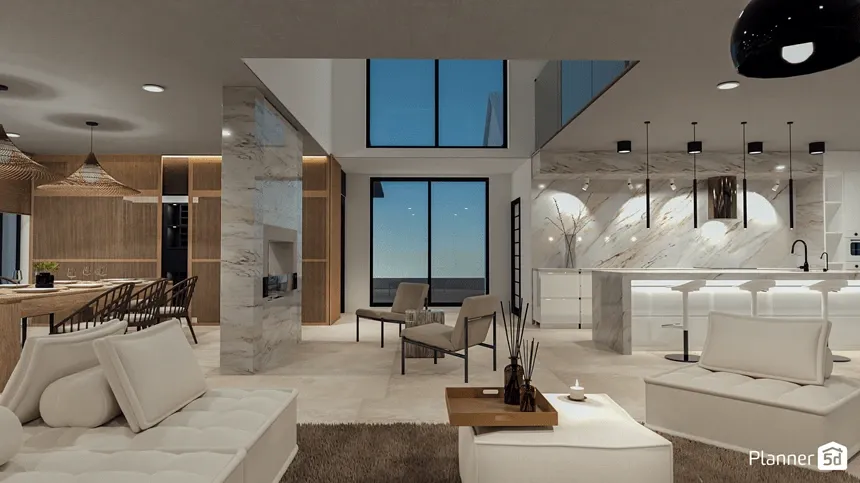
The key to success lies in visualizing your plan before you commit to it. Seeing how different layouts, colors, and furniture arrangements work together helps you make informed decisions and create a space that truly suits your lifestyle.
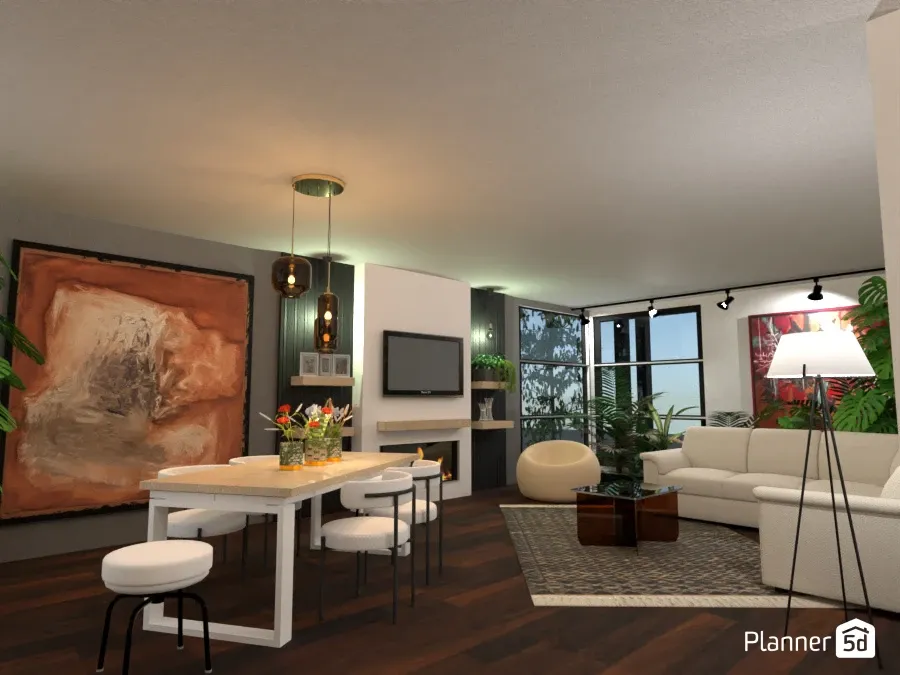
Take control of your open concept floor plan by treating it as the blank canvas it is. With the right approach and tools to visualize your ideas, you can add character to your living space that will make the room feel cozy and welcoming.
FAQ
How do you arrange furniture in an open floor plan?
Use furniture as natural dividers by placing your sofa with its back facing the dining area to separate spaces. Float furniture toward the center of the room instead of pushing everything against the walls, and anchor each zone with an area carpet. Keep main pathways at least three feet wide for easy movement between areas.
How do I add interest to an open floor plan?
Create focal points in each zone using large artwork, statement light fixtures, or accent walls that reflect your personality. Mix textures and materials throughout the space. Display meaningful objects, family photos, and plants on tall shelves and console tables to tell your story.
How do I make my open floor plan more cozy?
Layer soft textures, such as throw pillows, blankets, and carpets, throughout the space to absorb sound and add warmth. Replace harsh overhead lights with lamps and wall sconces to create a softer, more intimate glow.
How do I create a cohesive look between my living room and dining table?
Use the same color palette and materials in both areas. If your table is made of dark wood, consider echoing that tone in your coffee table or side tables. Repeat similar textures and finishes throughout both spaces to create visual flow.
Planner 5D: The Future of Interior Design
Experience the power of AI-driven design with Planner 5D. Our innovative tools, including the Design Generator, Smart Wizard, and AI floor plan recognition, make bringing your dream home to life easier than ever. Transform your vision into reality and unlock a world of design possibilities today.
Start designing your dream home