Living Room Furniture Layout: 7 Arrangements That Actually Work
Pick from 7 tested layouts based on your room shape, TV placement and seating needs, with exact spacing numbers for each.
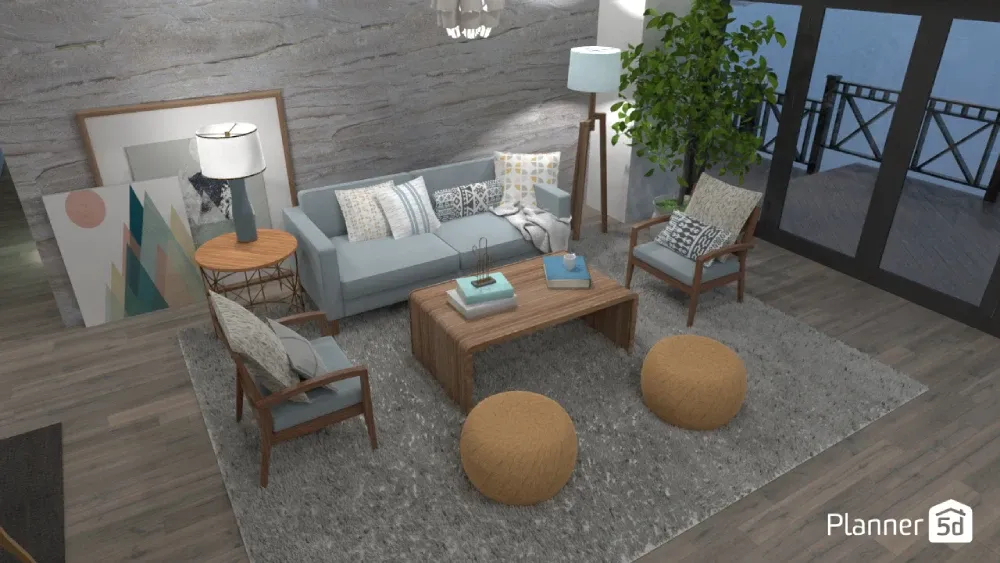
How you place your furniture will impact how well your living room works. A good layout keeps traffic moving, makes conversation easy, and ensures everyone can see the TV. A bad layout leaves you squeezing past chairs and craning your neck.
Let's look at seven common living room furniture layouts and when to use them. Plus, the measurements you need to know before you move anything.
1. Sofa facing TV (classic media layout)
Best for: Dedicated TV rooms, rectangular spaces, families who spend most of their time watching the screen.
Not ideal for: Rooms where conversation matters more than TV viewing, or rooms where the TV wall is too close to the seating.
Want to design your dream home faster?
Let AI do the heavy lifting with Planner 5D.
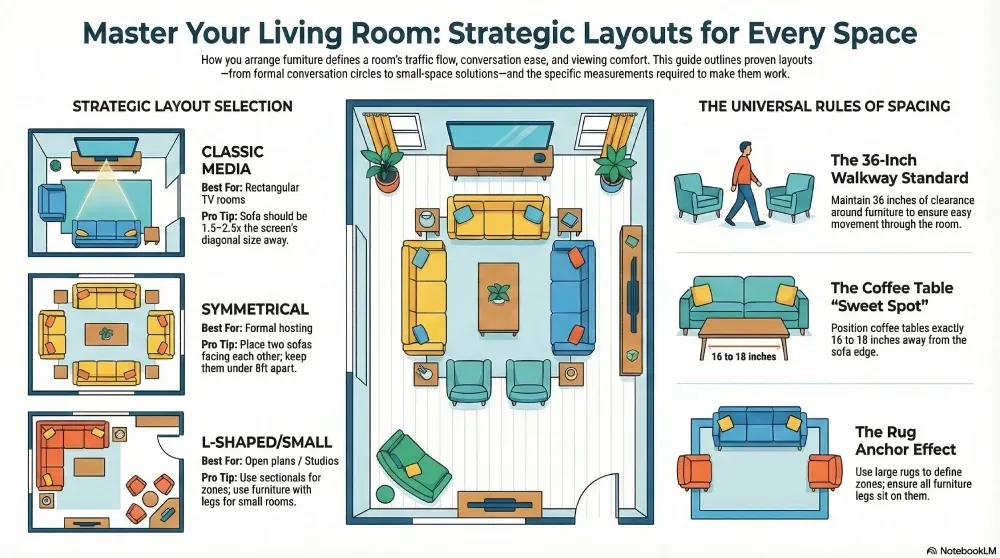
How to arrange: Place the sofa directly across the TV. For optimal viewing, the distance should be 1.5 to 2.5 times the diagonal size of your screen. For example, a 55-inch TV requires a space of roughly 7 to 11 feet from the sofa. Add a coffee table 16 to 18 inches in front of the sofa. If space allows, flank the sofa with two armchairs at a slight angle toward the TV.
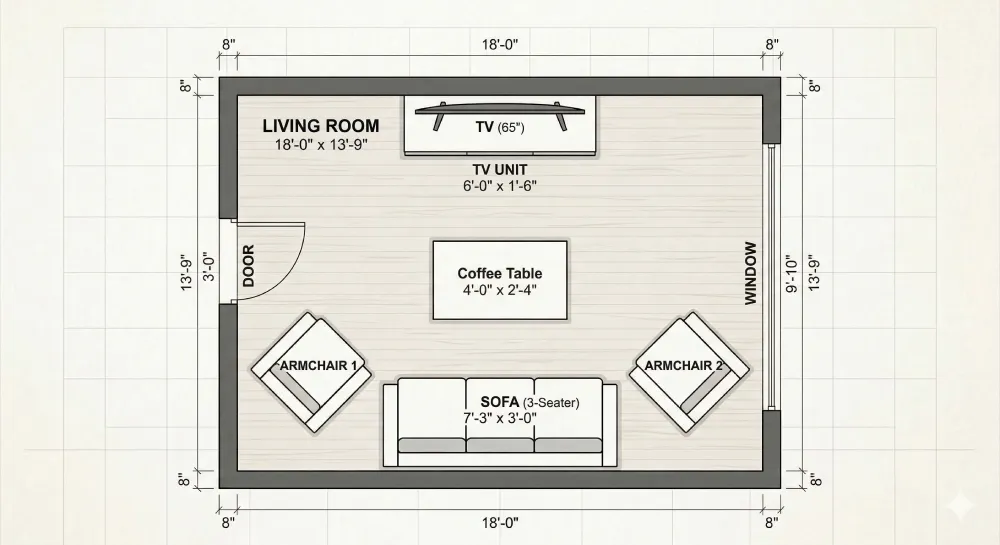
Spacing tip: Keep at least 36 inches between the sofa and any wall or furniture behind it for easy movement. Leave 18 inches on either side of the TV stand for visual breathing room.
Common mistake: Pushing the sofa flush against the back wall to create more space. It usually makes the room feel longer and emptier, and puts you too far from the TV.
2. Symmetrical conversation layout
Best for: Formal living rooms, spaces used mainly for hosting and rooms without a TV as the focal point.
Not ideal for: Everyday TV watching, small rooms where a second sofa eats up too much floor space.
How to arrange: Place two sofas facing each other across a coffee table. Center both pieces on an area rug. The gap between the two sofas should be 4 to 5 feet, with the coffee table in between. Add a side chair at each end if the room allows.
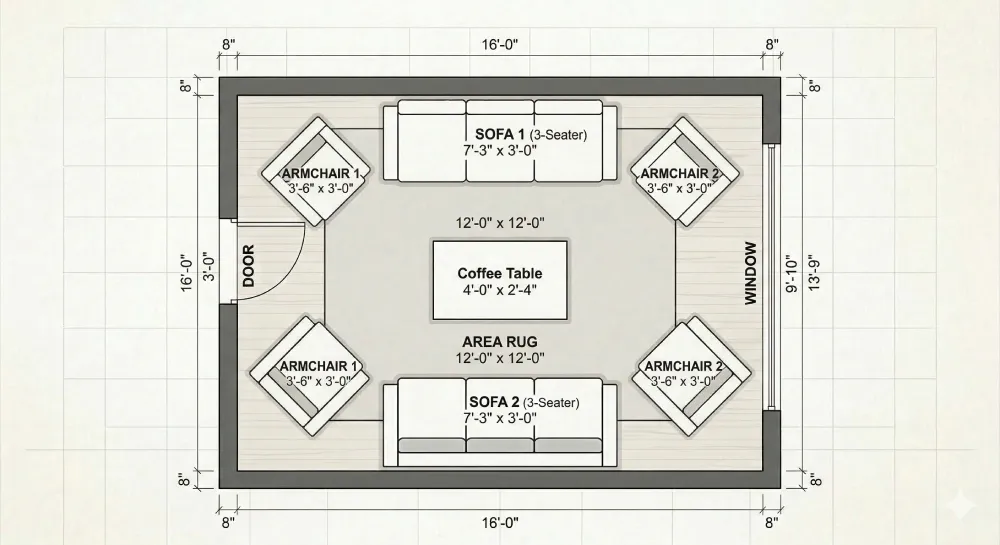
Spacing tip: Keep a 30 to 36-inch clearance on all sides of the seating group for easy walk-through. The area rug should extend at least 6 inches beyond the sofa legs on each side.
Common mistake: Making the conversation distance too wide. If the two sofas are more than 8 feet apart, people stop talking and start shouting.
3. L-shaped sectional layout
Best for: Families, casual rooms, and open-plan spaces that need a defined seating zone.
Not ideal for: Narrow rooms, spaces with doorways on multiple walls.
How to arrange: Anchor the sectional in a corner, with one arm running along each wall. The chaise or the shorter end should face the TV or the main focal point. Place a coffee table 16 to 18 inches from the edge of the seating. Make sure the sectional doesn't block any doorways or main walking paths.
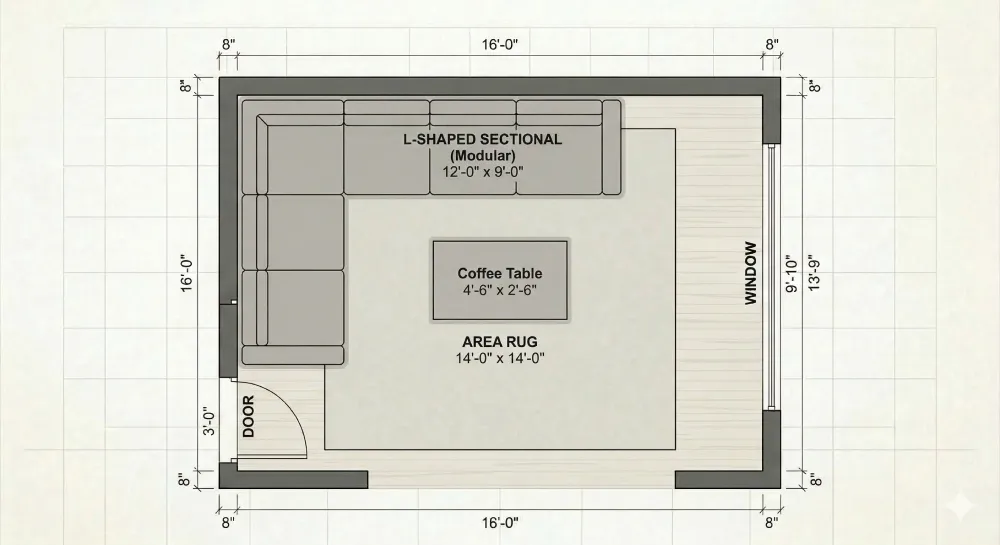
Spacing tip: Leave at least 36 inches between the open end of the sectional and the nearest wall or piece of furniture. Use a large area rug to anchor the whole arrangement.
Common mistake: Choosing a sectional that's too large for the room. Measure your space before you shop. A sectional that fits the showroom floor may leave you with no walkable floor space at home.
4. Floating furniture layout (for open-plan rooms)
Best for: Large open-plan spaces where the living area shares a floor with a dining room or kitchen.
Not ideal for: Small rooms, spaces where you need furniture against walls to preserve floor space.
Design smarter, not harder.
AI suggestions tailored to your space and style.
How to arrange: Pull all furniture away from the walls and group it around a central rug. The sofa can float 12 to 18 inches from the wall behind it. Face chairs inward toward the coffee table. The rug defines the boundary of the living zone, so size it generously. All four legs of major furniture pieces should sit on it.
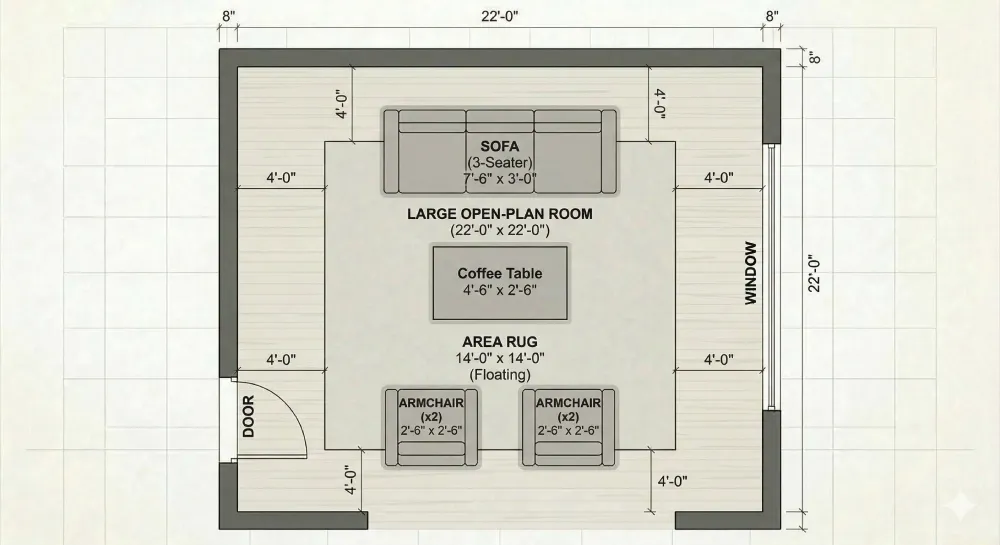
Spacing tip: Keep a clear 36-inch path around the perimeter of the furniture group so foot traffic can flow through the open plan without cutting through the seating area.
Common mistake: Skipping the area rug. Without it, floating furniture looks like it's drifting. The rug is what makes the group feel intentional.
5. Small living room wall-aligned layout
Best for: Rooms under 150 square feet, studio apartments, and tight city spaces.
Not ideal for: Rooms that need more than four seats, or where the TV is not on the same wall as the door.
How to arrange: Push the sofa against the longest wall. Place a narrow coffee table (no deeper than 18 inches) in front of it. Use a small armchair rather than a second sofa. Mount the TV on the opposite wall to keep the floor clear. Avoid adding extra seating unless the room is wide enough for a 36-inch walkway between the sofa and any other piece.
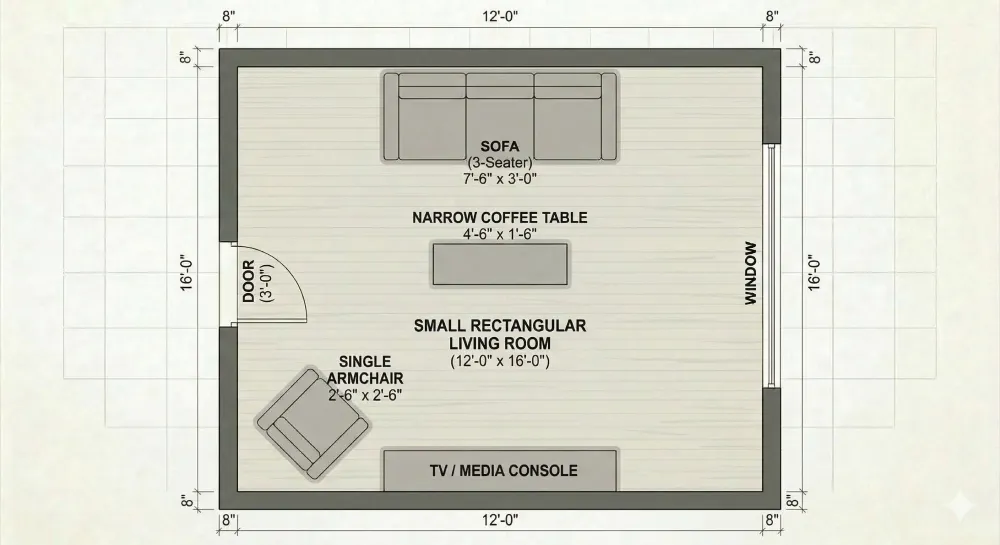
Spacing tip: Choose furniture with legs rather than pieces that sit directly on the floor. Visible floor space makes a small room feel bigger.
Common mistake: Trying to fit too many pieces. Two or three comfortable seats with clear floor space always work better than four cramped ones.
6. Long rectangular room layout
Best for: Narrow living rooms, older homes with rooms that are much longer than they are wide.
Not ideal for: Square rooms, rooms with windows or doors at both short ends.
How to arrange: Divide the room into two zones. Put the main seating group, including the sofa, coffee table, and TV, in one half. Use the other half for a reading chair, small desk, or secondary seating. Keep a clear 36-inch path running down one side of the room from end to end. Avoid placing furniture across the full width of the room, which creates a barrier.
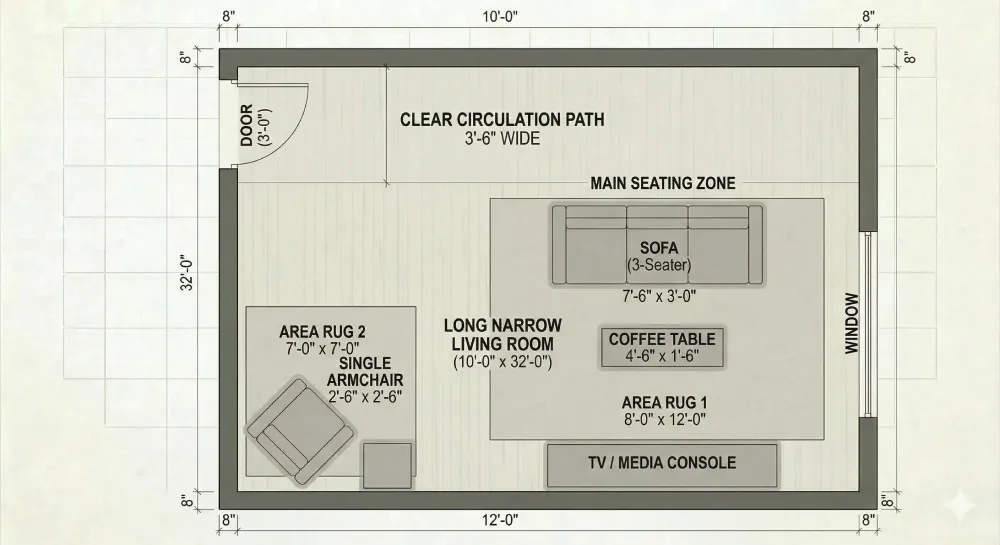
Spacing tip: Two medium area rugs (one per zone) work better than one long runner. They help define each area and keep the room from feeling like a hallway.
Common mistake: Lining all furniture along the two long walls and leaving the center empty. The room ends up feeling like a waiting room.
7. Corner TV layout
Best for: Rooms where the best wall for a TV is a corner, square rooms, and rooms with awkward window placements on main walls.
Not ideal for: Rectangular rooms where a corner placement puts the TV too far from some seating.
How to arrange: Mount or place the TV at a 45-degree angle in the corner. Arrange seating in a soft arc facing it. A sectional works well here, or a sofa with one chair on each side angled inward. All seats should be within 10 feet of the screen and no more than 30 degrees off-center for comfortable viewing.
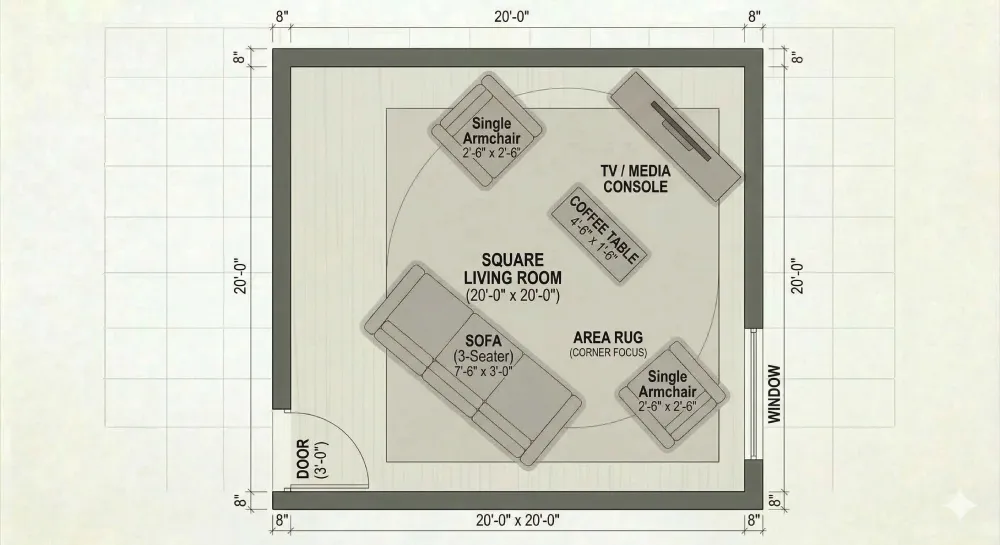
Spacing tips: Allow 24 inches of clearance on each side of the corner unit. Avoid blocking the corner with oversized TV consoles that make the space feel cramped.
Common mistake: Placing the TV too high in the corner. Eye level when seated is the right height — not the top of the wall.
Final thoughts
Before you move anything, take detailed measurements. Sketch your room layout to scale on paper or use a free floor planner like Planner 5D to test layouts without lifting a single piece of furniture. What looks right in your head can feel very different once the sofa is in place.
Planner 5D: The Future of Interior Design
Experience the power of AI-driven design with Planner 5D. Our innovative tools, including the Design Generator, Smart Wizard, and AI floor plan recognition, make bringing your dream home to life easier than ever. Transform your vision into reality and unlock a world of design possibilities today.
Start designing your dream home