Kitchen Island Ideas To Upgrade Your Space
In this article, you'll discover the best design tips for a kitchen island: from the best materials to design ideas you can't miss.
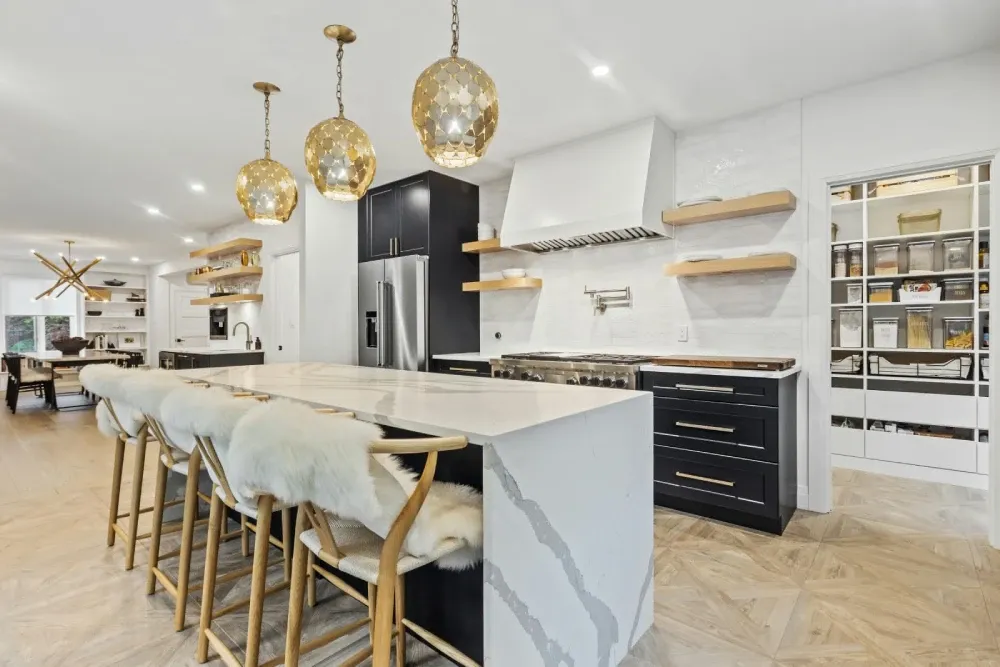
In kitchen design, there's nothing better than a good central island. A kitchen island is a versatile space for cooking, eating, working, or chatting with family and guests. Plus, with a spectacular marble, granite, or porcelain countertop, a kitchen island can make a real style statement in the kitchen.
There's no doubt that a kitchen island can be a spectacular addition to any home. In this article, we analyze the benefits of installing an island in your kitchen, the key factors to consider, and provide the best suggestions for style and inspiration.
What is a kitchen island?
Kitchen islands are an extension of the kitchen cabinets and countertops, typically placed in the center of the room to optimize space and enhance the layout. These surfaces can be used as work areas, storage areas, or even as additional furniture to accommodate a cooktop or sink.
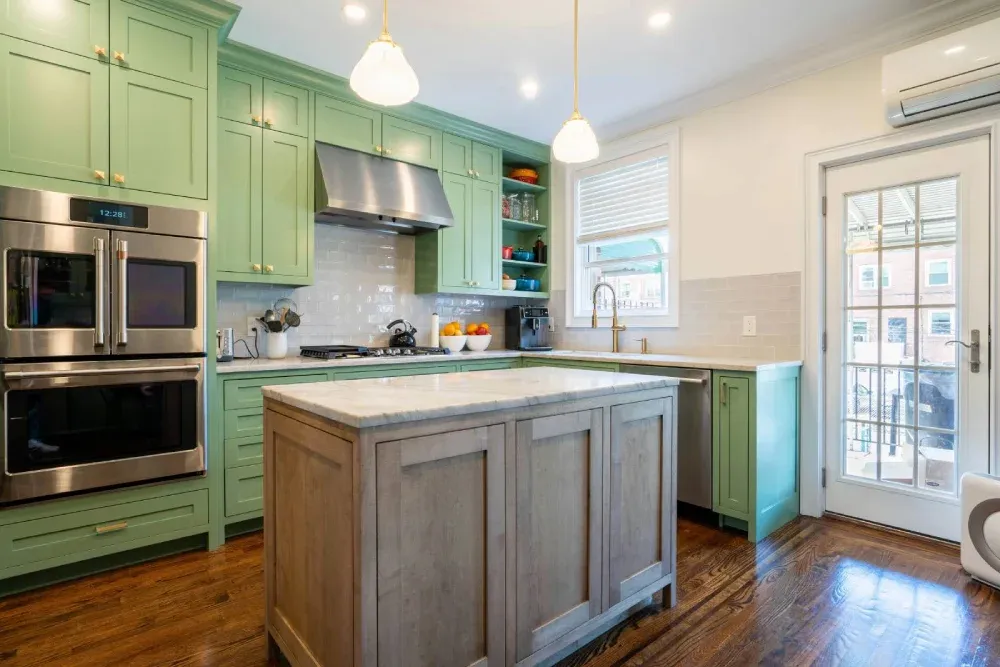
In addition to being functional, islands add an aesthetic element to the kitchen design by blending in with the rest of the furniture.
Want to design your dream kitchen faster?
Let AI do the heavy lifting with Planner 5D.
Thanks to their versatility, they have become a very popular choice in modern kitchen designs, adapting to a variety of kitchen styles and sizes, from the largest to the most compact.
Why your kitchen should have an island?
Choosing a kitchen island is much more than a matter of style. First and foremost, a kitchen island provides additional space for preparing food and storing small appliances or cooking utensils.
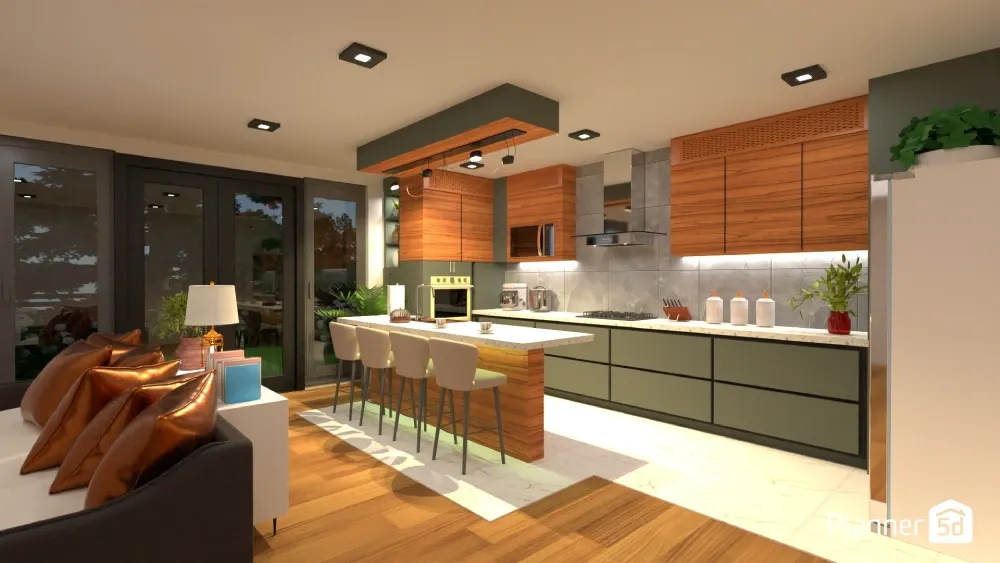
Kitchen islands enable better space utilization, facilitating the seamless flow between different work areas.
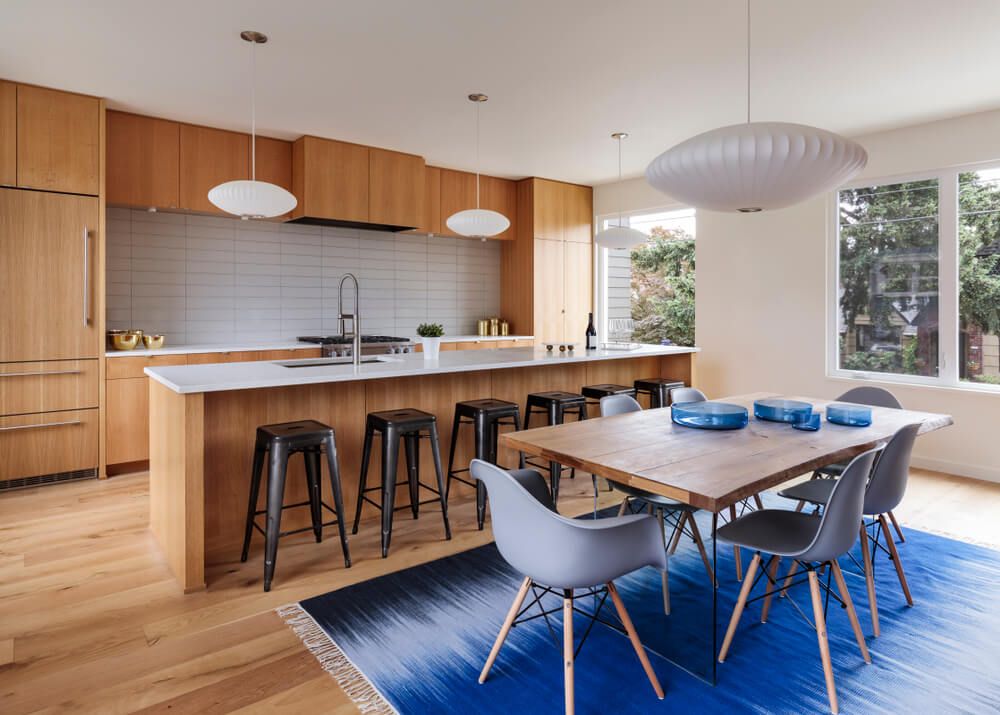
Additionally, in an open-plan kitchen, an island is ideal for visually separating the dining or living room from the kitchen area, making the space feel more organized and cohesive.
Islands also serve as gathering points for families, transforming the kitchen into the heart of the home, where friends and family tend to congregate.
Advantages of having a kitchen island
We already know some of the key points for choosing a kitchen island. But the advantages of having a well-designed kitchen island go far beyond that.
Extra storage space
A kitchen island offers additional storage space, and when placed in the center of the kitchen, it's the perfect place to store utensils, pots, pans, and even small appliances.
This built-in piece of furniture maximizes the use of space without cluttering the room. Kitchen islands can include drawers that keep everything you need while cooking or working within easy reach.
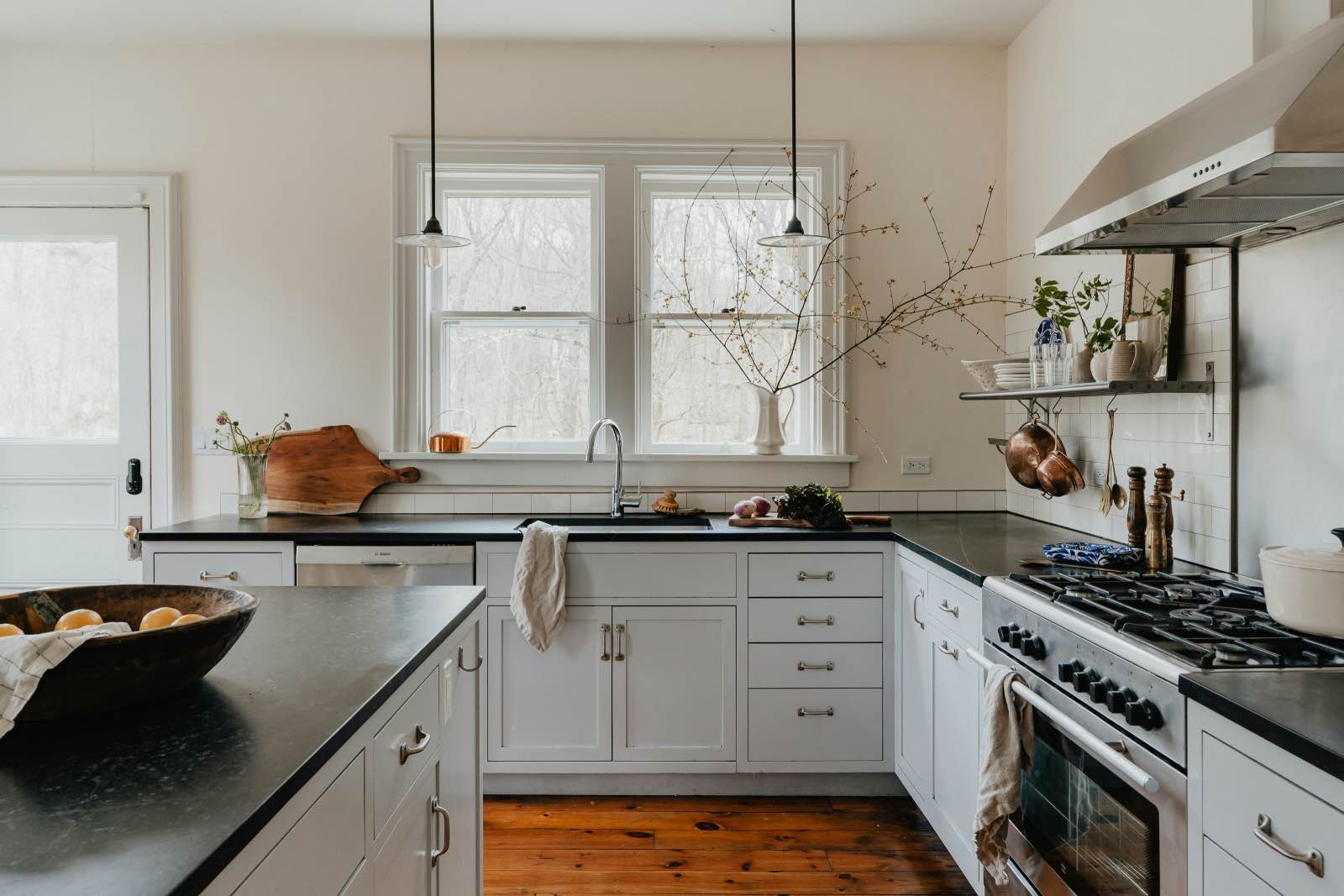
Additionally, this type of design facilitates organization, helping to keep a kitchen clean and tidy, as hidden cabinets are an excellent storage solution. Depending on the design, you can opt for wood or marble finishes to give it a unique touch.
Additional counters to cook and prepare food
In a kitchen island, the extra countertop space becomes an excellent area for food preparation. Installing a cooktop on the island optimizes space and facilitates access from any angle, improving workflow.
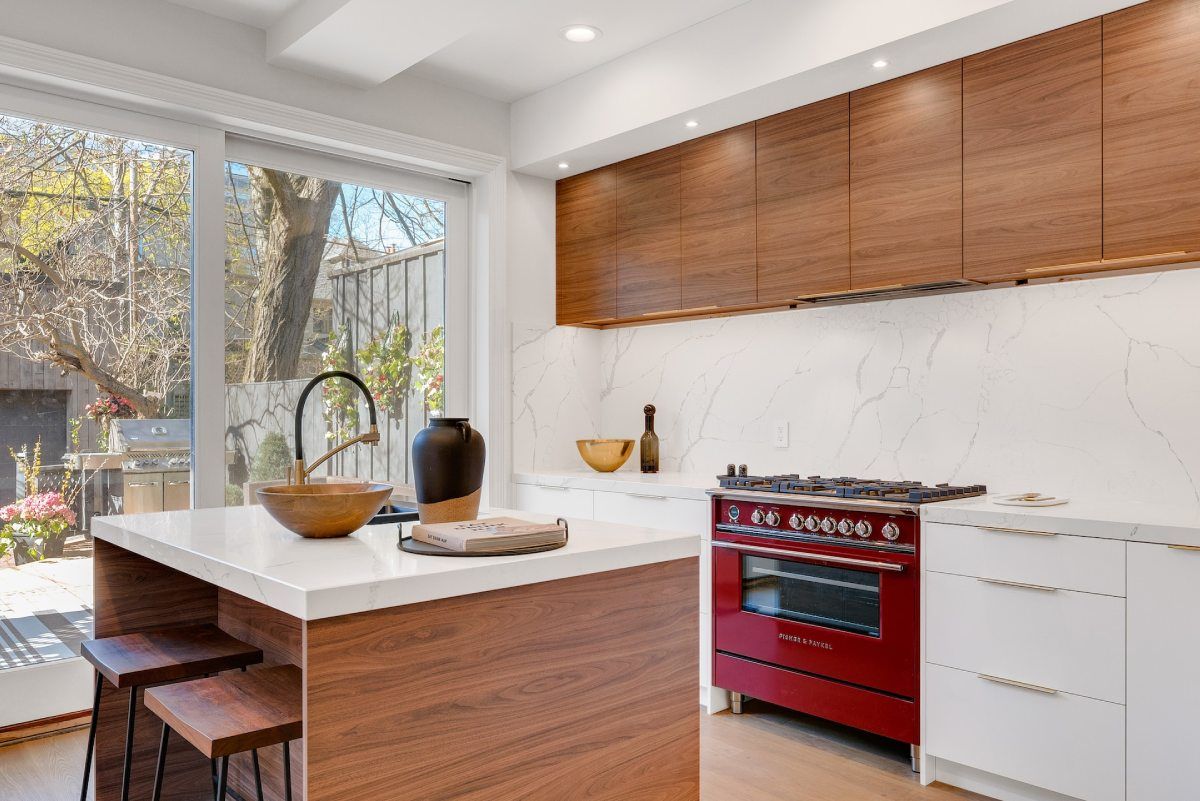
Kitchen islands allow you to have everything you need within easy reach, from ingredients to utensils. On the other hand, a kitchen island allows you to create a traditional triangular layout, providing access to major appliances to make cooking as easy as possible.
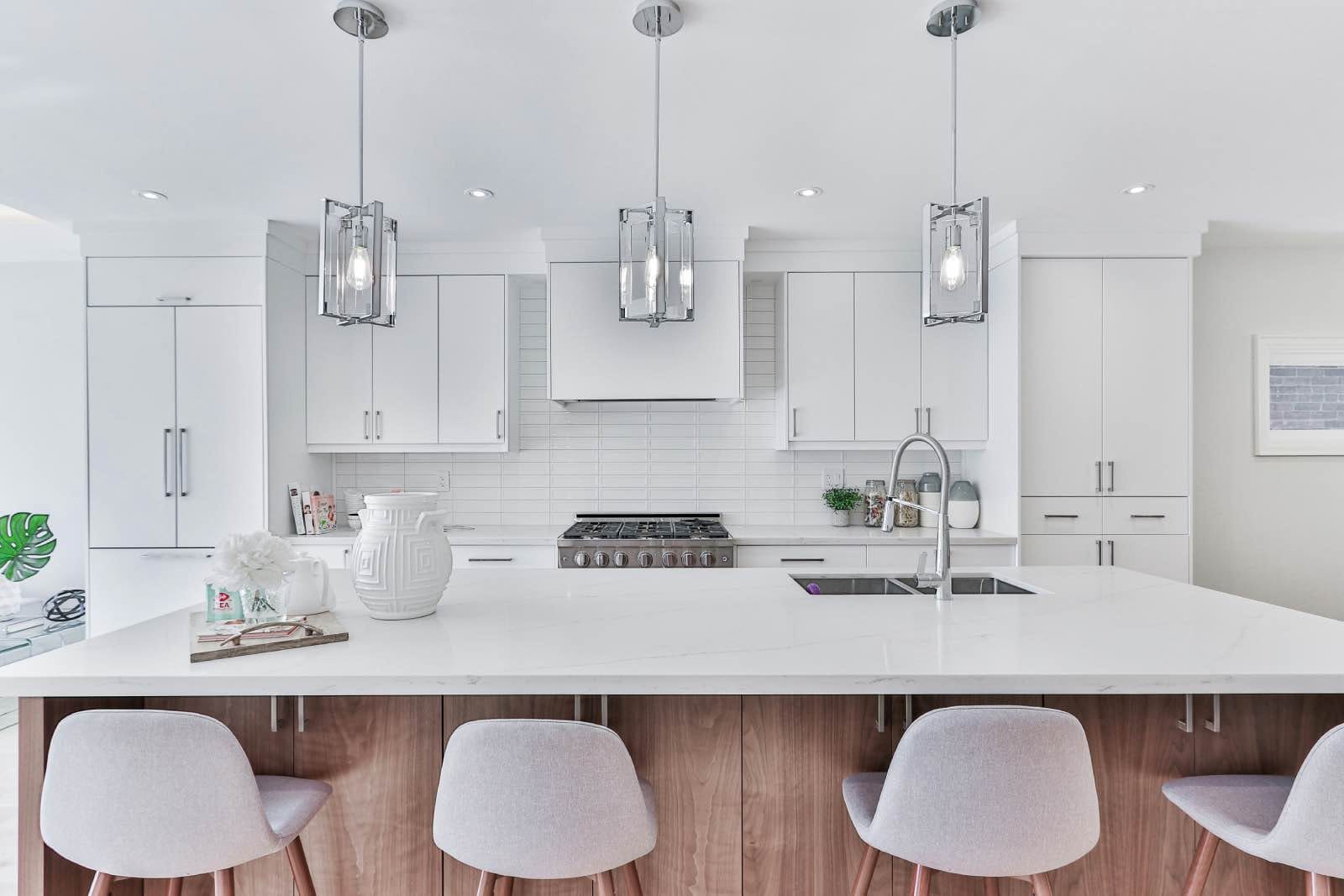
Additionally, working at a kitchen island allows you to interact with others, making the cooking process a social activity. This design creates a more welcoming and functional environment, perfect for large families with busy kitchens.
Kitchen design made easy with Planner 5D
Let AI do the heavy lifting for you.
Additional dining and social space
Kitchen islands often include a bar or dining area at one end, making them a versatile addition to any home, helping to encourage interaction with family or guests. The bar serves as a place for quick or casual meals, as well as a gathering point during social events.
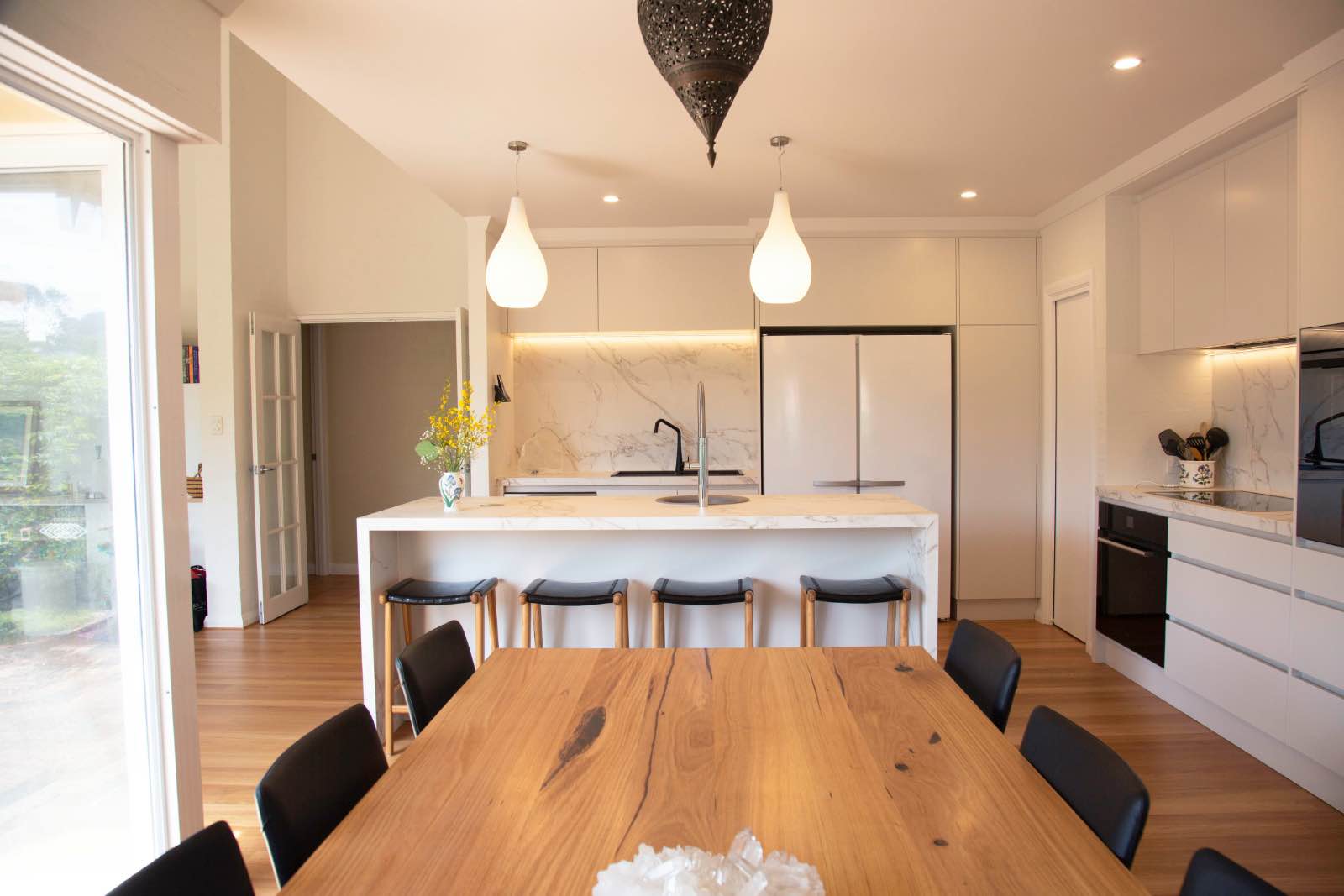
This type of kitchen island design allows family and friends to sit at the counter while the hosts cook, creating a more inviting atmosphere.
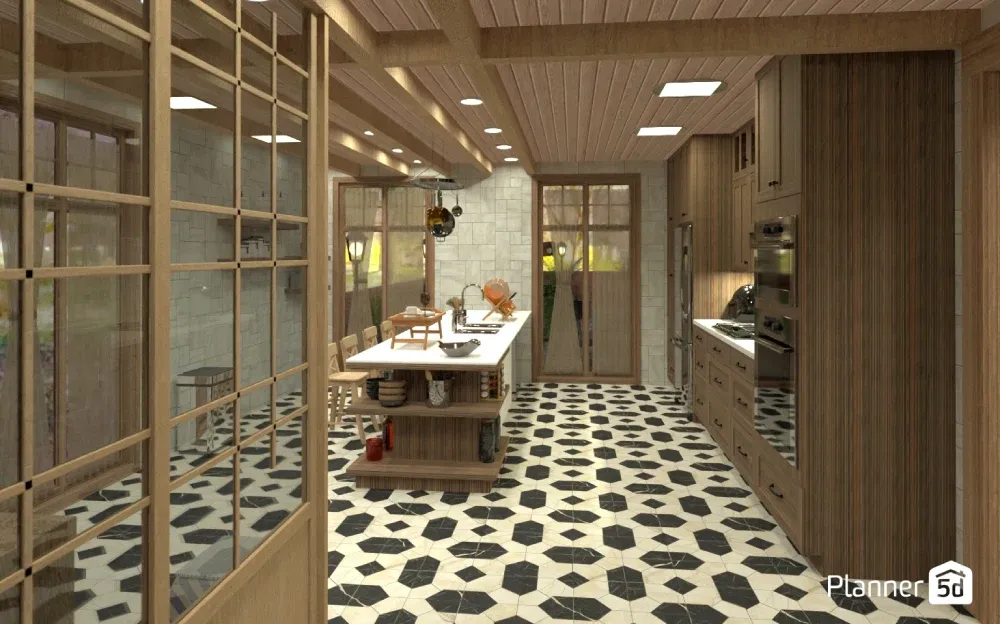
In terms of layout, a kitchen island with an attached dining area maximizes the use of space, integrating functionality and style into a single element, without the need for additional furniture in the dining area.
Practical space divider
A kitchen island is not only a functional addition, but also acts as a room divider in open kitchens, delimiting the kitchen area from the dining or living room. This is especially useful in integrated spaces with an open layout, where it can be difficult to define each space.
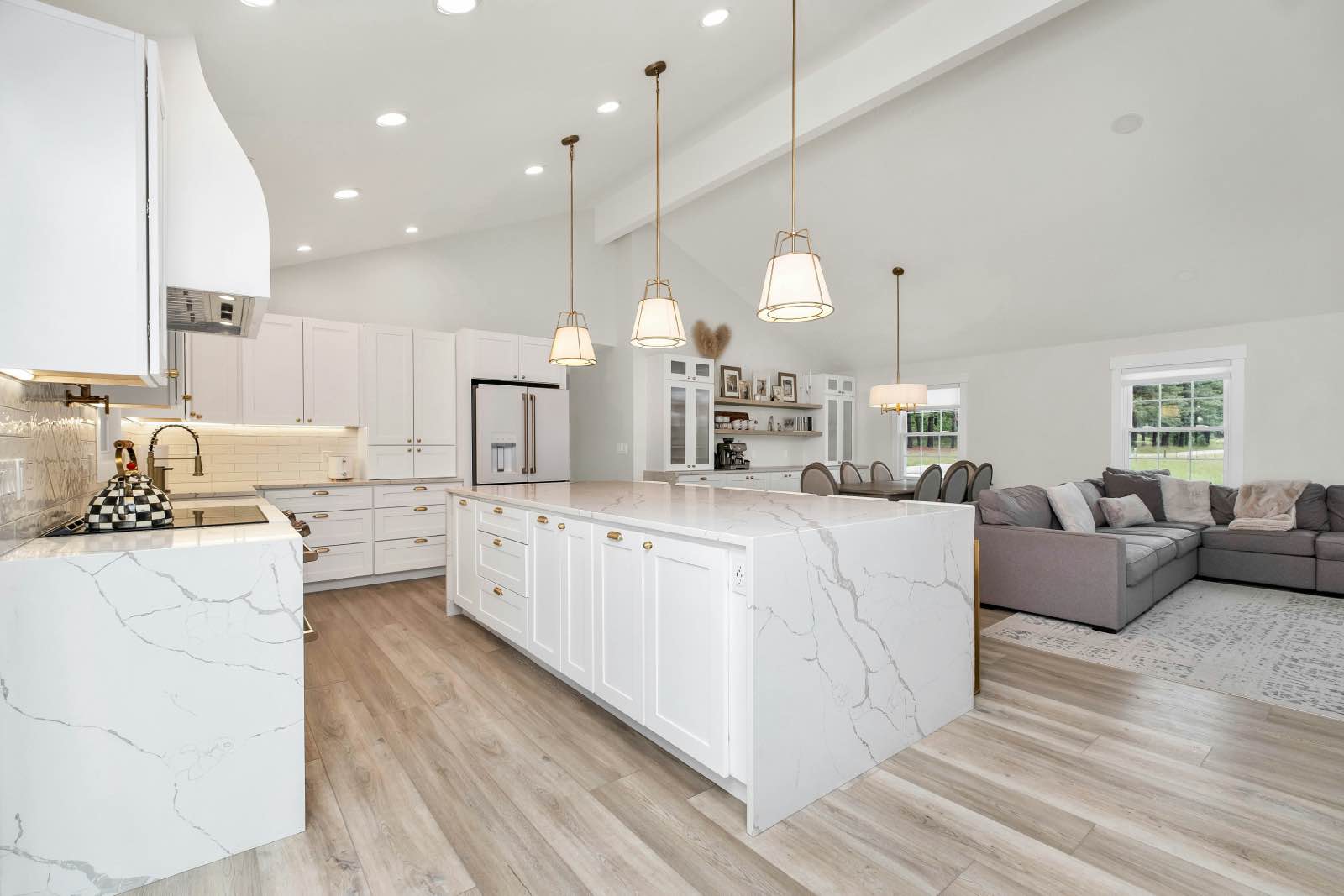
In addition, the design of a kitchen island can be a focal point in a home's decor, as the kitchen's finishes become a stylish element: wood, marble, stainless steel, or all kinds of colors add personality to the space. Kitchen islands not only optimize the use of space but also provide a design element that elevates the home's aesthetic.
Factors to consider before installing an island in the kitchen
While an island can be a fantastic addition to a kitchen, it doesn't necessarily fit any space. Always be sure to consider the following factors before installing an island in your kitchen:
Available space and required measurements
Before installing a kitchen island, it's important to assess the dimensions of the available space. Kitchen islands require a at least 36 inches of clearance around the island to allow for comfortable movement.
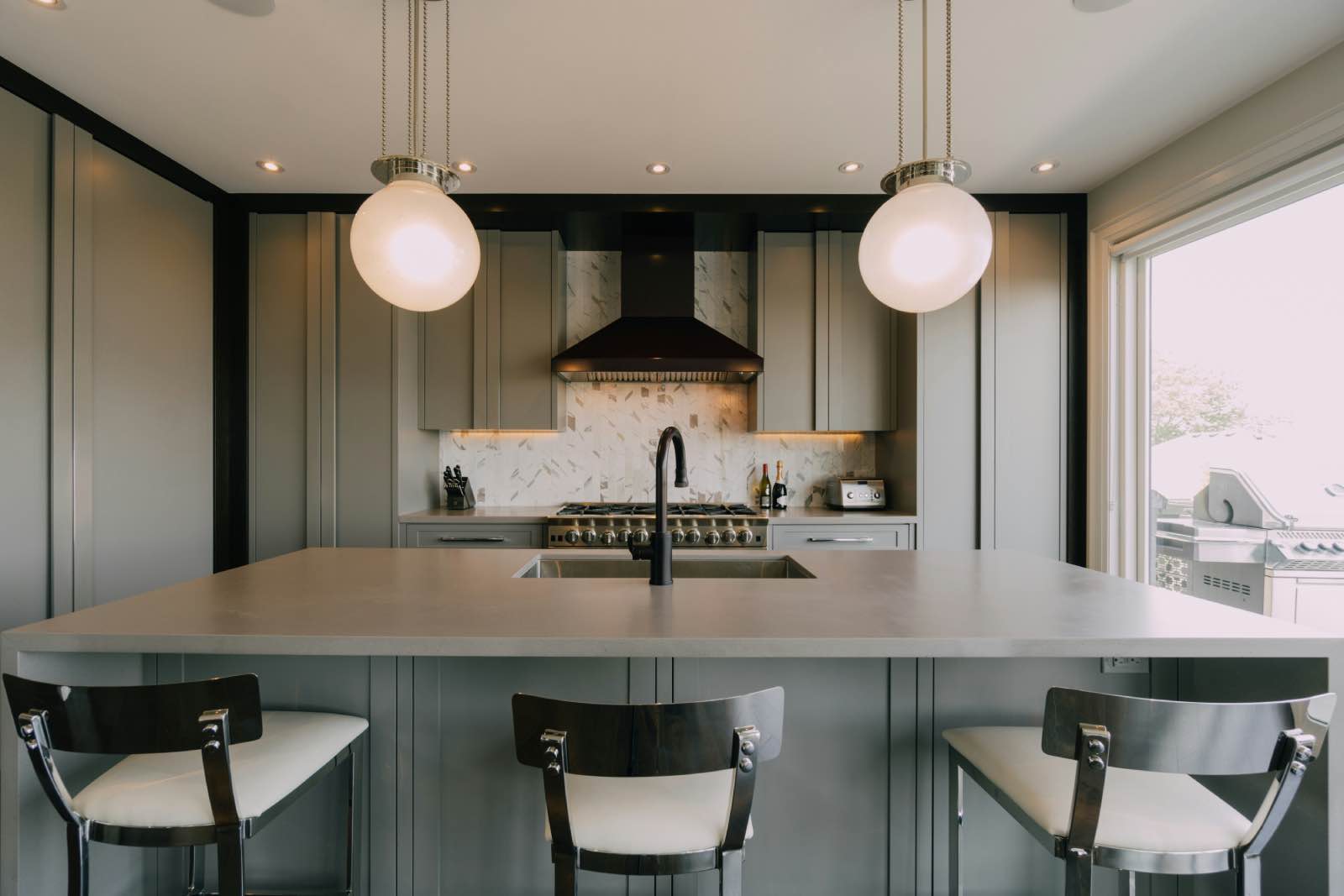
Make sure to carefully measure the work area to prevent the island from obstructing passage or hindering access to other furniture or appliances.
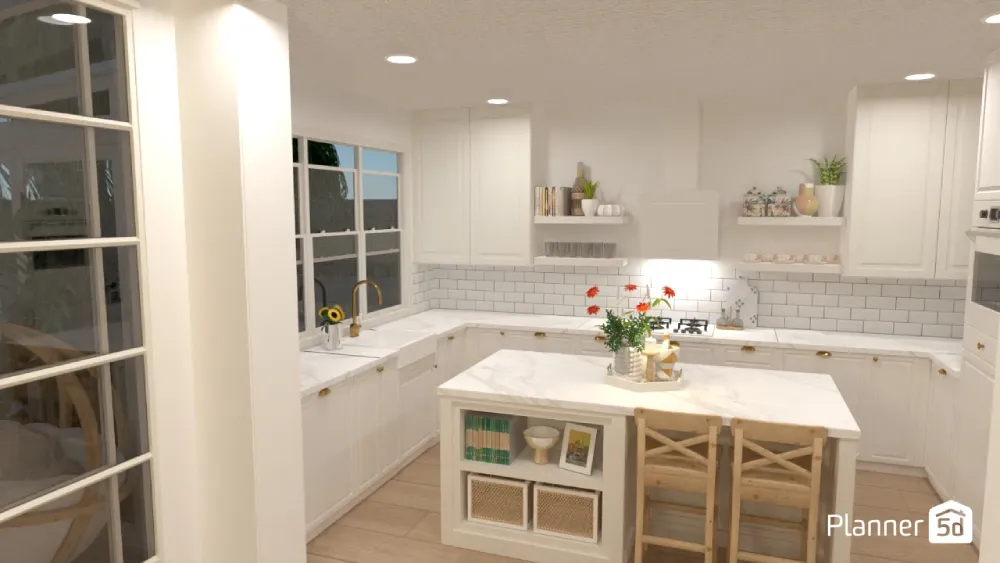
The layout should be tailored to the size of the kitchen, ensuring that the island is neither too large nor too small, maintaining an appropriate proportion that favors both functionality and aesthetics.
Island style and design
The kitchen island design should match the rest of the furnishings and the overall style of the home. Islands can take on all kinds of styles depending on personal tastes and the kitchen's finish—whether you prefer a modern, rustic, classic, minimalist aesthetic, etc.
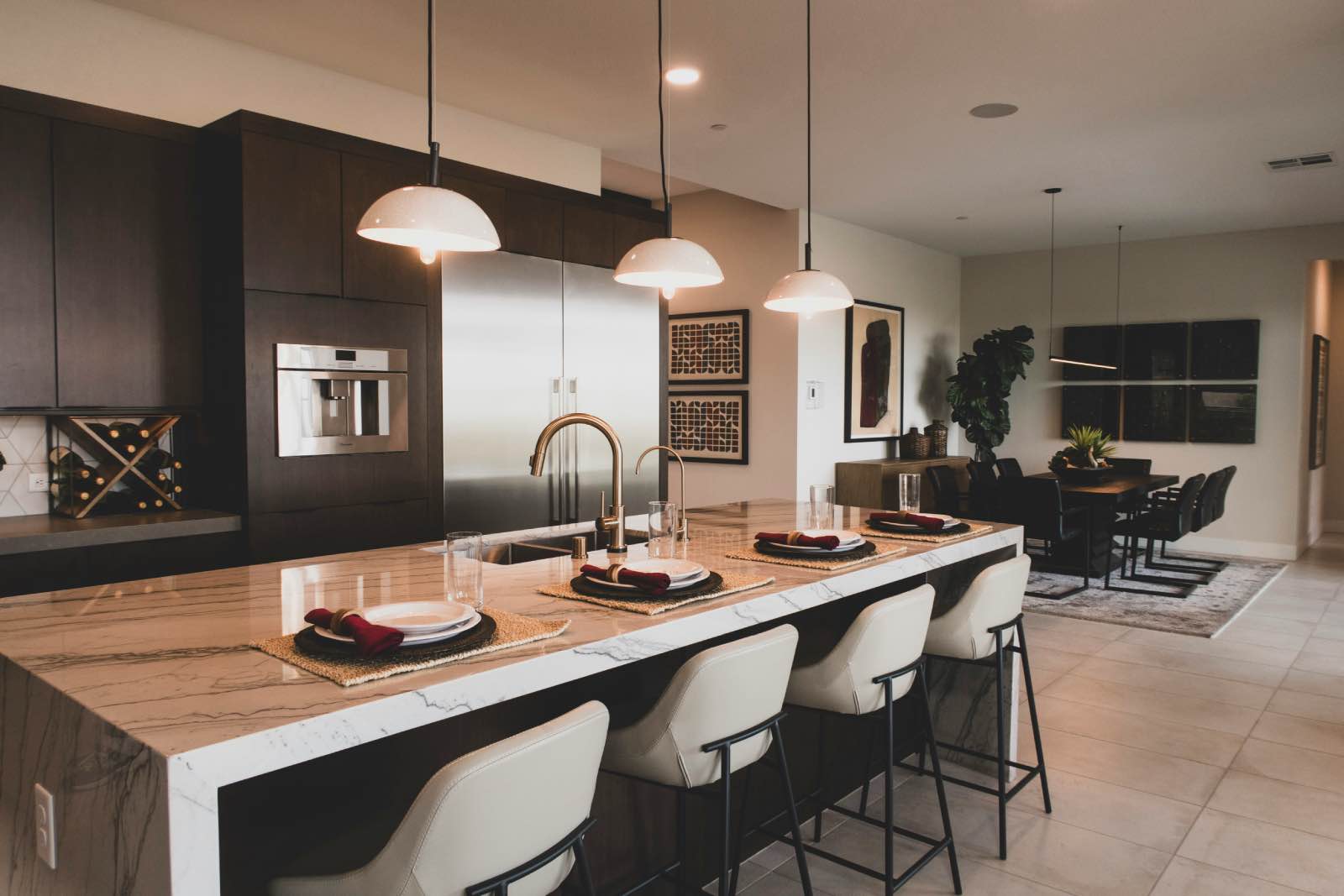
The choice of materials such as wood, marble, or quartz influences the aesthetics and durability of the countertop. Likewise, color and design details can make a difference, as a well-thought-out kitchen island becomes the central element of the kitchen, providing style and functionality at the same time.
Functionality and equipment
The functionality of a kitchen island depends on the elements you want to integrate. If your kitchen requires more workspace, you may only need an extra countertop, but beyond that, you can choose to install a cooktop, a sink, or additional storage area.
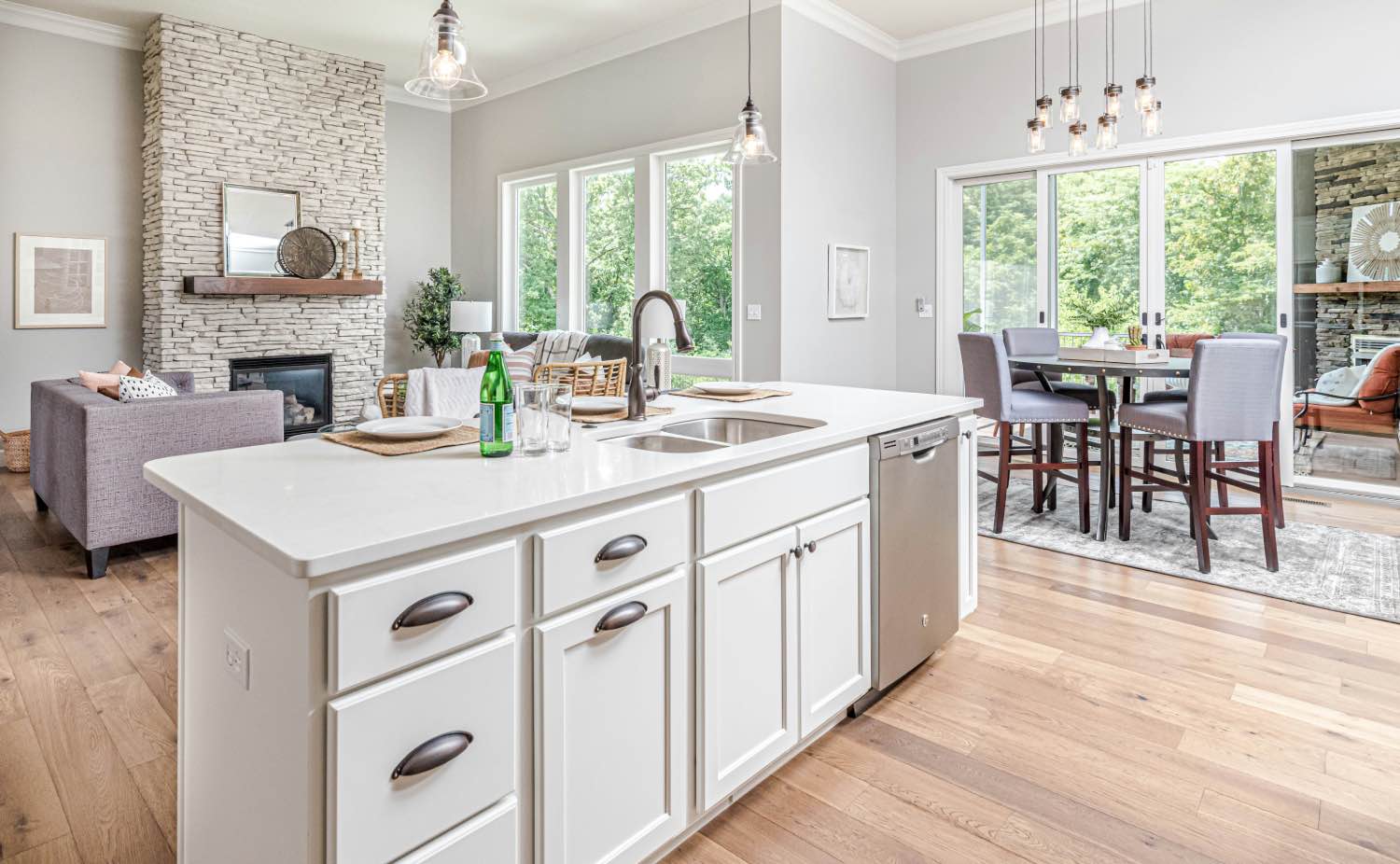
Multifunctional kitchen islands allow for multiple tasks to be performed in a single space, maximizing efficiency. It's also advisable to include outlets on the island for small appliances, such as blenders or coffee makers.
Kitchen lightning
Lighting is crucial to enhancing a kitchen island design. Pendant lights over the island are an elegant option to illuminate the work surface, adding a decorative touch. Additionally, recessed lighting or LED spotlights directed toward the countertop can improve visibility in the work or cooking areas.
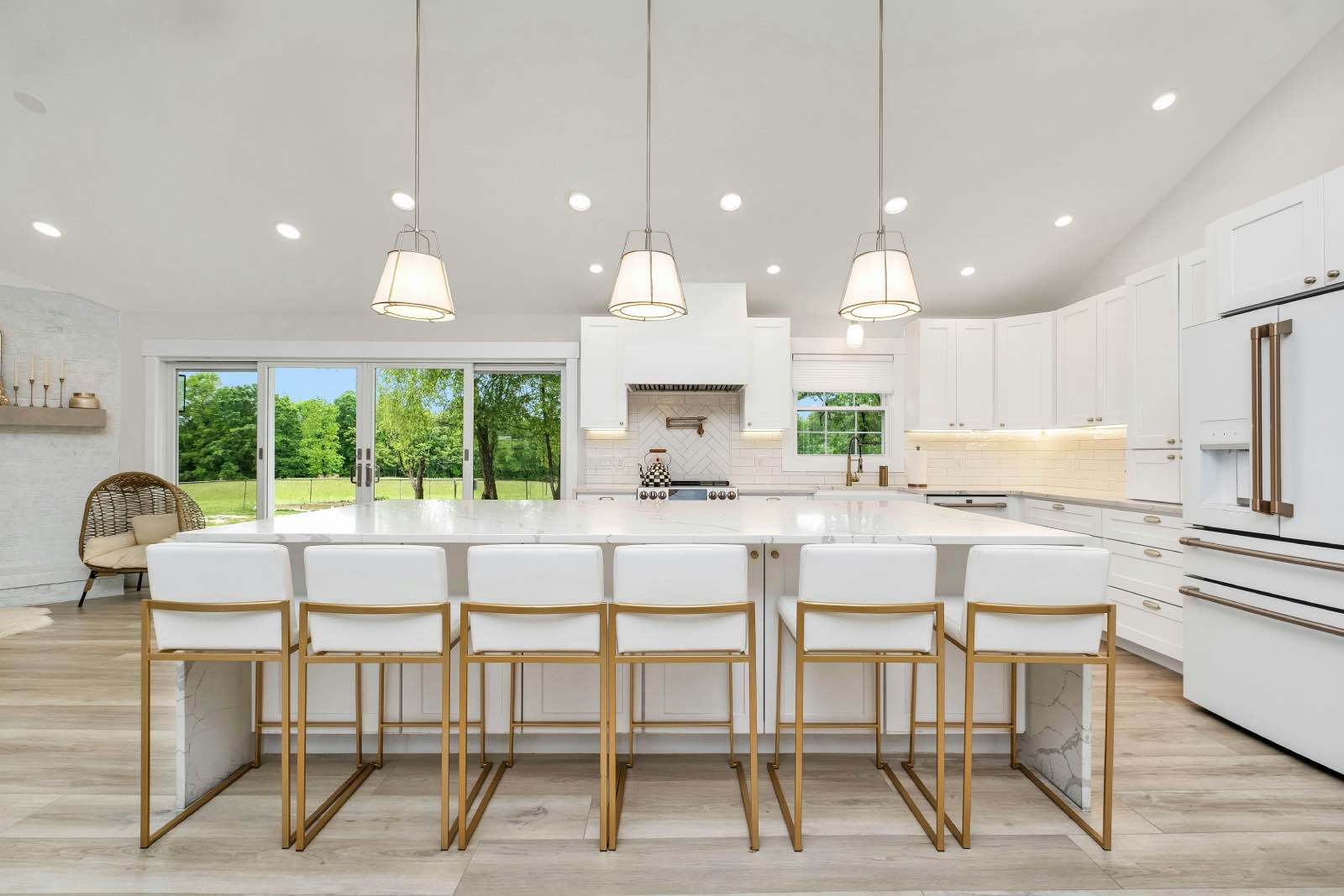
Choose kitchen lighting that combines functionality and aesthetics to ensure that you have enough light to work and it creates a warm atmosphere. The right lighting highlights the design and enhances the kitchen experience.
Recommended materials for a kitchen island
Choosing the right materials for a kitchen island is essential to ensure its durability and aesthetics. Each material brings a unique style to a kitchen island design, from rustic to modern.
- Quartz, granite, or alternative countertops such as porcelain or Silestone are highly recommended for their durability and ease of cleaning.
- Wood is another popular choice, ideal for creating a warm and natural atmosphere in the kitchen.
- Marble is a luxurious and elegant alternative, although it can be more delicate and requires special maintenance.
When selecting materials, it's important to consider their maintenance and ability to withstand daily use, ensuring the island remains in perfect condition.
Budgeting and planning
When planning a kitchen with an island, it's crucial to establish a clear budget. Costs vary depending on the size of the island, the materials used, and the appliances integrated into it.
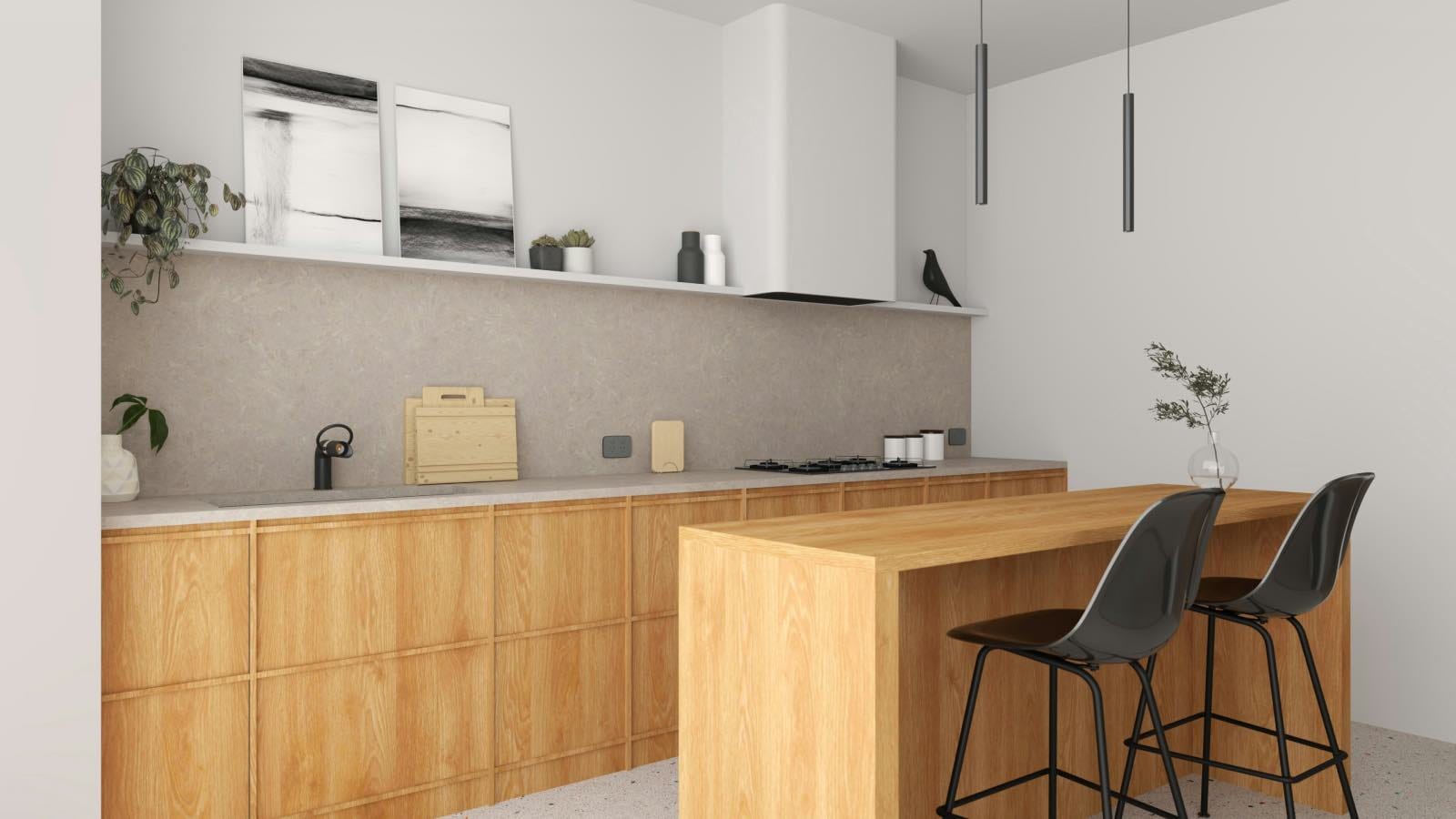
If electrical or plumbing installations need to be extended to the center of the room, the costs of adding an island can be very high.

Dividing your budget into categories such as furnishings, labor, and materials (like marble or wood) helps you better manage expenses. Don't forget to consider any additional costs, such as plumbing or electrical installation, if the island features a stove or sink.
Proper planning ensures that the layout and design of your kitchen island align with your budget without compromising quality or style.
Ideas and examples of kitchens with islands
Once you've analyzed the benefits and factors to consider when installing a kitchen island, check out these design ideas to inspire you.
With a cooktop
Kitchen islands with a built-in cooktop offer additional space for preparing meals while chatting with others. This is an excellent option for those who enjoy cooking with others, as it allows you to prepare dishes without losing sight of the rest of the house or the dining room.
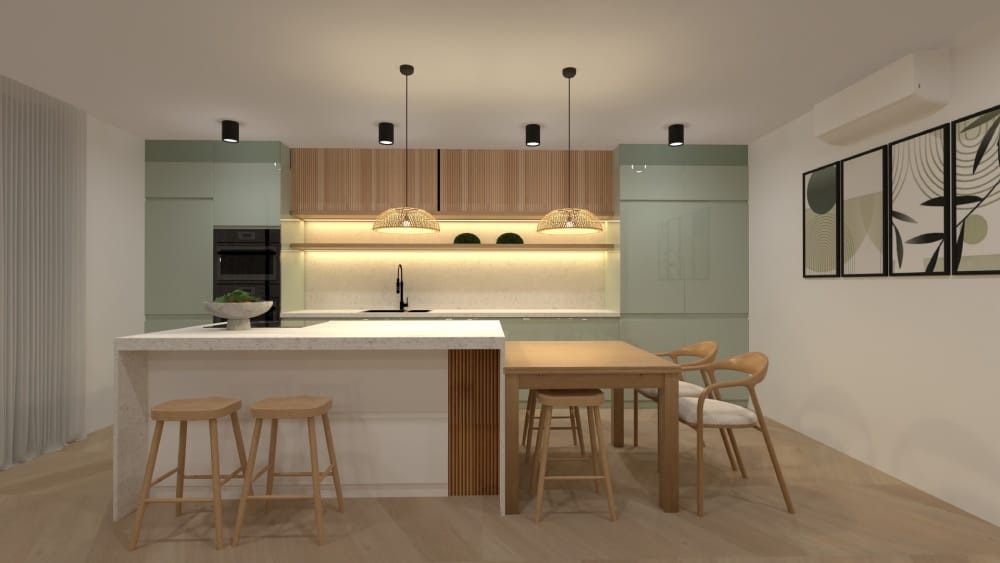
This type of design is ideal for open kitchens and should be complemented by a dedicated extractor hood to keep the environment clean and odor-free. Kitchens with island cooktops also allow for more efficient distribution of cooking work.
With sink
A kitchen island with a sink makes cleaning easier, especially in kitchens looking to optimize workflow. Having the sink in the center of the kitchen makes it easier to access from anywhere, improving efficiency when cooking or cleaning. This design also keeps the cooking area clear of clutter.
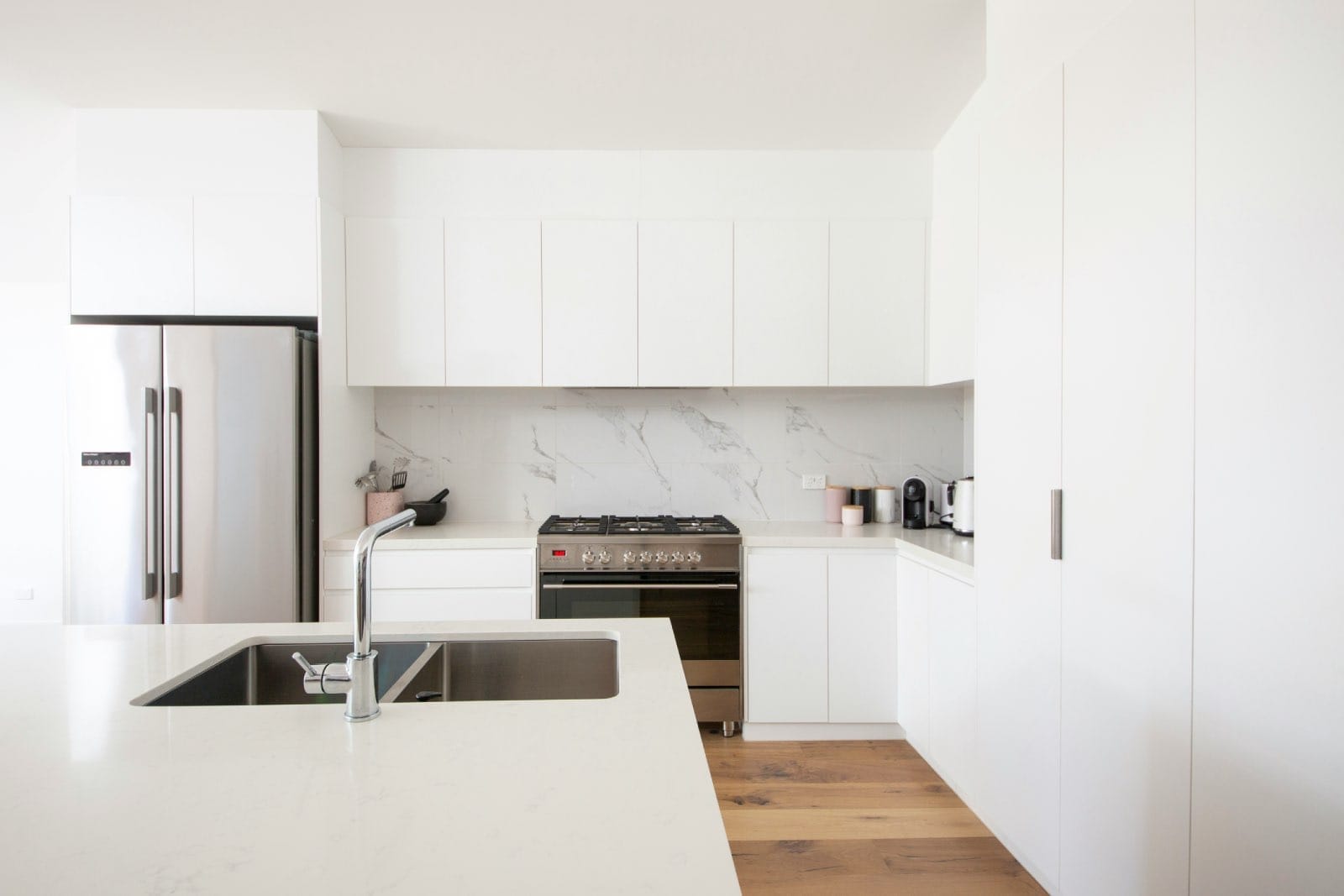
Including under-counter storage and a good plumbing system is essential to make the most of this setup. Islands with sinks are ideal for large, open spaces.
With additional eating space
Incorporating an eating counter into your island transforms your kitchen into a multifunctional space. The island not only serves as a cooking surface, but also as an informal dining area, ideal for breakfast or quick lunches, as a work or homework area, and much more.
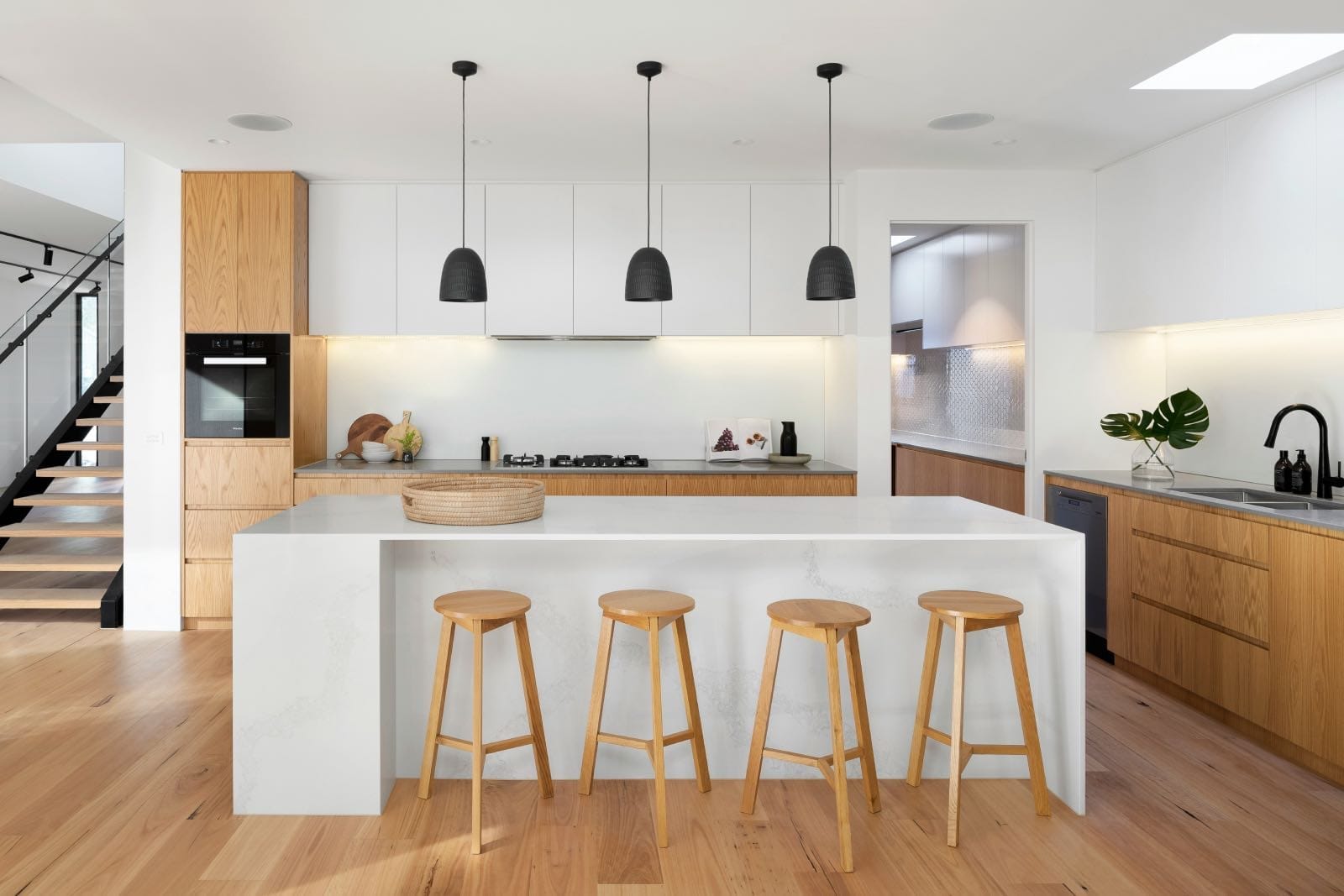
This type of design encourages social interaction, allowing people to sit around the island and chat, turning the kitchen into the true heart of the home. Kitchens with an island and integrated breakfast bar are perfect for homes where the kitchen is a central space for daily living.
Design your dream kitchen
When planning a kitchen renovation or contemplating adding an island, make sure to use a kitchen planner like Planner 5D to make the most of your project.
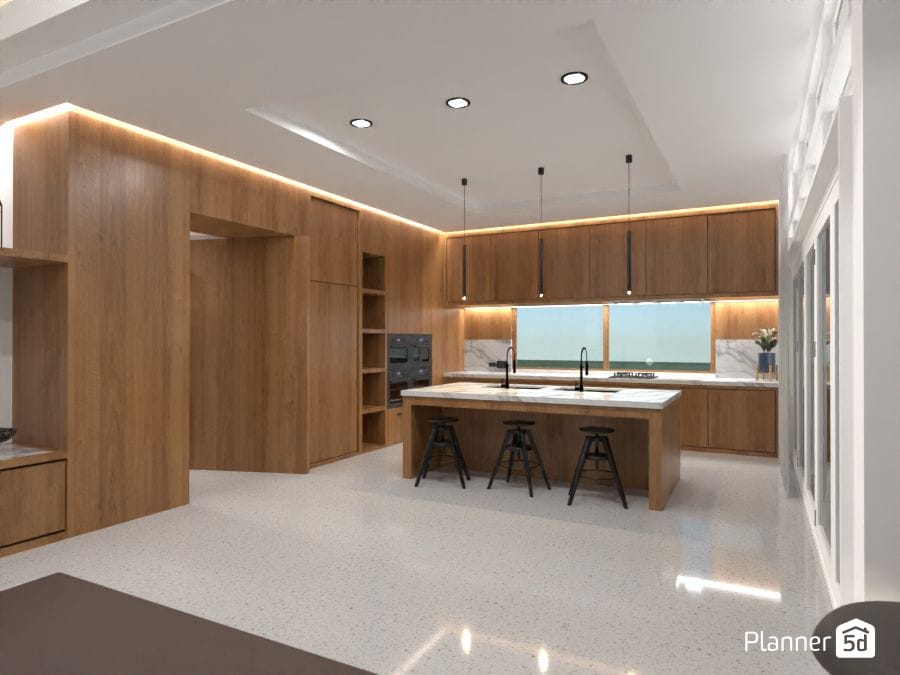
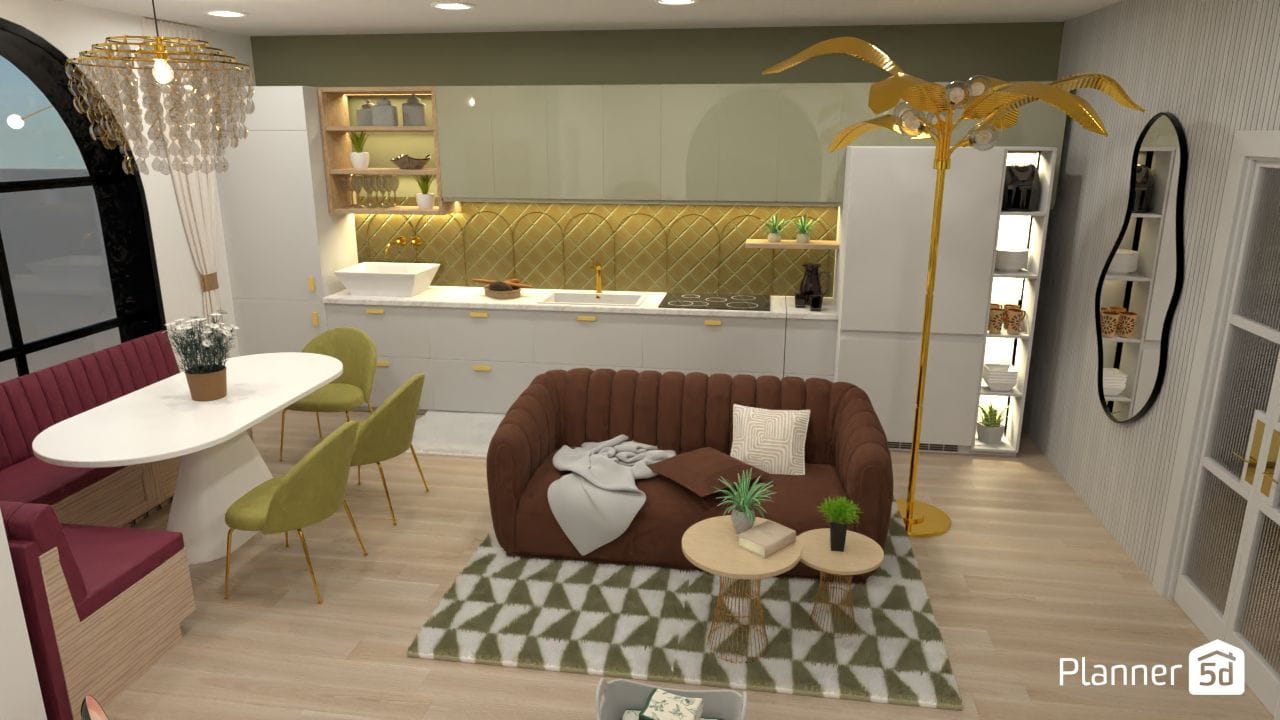
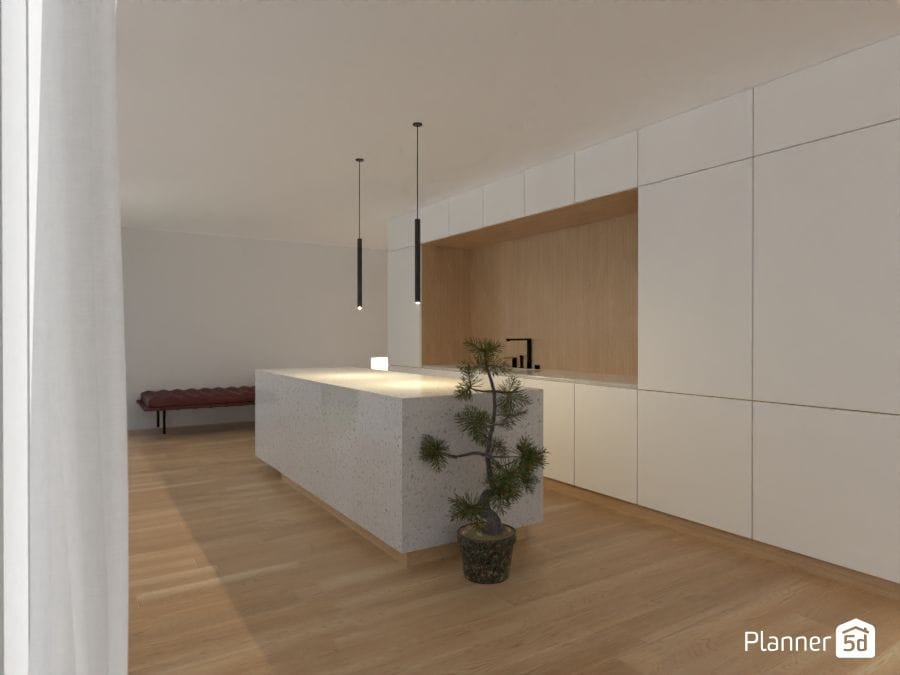
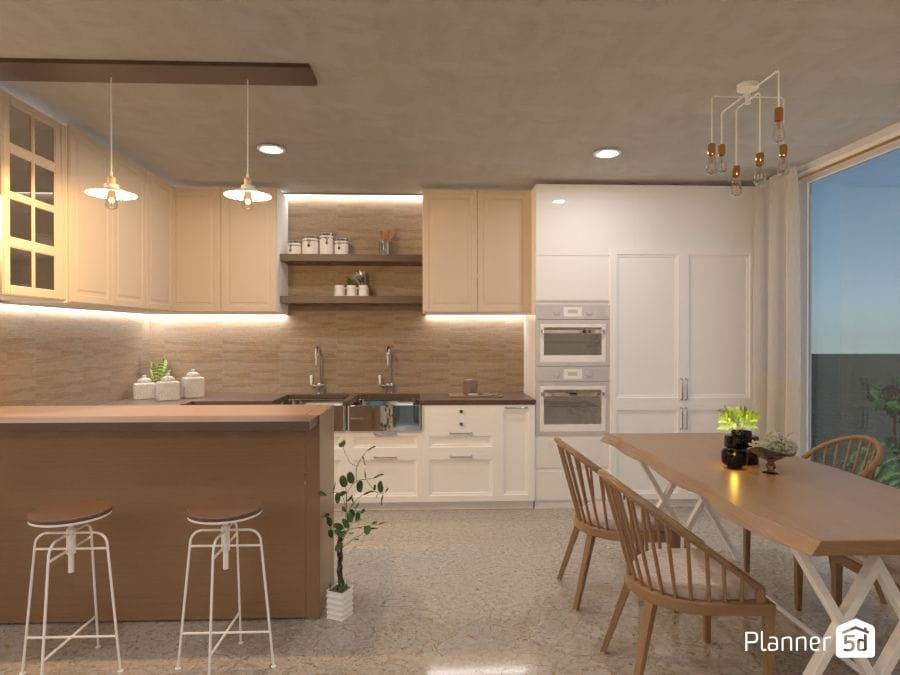
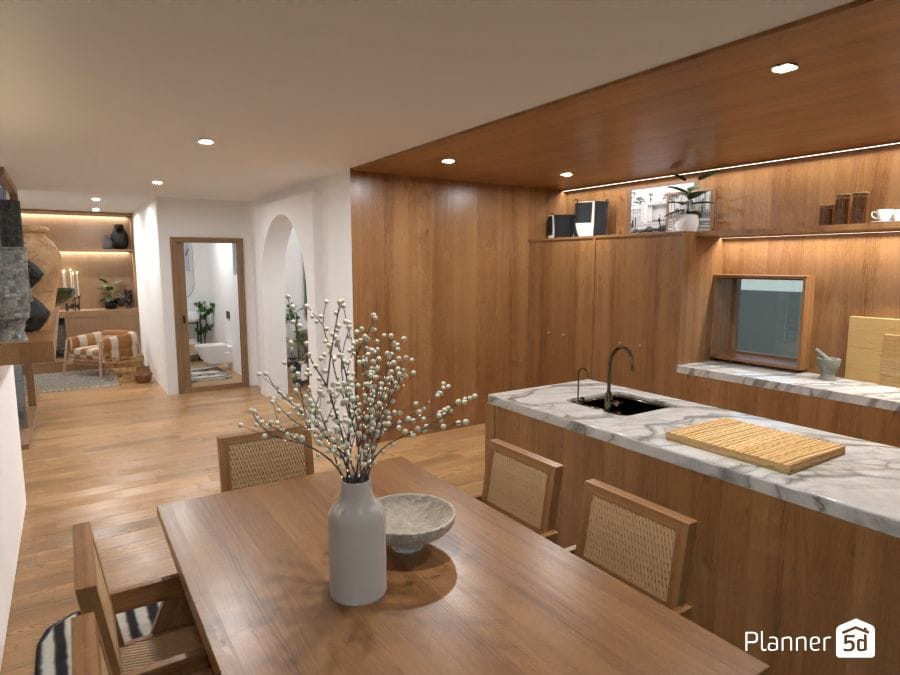
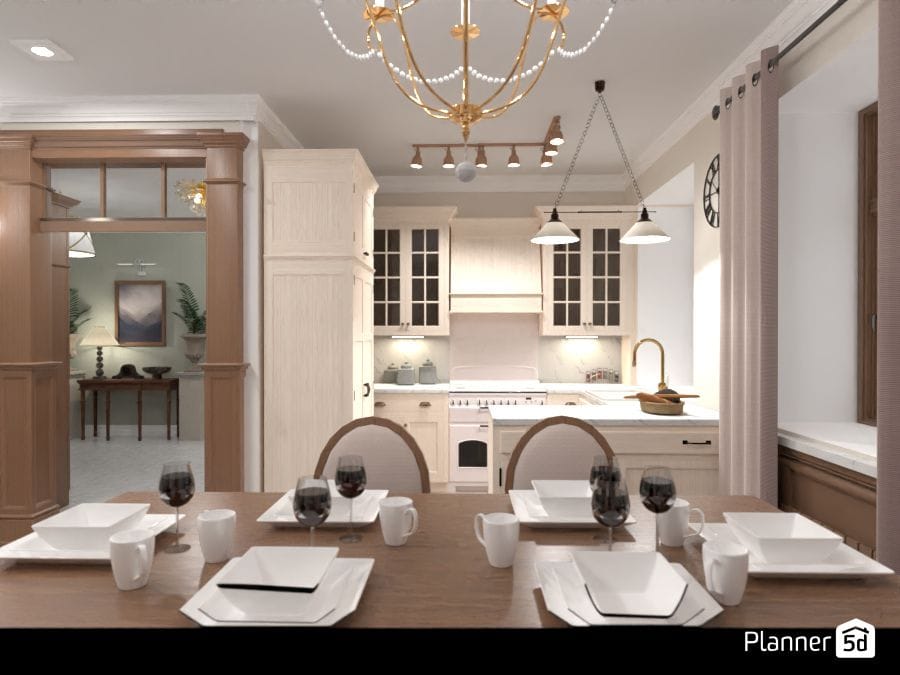
Planner 5D design: James Atkinson, Mari Mond, Benjamin Jaber, Derhy, Ana G y Elena Strenova.
A good kitchen planner lets you make all your mistakes digitally instead of during construction, when changes cost thousands of dollars.
- See before you build - View your kitchen in 3D to spot problems before construction starts
- Test island placement - Try different island sizes and positions to find what layout works best for traffic flow
- Check appliance fit - Make sure your new refrigerator or stove actually fits in the planned space
- Experiment with layouts - Compare galley, L-shaped, and U-shaped designs without commitment
- Avoid costly mistakes - Catch spacing issues, like doors that won't open fully or tight walkways
- Share design ideas - Show contractors and family members exactly what you want
- Play with finishes - Test different cabinet colors and countertop materials together
- Plan storage needs - Design enough cabinet and drawer space for your cooking style
- Perfect the lighting - Plan task lighting, ambient lighting, and natural light sources
Conclusion
In recent years, the kitchen island has become a highly desirable addition to kitchen design, offering both functionality and aesthetic value. Beyond providing additional cooking surfaces, islands can serve as extra storage space, or even as social, cooking, or cleaning areas.
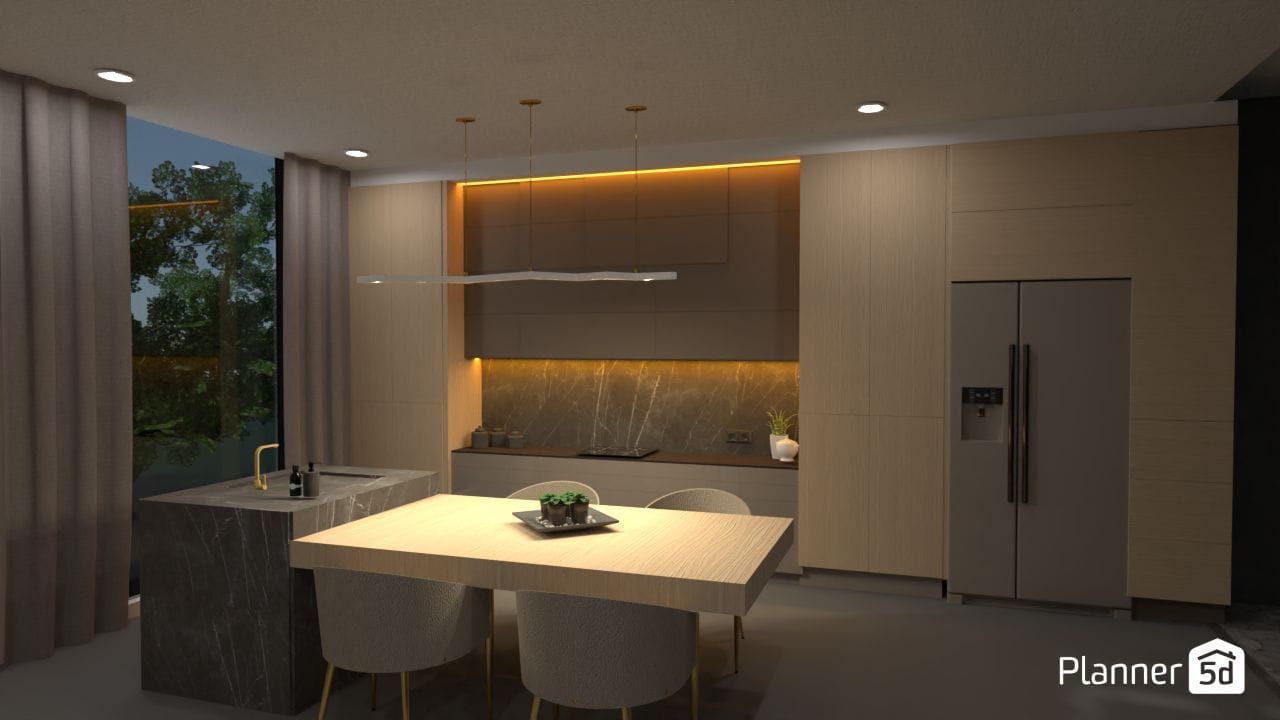
With proper planning, a kitchen island can transform any space, adapting to the needs of the home. Whether small or multifunctional, a well-designed island has the potential to become the heart of the home, uniting aesthetics and functionality to create a welcoming and efficient space.
Planner 5D: The Future of Interior Design
Experience the power of AI-driven design with Planner 5D. Our innovative tools, including the Design Generator, Smart Wizard, and AI floor plan recognition, make bringing your dream home to life easier than ever. Transform your vision into reality and unlock a world of design possibilities today.
Start designing your dream home