How to Paint a Windowless Hallway: Colors That Brighten Dark Spaces
Unsure what color to paint a hallway with no windows? Use these colors for the best outcome.
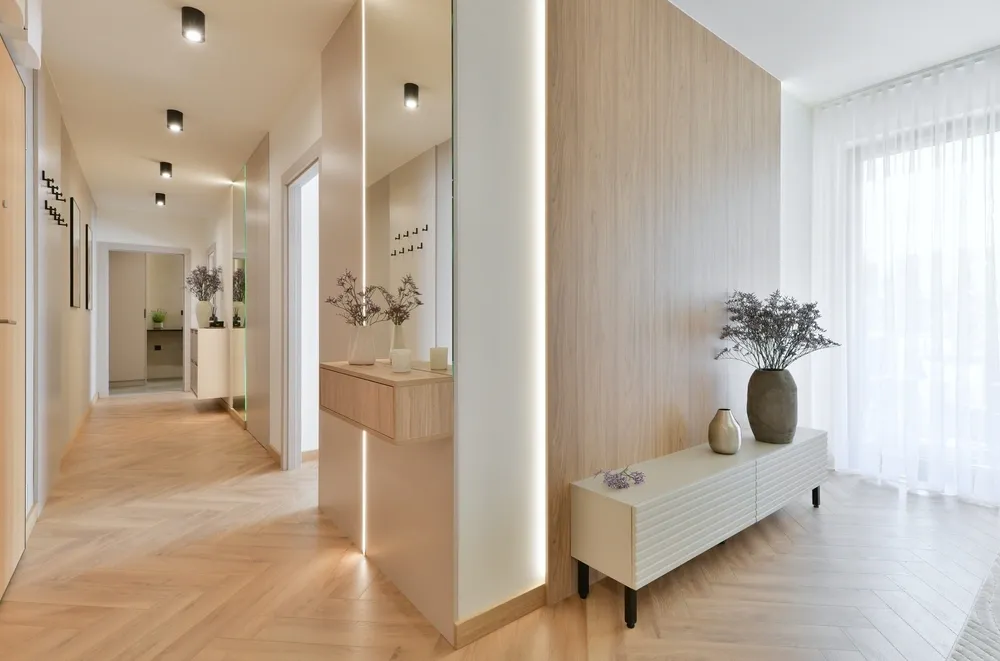
The best paint colors for hallways with no windows are warm whites, light beiges, and warm-toned light grays. These colors maximize artificial light reflection and prevent the space from feeling dark or dingy. Avoid cool grays, dark colors, and pure white.
Best paint colors for windowless hallways
- Warm white works great when it's not stark. Look for off-white, cream, or ivory shades. These reflect light without feeling cold or sterile.
- Warm beige and greige are solid choices, too. Pick light tan with yellow or gray undertones. These colors add coziness while keeping the space bright.
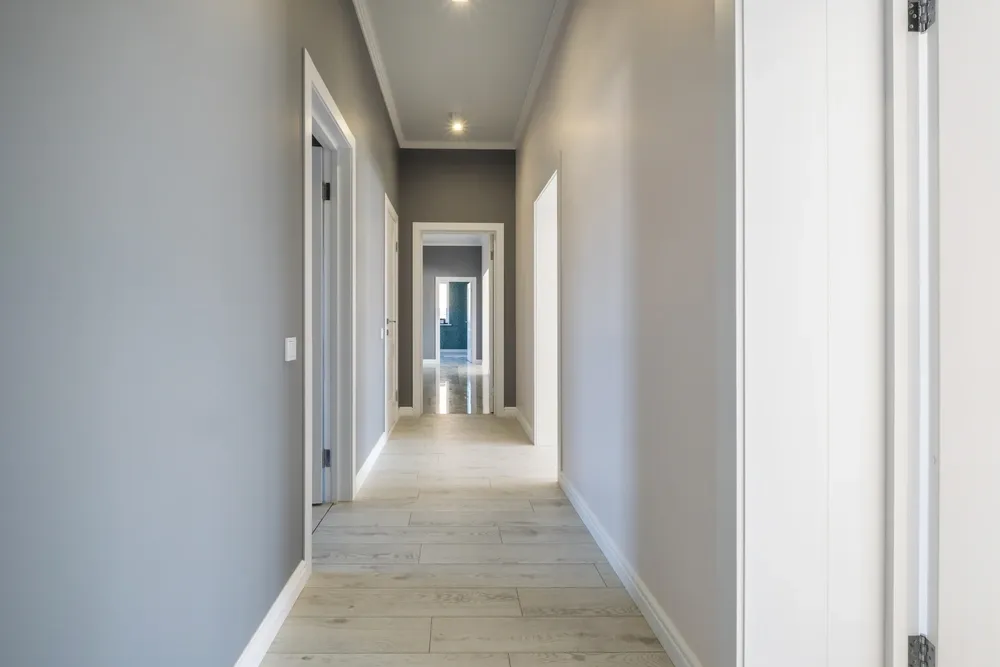
- Light warm gray also does the job. Make sure to avoid cool grays, which look dingy without natural light. The warmth matters more than you might think.
- Soft yellow in very pale, butter tones can work as well. It adds warmth and brightness without being too bold.
These colors work because they reflect artificial light effectively, create the illusion of brightness, and compensate for the lack of natural light. Light colors also make narrow spaces feel wider.
Want to design your dream home faster?
Let AI do the heavy lifting with Planner 5D.
Paint finish matters
Choose satin or eggshell over matte. These finishes reflect more light, which is crucial in a windowless space. Flat paint absorbs light and makes hallways feel darker.
Colors to avoid
Cool grays and blues look dull and dingy without natural light. Dark colors like navy, charcoal, and dark green make the space feel closed in and smaller. Pure white can look sterile and harsh under artificial light.
Bold colors are overwhelming in a confined space with no light relief. Dark colors do work in one situation: if your hallway is wide, well-lit with artificial lights, and you want a dramatic look. Otherwise, stick with light tones.
Lighting is half the battle
Paint color alone won't fix a dark hallway. You need to address lighting as well.
- Add multiple light sources instead of relying on one overhead light.
- Use warm LED bulbs rated at 2700-3000K.
- Install brighter fixtures or increase the wattage.
- Wall sconces provide layered lighting that feels better than a single ceiling fixture.
- Mirrors reflect light around the space.
- Light-colored flooring helps. Think of paint as one piece of the puzzle, not the whole solution.
Test your colors first
Buy sample sizes of 2-3 colors you're considering. Paint large swatches (at least 2 feet by 2 feet) to see how they look. View them at different times with your lights on.
Colors look different under artificial versus natural light. What looks good in the store may disappoint in your windowless hallway. Live with your samples for 24-48 hours before deciding.
Popular paint color options
Look for warm undertones. Avoid any color with blue or green undertones. These colors are worth testing (but always test in your space first):
- Benjamin Moore: White Dove, Pale Oak, Edgecomb Gray
- Sherwin-Williams: Alabaster, Accessible Beige, Agreeable Gray
Quick decision guide
- Narrow and windowless? Go with warm white or cream.
- Wide and windowless? Light warm beige or greige works well.
- Short and windowless? Use a light color on the walls and ceiling.
- Long and windowless? Light walls with a slightly darker ceiling to visually lower the space.
Planner 5D: The Future of Interior Design
Experience the power of AI-driven design with Planner 5D. Our innovative tools, including the Design Generator, Smart Wizard, and AI floor plan recognition, make bringing your dream home to life easier than ever. Transform your vision into reality and unlock a world of design possibilities today.
Start designing your dream home