What Type of Furniture is Best in a Bedroom?
Not sure what type of furniture you need in your bedroom? This guide will help you decide based on your room size.
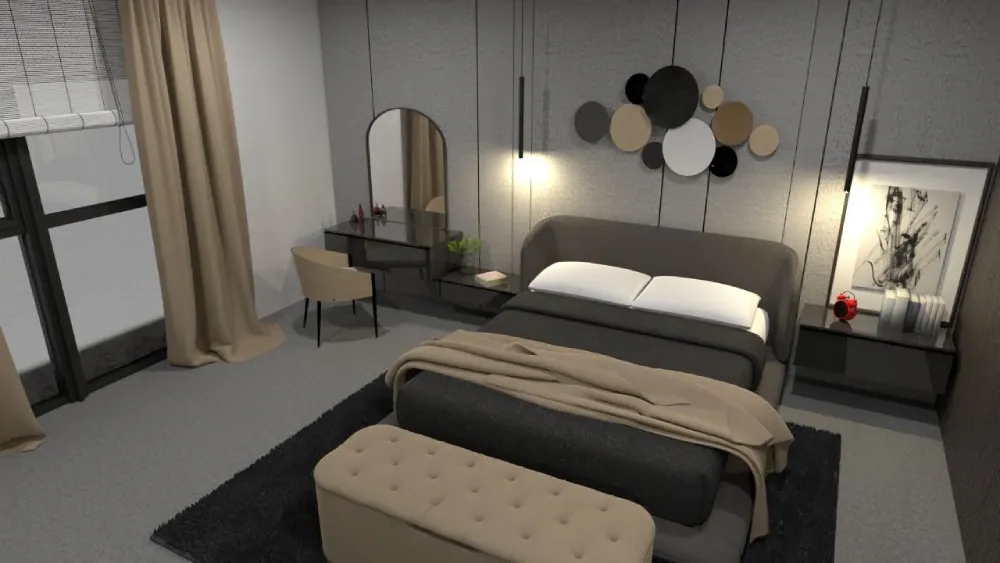
Start with a bed frame, a mattress, two nightstands, and a dresser. Add a bench, chair or desk based on space and budget. Material matters less than scale because your furniture must fit the room without blocking walkways.
The non-negotiables
- A bed frame with storage saves space you're already paying for. Platform beds with drawers or hydraulic lift storage cost $100-300 more than standard frames, but you won't need separate under-bed boxes. Standard frames waste 12-15 inches of vertical space under your mattress.
- Two nightstands, not one. Asymmetry makes a room feel unfinished. Even in tight spaces, use wall-mounted shelves on one side if the floor won't fit two tables. You need a minimum of 24 inches of width per side for a lamp, a phone, and a book.
- A dresser or a tall chest, depending on your room size. Dressers (wide and low) measure 30-36 inches tall and 48-60 inches wide. They work better in rooms 12x12 feet or larger. Chests (tall and narrow) measure 48-54 inches tall and 30-36 inches wide. They're better for bedrooms under 12x12 feet because they use vertical space rather than taking up floor area.
Calculate your drawer needs: 7 drawers minimum for one person's clothes (underwear, shirts, pants, etc.). Two people need 12-14 drawers total. If your closet space is large enough, you can reduce the size of the dresser.
Want to design your dream bedroom faster?
Let AI do the heavy lifting with Planner 5D.
What to add second
1. Bench at the foot of the bed. 90% of people skip this, and they shouldn't. It solves multiple problems: where to sit while putting on shoes, where to fold clothes, where to place tomorrow's outfit, and a surface that's neither your bed nor the floor.
A comfortable size should be 42-48 inches long, 16-18 inches deep. You need 24-30 inches of clearance between the bed and the wall or dresser to walk around comfortably.
2. Reading chair only if the room is 13x13 feet or larger. In smaller rooms, a chair creates an obstacle course. You'll walk around it 10 times daily, resent it and remove it.
Proper setup requires a chair, a side table, and a floor lamp, which equals a minimum 4x4-foot zone. That's 16 square feet. If that leaves less than 30 inches of clearance on other sides of your bed, skip the chair.
3. A desk for work-from-home needs a minimum of 48 inches. Those 36-inch "compact" desks will make your elbows hate you. Place it perpendicular to the window (facing it creates glare, having it behind you makes your screen dark). Account for desk chair clearance: 36 inches behind the desk.
Furniture that wastes space
Most people buy these but rarely use them.
- Armoire or wardrobe when a closet exists. These made sense in 1900, before built-in closets were common. Today, they eat 6-8 square feet of floor space for less storage than closet organizers. Exception: studio apartments with no closet or a vintage piece you love.
- Oversized headboards taller than 60 inches visually shrink your room and block wall art options. They can cost $400- $1,200 more than standard 48-inch headboards, with no functional benefit.
- Matching bedroom "sets" force you into specific sizes. The dresser might be too wide, the nightstands too bulky. Buy pieces individually based on actual room measurements, not pre-packaged sets designed for showrooms, not your 11x13 bedroom.
Design smarter, not harder.
AI suggestions tailored to your space and style.
Room size-based recommendations
Small bedroom (10x10 to 11x12 feet)
- Queen bed (not king, as that leaves only 12-18 inches walkway)
- Two wall-mounted nightstands or one nightstand plus one wall shelf
- Tall chest (not a wide dresser)
- Skip: bench, chair, desk
- Total: 4 pieces maximum
Medium bedroom (12x14 to 13x14 feet)
- Queen or king bed
- Two nightstands (freestanding)
- Dresser or chest
- Bench at the foot of the bed
- Skip: reading chair and desk (choose one if you must have it)
- Total: 5-6 pieces
Master bedroom (14x16 feet or larger)
- King bed
- Two nightstands
- Dresser plus chest (or large dresser)
- Bench
- Reading chair or desk (not both unless room is 16x18+)
- Mirror (leaning or wall-mounted)
- Total: 6-8 pieces
Material quick reference guide
- Wood furniture (solid or veneer): Durable, timeless, various price points ($200-2000+ per piece). Heavy to move and can scratch. Best for dressers, bed frames and nightstands.
- Upholstered pieces: Soft headboards are comfortable for reading in bed, while fabric benches add texture. Shows wear and is harder to clean. Best for headboards, benches and accent chairs.
- Metal frames: Lighter weight, modern look, less visually heavy. It can be noisy (squeaking) and feels less substantial. Best for small rooms and minimalist styles.
Measurement checklist before buying
- The bed needs a 24 to 30-inch walkway on each side.
- Dresser drawers should open fully without hitting the bed.
- Door swings shouldn't hit furniture.
- Nightstand height should equal mattress height ±2 inches (ideal for reaching the lamp).
- If adding a bench, you need at least 24 inches of clearance to walk around.
- All furniture pieces leave 3+ inches from the wall (air circulation, baseboard clearance).
Planner 5D: The Future of Interior Design
Experience the power of AI-driven design with Planner 5D. Our innovative tools, including the Design Generator, Smart Wizard, and AI floor plan recognition, make bringing your dream home to life easier than ever. Transform your vision into reality and unlock a world of design possibilities today.
Start designing your dream home