How Wide is a Hallway? Standard Width Requirements & Building Codes
Never be confused about the size of the hallway in any home.
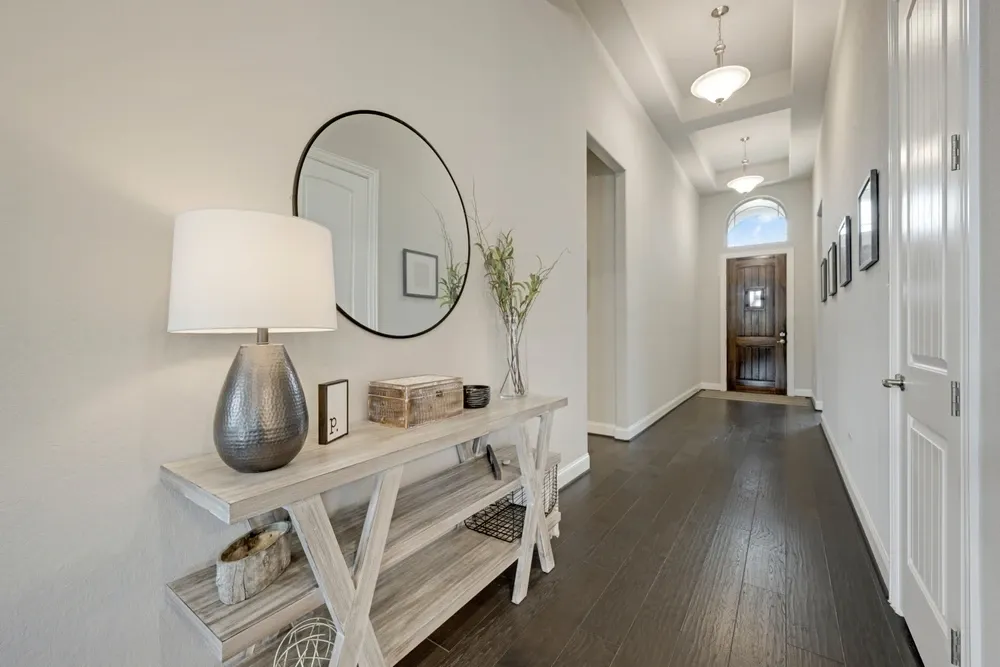
A standard residential hallway is 36-42 inches wide. Building codes require a minimum of 36 inches, though 42-48 inches provides more comfortable passage and easier furniture moving. The width matters for building codes, accessibility and daily comfort.
Standard hallway widths
The minimum residential hallway width is 36 inches (3 feet). This isn't just a suggestion but a requirement in most building codes. Two people can pass each other at this width, but it feels tight.
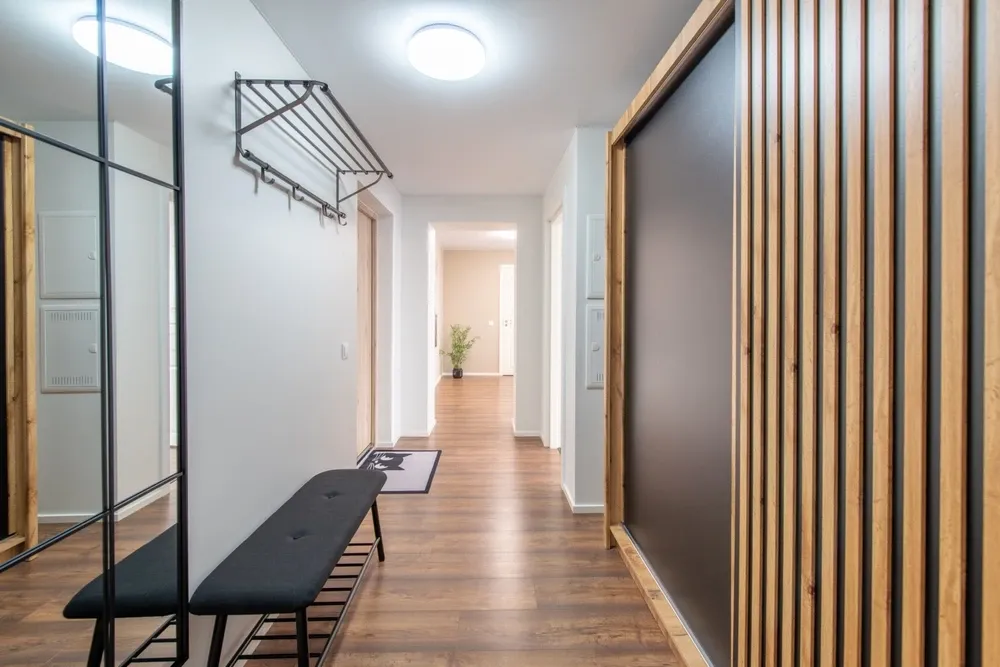
A comfortable standard hallway runs 42-48 inches wide. This gives you breathing room when carrying laundry baskets or when two people need to pass. You'll find this width in most newer homes.
Luxury homes often feature hallways 48-60 inches wide. These feel spacious and allow easy furniture moving. The extra width also creates better visual proportion with taller ceilings.
Want to design your dream home faster?
Let AI do the heavy lifting with Planner 5D.
The 36-inch minimum exists for good reason. It allows two people to pass without turning sideways and meets basic safety requirements for emergency exit routes.
Hallway width by type
- Primary hallways that connect main living spaces typically measure 42-48 inches wide. These get the most traffic and benefit from extra width.
- Secondary hallways leading to bedrooms can be narrower at 36-42 inches. Since fewer people use them at once, the reduced width works fine.
- Commercial hallways require a minimum of 44-60 inches, depending on the building type and how many people use the space. Higher occupancy buildings need wider halls.
- ADA-compliant hallways must be at least 60 inches wide to allow wheelchair users to turn around. While 48 inches works for straight-line travel, the turning radius requires more space.
- Older homes sometimes have narrow hallways of 30-36 inches. These feel cramped, but they were common in earlier construction when space efficiency mattered more than comfort.
Building code requirements
The International Residential Code (IRC) requires a minimum width of 36 inches for residential hallways. This applies to most single-family homes and some multi-family buildings.
Commercial codes vary by location and building type. High-occupancy spaces, such as schools or hospitals, have stricter requirements than small offices.
Stuck on your next design move?
Let AI generate stunning layouts in seconds.
Always check your local requirements before starting construction or renovation. What's legal in one city might not meet code in another.
Exit routes may need wider hallways than standard spaces. If a hallway serves as the primary emergency exit path, expect additional requirements.
Practical considerations
Moving furniture requires at least 32 inches of clearance. A 36-inch hallway gives you just enough room for most pieces, while 42 inches makes the job much easier.
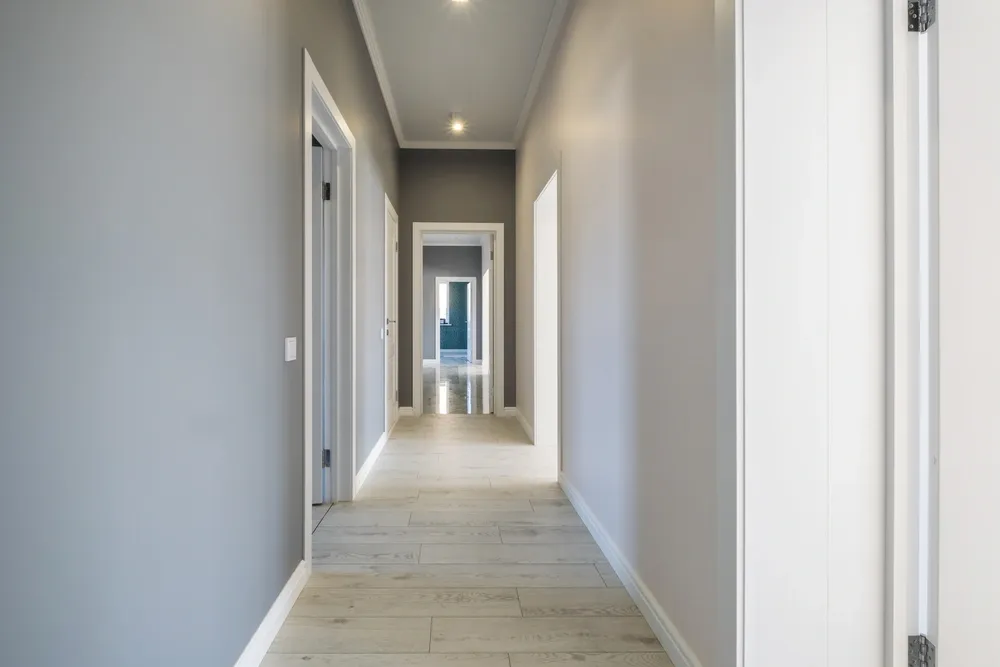
Wheelchair users can navigate 48-inch hallways comfortably for straight travel. But turning around or entering rooms needs that 60-inch width.
Two people passing each other can manage at 36 inches, but it can feel awkward. At 42 inches or more, people can pass without the shuffle-and-turn dance.
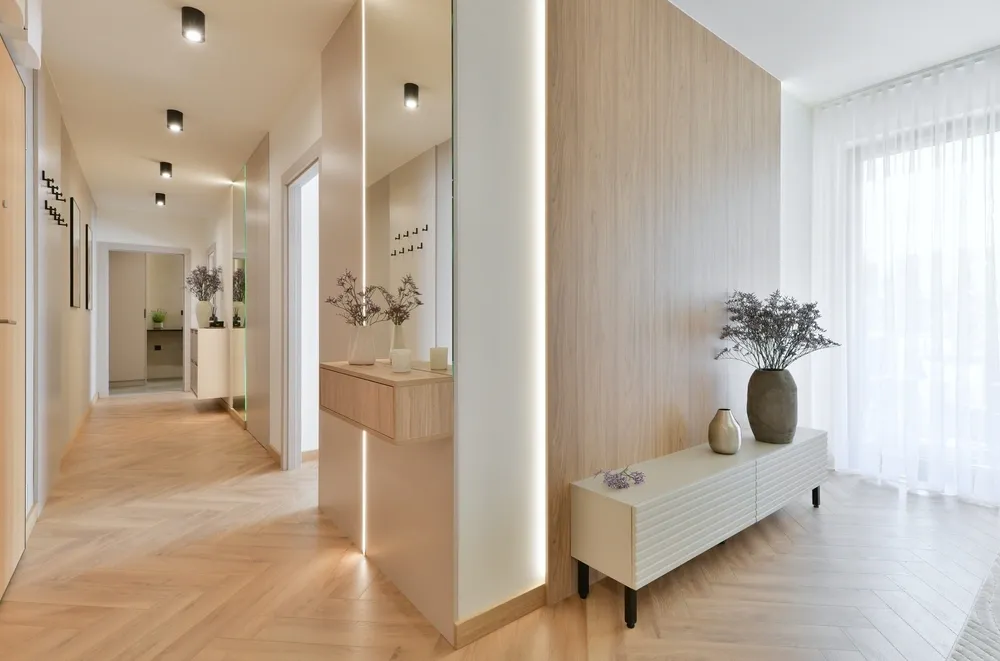
Consider your ceiling height, too. A narrow hallway with tall ceilings can feel like a tunnel, while proper proportions create a pleasant space.
Don't forget door swing clearance. Doors opening into hallways take up space and can block traffic flow.
Quick reference table
| Hallway type | Width | Use case |
|---|---|---|
| Minimum code | 36" | Legal minimum, tight |
| Standard residential | 42-48" | Comfortable daily use |
| Primary/main hall | 48-54" | Spacious, easy traffic |
| ADA accessible | 60" | Wheelchair turning |
| Commercial | 44-60"+ | Code-dependent |
Measuring your hallway
Measure wall-to-wall at the narrowest point to get an accurate reading. This tells you if your space meets code requirements.
Account for baseboards when measuring usable space. The measurement that matters is the actual walking width, not the distance between wall studs.
Check for obstructions, such as light fixtures or wall decor, that reduce the effective width. A 36-inch hallway with a protruding light fixture might not meet the minimum.
Measure at multiple points since hallways aren't always perfectly straight. One narrow spot can create code violations even if the rest meets requirements.
Planner 5D: The Future of Interior Design
Experience the power of AI-driven design with Planner 5D. Our innovative tools, including the Design Generator, Smart Wizard, and AI floor plan recognition, make bringing your dream home to life easier than ever. Transform your vision into reality and unlock a world of design possibilities today.
Start designing your dream home