How to Choose Curtains for Your Living Room in 8 Easy Steps
Not sure how to choose the righ curtains for your living room? Save this post for flawless design every time.
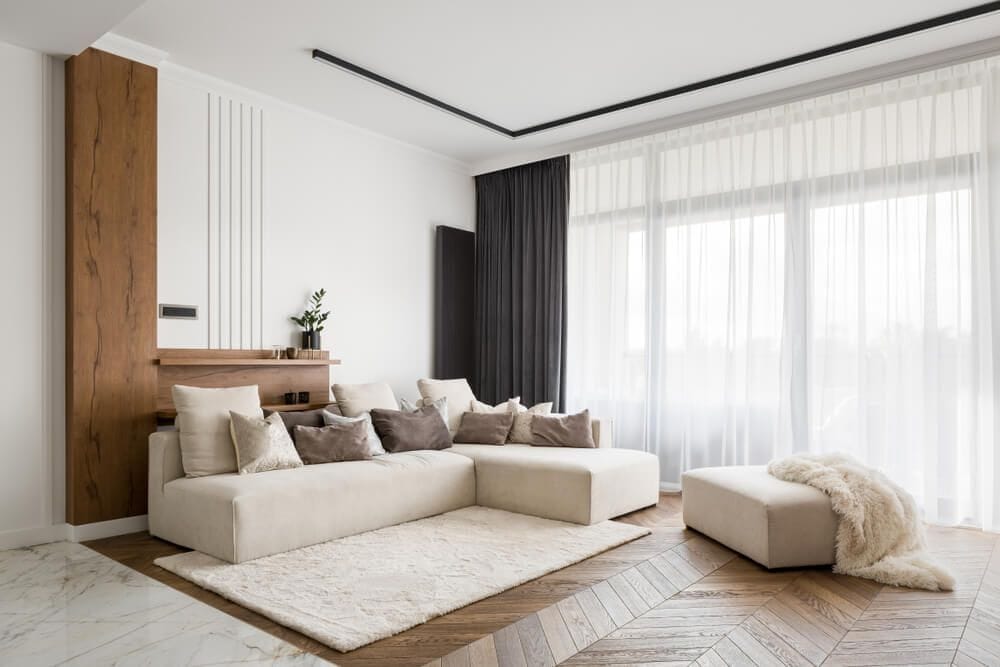
Picking curtains for your living room shouldn't feel like guesswork. You need the right size, the right color, and the right fabric—but with so many options, it's easy to feel stuck.
Here's how to narrow it down:
- Measure your window (width × 2-3, length to floor)
- Choose fabric based on how much light you want
- Pick a color that matches or contrasts with your walls
- Select the hanging style that fits your room
This guide walks you through each step so you can find curtains that look great and work for your space.
Measure your windows
Before you look at colors or fabrics, grab a measuring tape. Getting the size wrong is the fastest way to waste money on curtains that don't fit.
Width: Your curtains should be 2 to 3 times the width of your window. This creates fullness when they're closed. If your window is 60 inches wide, you need curtain panels that add up to 120-180 inches total.
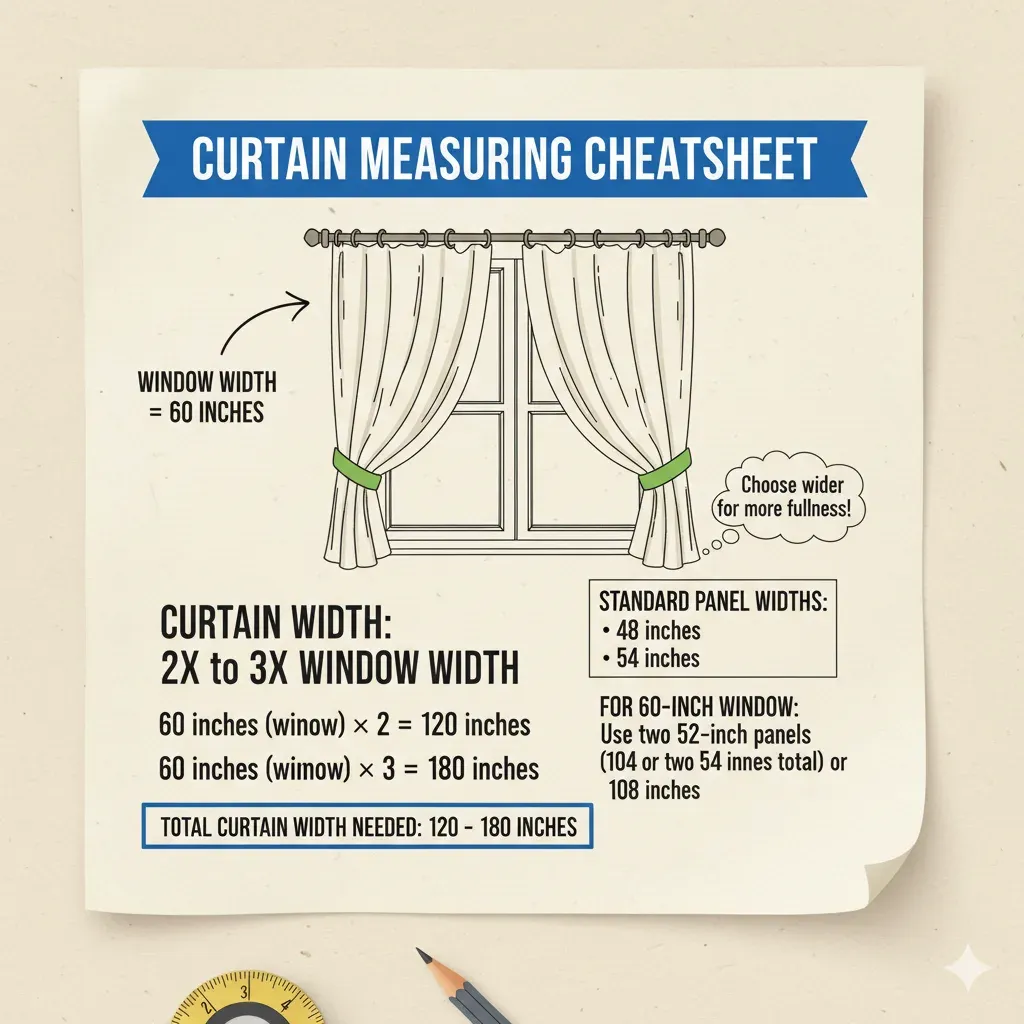
Standard curtain panels come in 48, 52, or 54 inches wide. For that 60-inch window, you'd want at least two 52-inch panels (104 inches) or two 54-inch panels (108 inches) for better fullness.
Length: Most living rooms look best with floor-length curtains. Measure from where you'll hang the rod down to the floor, then subtract 1/2 inch to 1 inch. This keeps the fabric from dragging on the floor while still maintaining a full-length look.
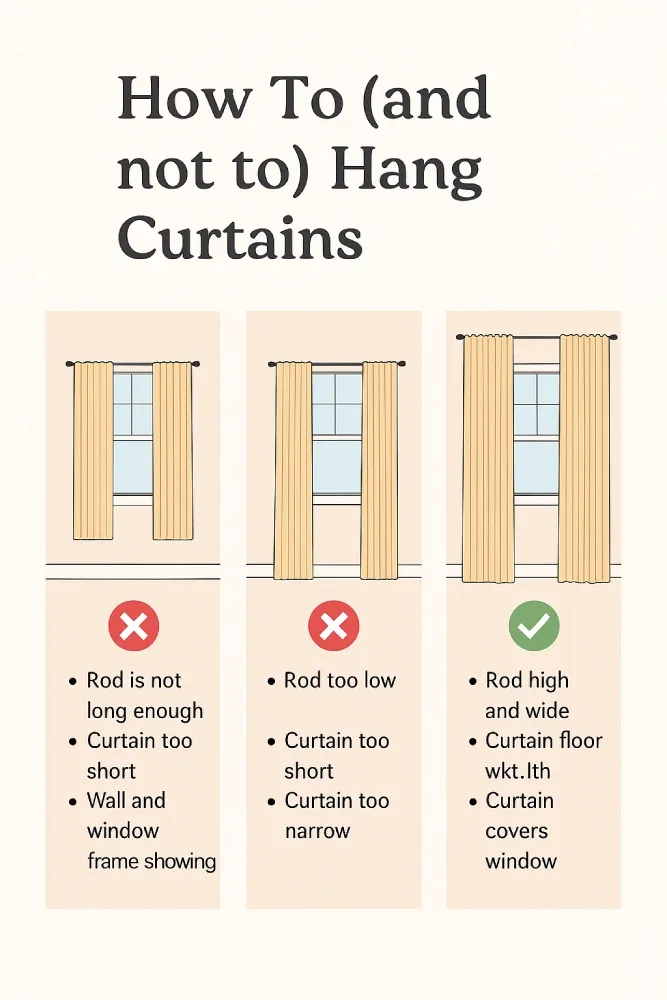
Rod placement: Hang your rod 4 to 6 inches above the window frame. This makes your ceiling look higher. The rod should also extend 3 to 6 inches past each side of the frame so curtains can open fully without blocking the window.
Choose the right curtain length
The length you pick changes how formal or casual your room feels.
- Floor length is what most people choose. The curtains hang about 1/2 inch above the floor. This works in almost any living room and looks clean and finished.
- Puddle length adds 1 to 3 inches of extra fabric that pools on the floor. This looks fancy and formal, but it's harder to keep clean. Save this for living rooms you don't use every day.
- Sill length stops right at the window sill or about 1/2 inch above it. This works in casual spaces or if you have furniture right under the window. But in most living rooms, floor-length curtains look more polished.
If you're not sure, go with floor length. It fits most rooms and looks good with almost any style.
Select fabric type
The fabric you pick controls how much light gets in and how much privacy you have.
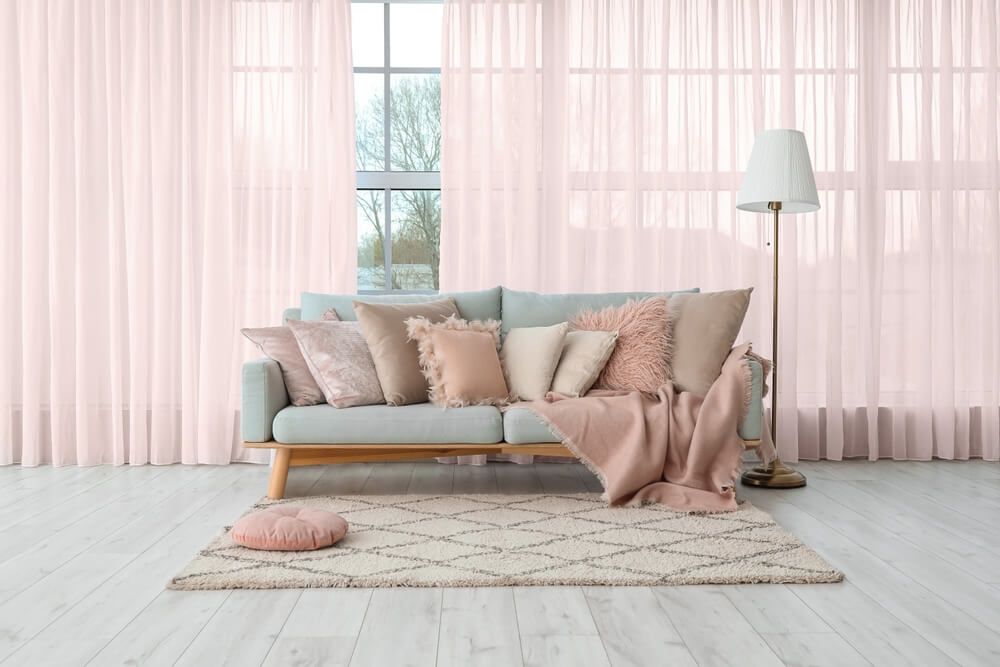
- Light-filtering fabrics like cotton, linen, or sheer materials let natural light through while still providing some privacy during the day. These work well if your living room needs to feel bright and open.
- Blackout fabrics like polyester or velvet block almost all light. Use these if you watch TV during the day, want to sleep in a living room that doubles as a guest room, or need to keep out the hot afternoon sun.
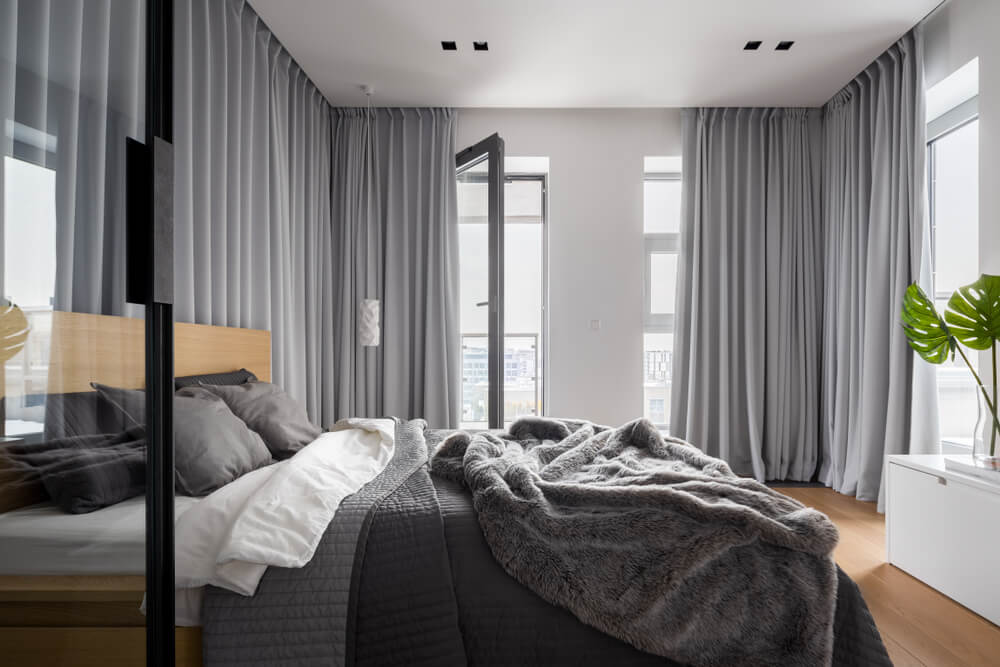
- Insulating fabrics with thermal backing help keep your room warmer in winter and cooler in summer. Heavy fabrics like velvet also add insulation. This matters if your windows let in drafts or if you want to lower your energy bills.
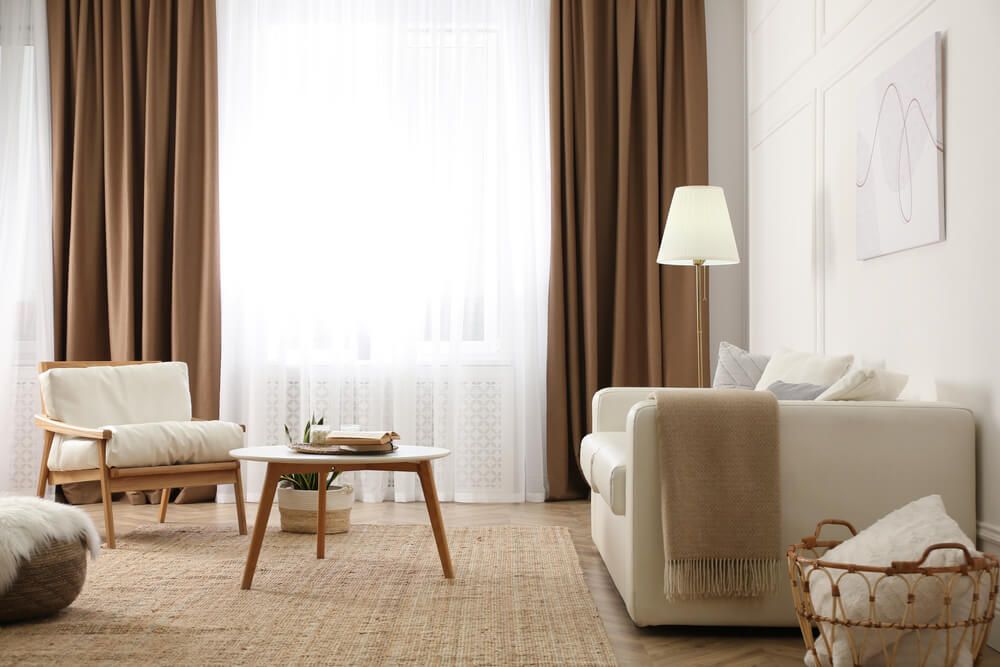
Think about what your room needs. If you want both light during the day and darkness when you need it, you can layer sheer curtains with heavier ones.
Pick the right color
Color choice can feel overwhelming, but there are clear rules that make it easier.
- Match your wall color if you want curtains that blend in. Light gray walls with light gray curtains create a calm, cohesive look. This makes small rooms feel bigger because there's less visual break between the walls and windows.
- Contrast with your walls if you want curtains to stand out. Dark blue curtains on white walls create a bold statement. This works well in larger rooms where you can handle more visual weight.
- Match furniture or accent colors to tie the room together. If you have navy throw pillows, navy curtains connect that color throughout the space.
- Neutral colors like white, beige, gray, or tan work in almost any room and won't feel dated in a few years.
- Bold colors like emerald green or deep burgundy add personality but commit you to that color scheme.
- Light fabrics make a room feel airy and bigger.
- Dark fabrics make a space feel cozy, but can visually shrink the room. In a small living room, stick with lighter colors unless you want a moody, intimate feel.
Preview your curtains before you change them
Try our visualizer today
Decide between patterns and solids
Patterns add visual interest, but they're not right for every room.
Use patterns in larger living rooms where they won't overwhelm the space. The pattern scale matters too—big, bold patterns need room to breathe, while small patterns can work in tighter spaces.
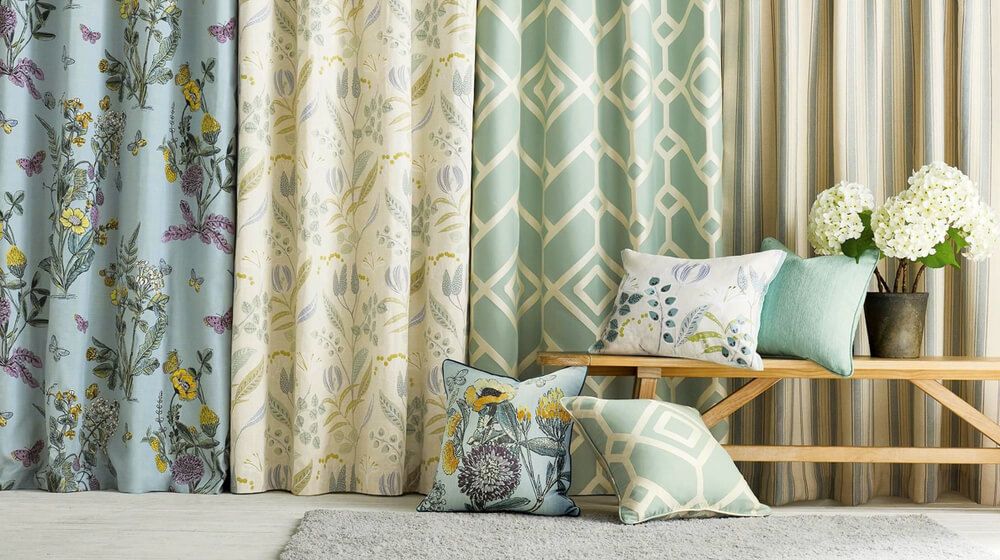
If your living room already has patterned furniture, rugs, or throw pillows, solid curtains usually work better. Too many patterns compete with one another, making the room feel chaotic.
Use solid curtains when you want a clean, simple look or when other elements in the room already provide visual interest. Solids are safer if you're not confident mixing patterns.
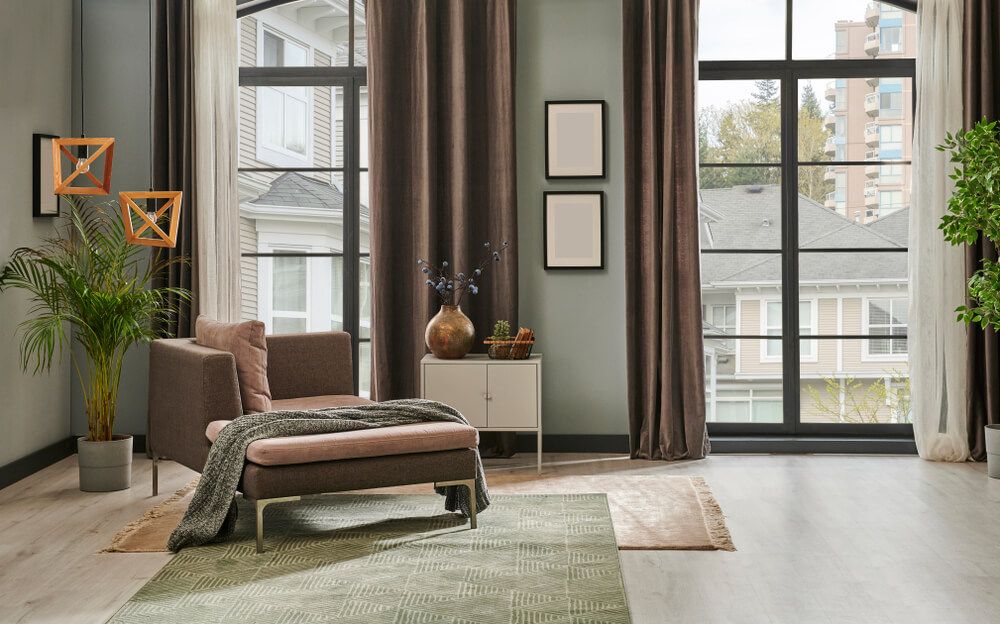
You can still add texture with solid curtains, for example, linen weaves, subtle stripes, or jacquard fabrics give you dimension without busy patterns.
Design smarter, not harder.
AI suggestions tailored to your space and style.
If you do mix patterns in one room, make sure they share at least one color and vary the scale. Don't put two medium-sized patterns next to each other.
Choose your hanging style
How you hang curtains affects both function and style.
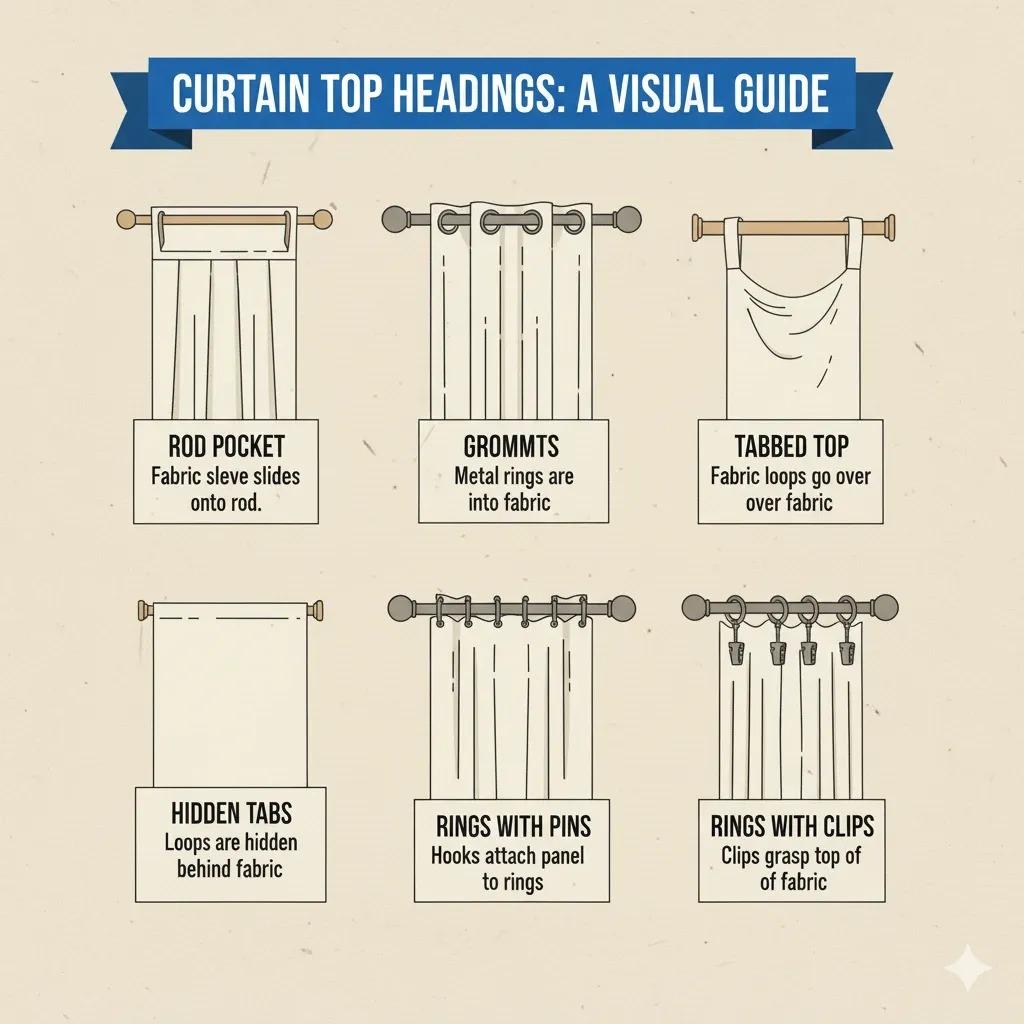
Rod pocket curtains have a pocket sewn at the top that slides onto the rod. These create a gathered, traditional look but are harder to open and close smoothly.
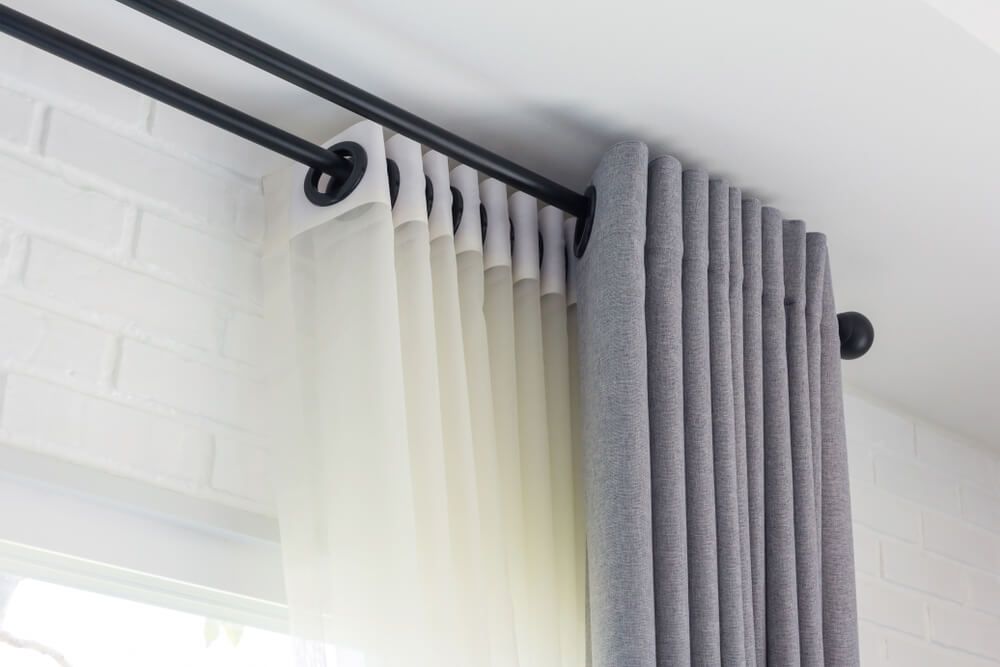
Grommets are metal rings at the top of the curtain that slide along the rod. They open and close easily and create even, modern folds.
Tabs are fabric loops that attach the curtain to the rod. They look casual and beachy but don't slide as smoothly as grommets.
Rings with clips attach to the top of the curtain and hang from the rod. You can adjust the length easily, and they work with almost any curtain panel.
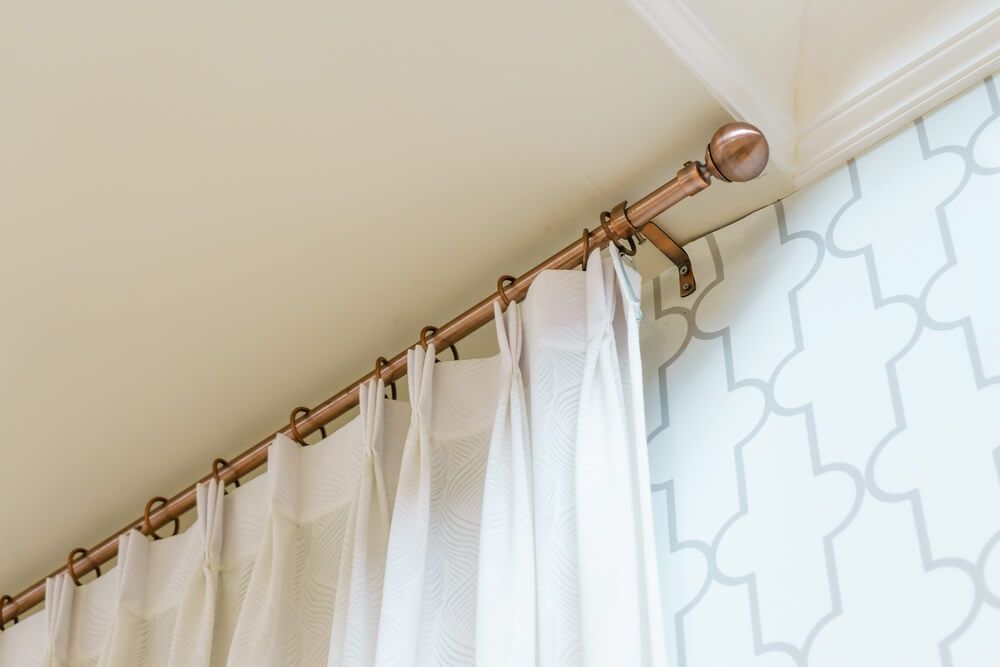
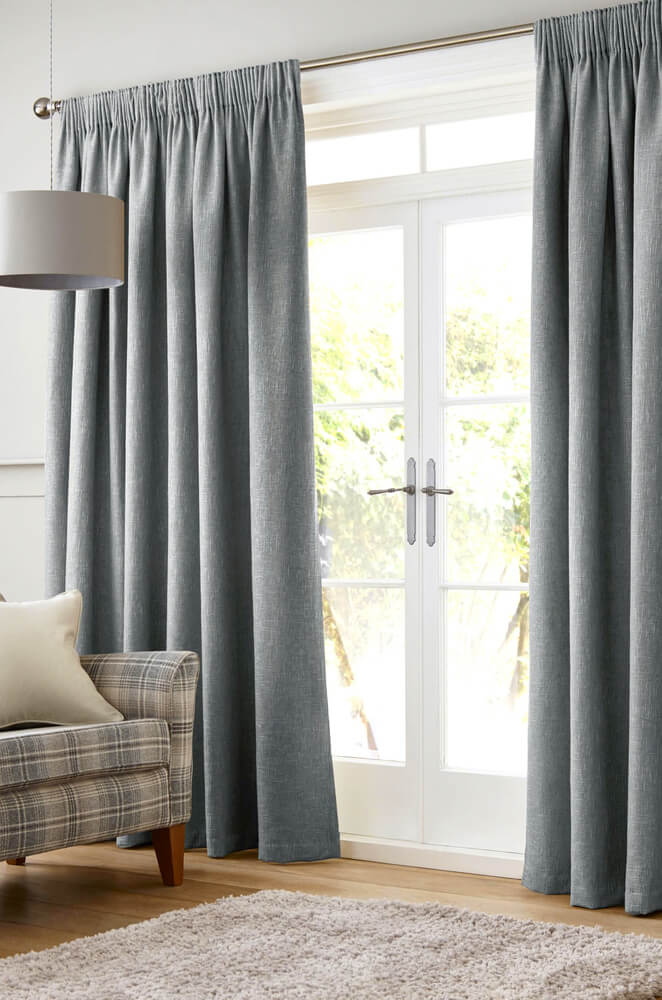
Pleated styles add formality. Pinch pleats create structured folds and look traditional. Pencil pleats are smaller and more delicate. Ripplefold creates sleek, modern waves and works well in contemporary spaces.
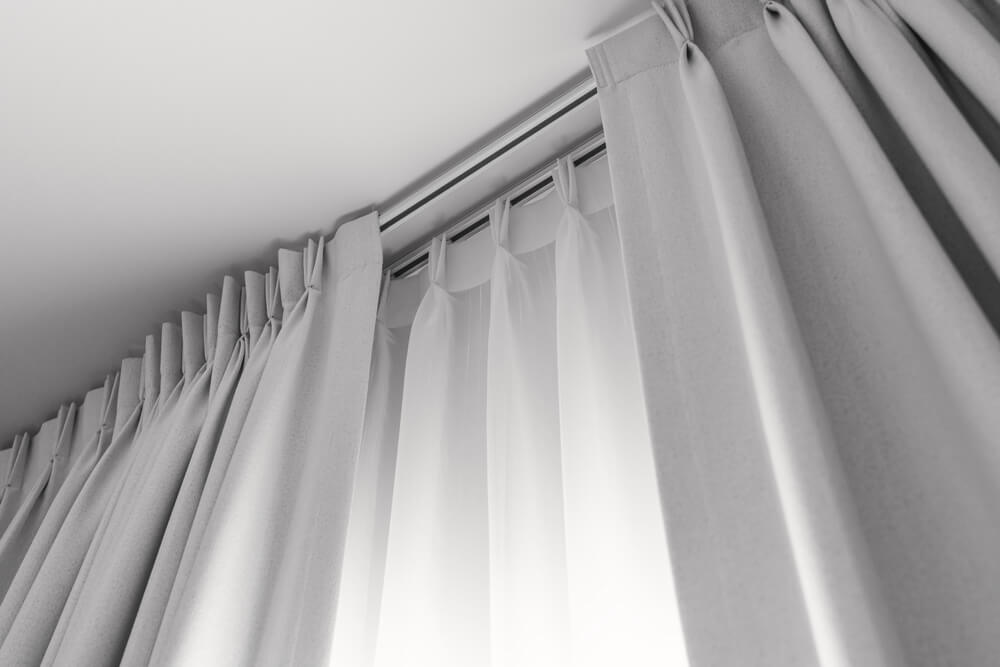
Your hardware matters too. Modern rooms look good with simple metal rods in black, brass, or chrome. Traditional rooms can handle decorative finials and more ornate rods.
Consider additional features
Basic curtains work fine, but a few upgrades can make them work better.
- Lining adds privacy, blocks more light, and helps curtains hang better. It also protects the main fabric from sun damage. Blackout lining blocks the most light, while standard lining just adds a layer of privacy.
- Thermal lining or insulated curtains help control temperature. If your living room gets hot in summer or cold in winter, this upgrade pays off.
- Tiebacks and holdbacks let you pull curtains to the side during the day. Tiebacks are fabric or rope, while holdbacks are mounted hardware. Both keep your curtains neat and let in maximum light when you want it.
- Layering gives you flexibility. Hang sheer curtains closest to the window for daytime privacy and light filtering, then add heavier curtains on top for nighttime privacy and light blocking.
Common mistakes to avoid
- Curtains that are too short are the biggest problem. If your curtains stop a few inches above the floor, they look like you bought the wrong size. Always go to the floor or just above it.
- A rod that's too narrow makes your curtains block the window even when open. Extend the rod at least 3 inches past the frame on each side so the curtains can stack off the window.
- The wrong fullness ratio happens when people buy curtains that match their window width exactly. You need at least 2 times the window width, preferably 2.5 to 3 times, for curtains to look full and gathered.
- Ignoring ceiling height is a missed opportunity. Hanging curtains at ceiling height, rather than just above the window, makes your room look taller. In a room with 8-foot ceilings, this trick adds visual height.
Ready to design your living room?
Now you know exactly what to look for. Measure your windows, pick a fabric that suits your lighting needs, choose a color that complements your walls, and select hardware that matches your style.
Design your complete living room
with our free tool
The right curtains don't just cover your windows—they finish the whole room. Take your time with measurements and you'll end up with curtains that look custom-made for your space.
FAQ
What length should living room curtains be?
Floor-length curtains work best in most living rooms. Measure from your curtain rod to about 1/2 inch above the floor. This length looks finished and polished. Avoid curtains that stop several inches above the floor—they make the room look unfinished.
How wide should the curtains be for my window?
Your curtains should be 2 to 3 times wider than your actual window. For a 60-inch window, you need a total curtain width of 120 to 180 inches. This creates the fullness that makes curtains look expensive and full when closed.
What color curtains make a room look bigger?
Light colors make a room feel larger and more open. White, cream, light gray, or soft beige curtains reflect light and don't create visual breaks. Matching your curtains to your wall color also helps a small room feel bigger by creating a seamless look.
Should living room curtains touch the floor?
Yes, living room curtains should reach the floor or stop about 1/2 inch above it. This length looks intentional and polished. Curtains that hang several inches above the floor look like a mistake.
Planner 5D: The Future of Interior Design
Experience the power of AI-driven design with Planner 5D. Our innovative tools, including the Design Generator, Smart Wizard, and AI floor plan recognition, make bringing your dream home to life easier than ever. Transform your vision into reality and unlock a world of design possibilities today.
Start designing your dream home