Feng Shui Living Room Layout: 6 Arrangements to Try Now
Six feng shui living room layouts explained, from small spaces to open plans.
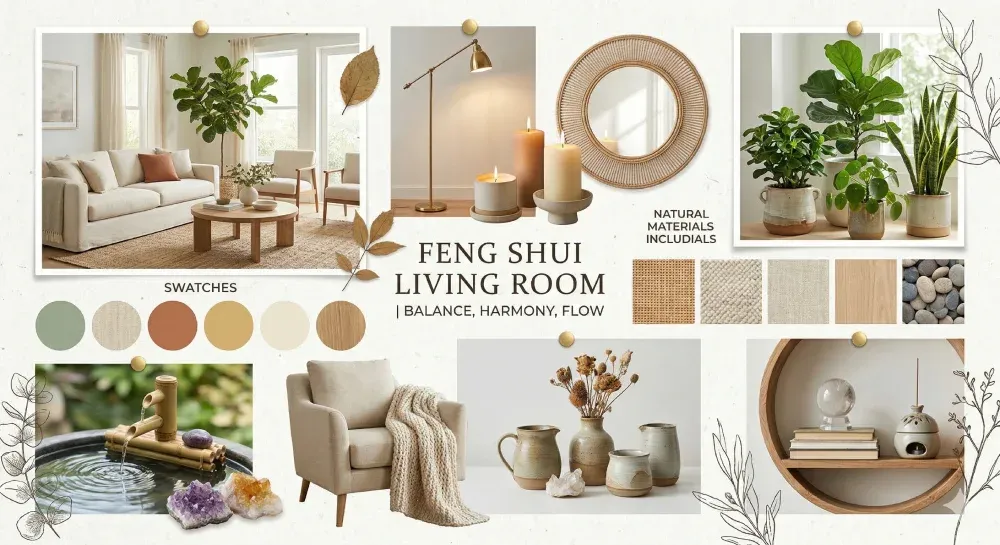
Where you place your furniture shapes how a room feels to move through and sit in. Feng shui layout focuses on three things: a clear view of the entrance, stable seating placement, and a balanced arrangement that leaves the room easy to navigate.
Core layout principles
- Command position: Place the main sofa so it faces the entrance but is not directly in line with the door.
- Solid backing: The sofa should sit against a solid wall, not floating in the middle of the room or in front of a window.
- No back to the door: Avoid seating where people sit with their backs to the entrance. This creates unease.
- Clear paths: Leave at least 30 inches of walking space around furniture. Keep the center of the room open.
- Avoid sharp angles: Coffee table corners or angled shelving pointed at seating spots disrupt comfort. Opt for rounded edges where possible.
Layout 1: Sofa facing entrance (diagonal placement)
Best for: Rectangular rooms where the sofa cannot sit directly opposite the door.
Works in: Medium- to large-sized living rooms.
How to arrange: Place the sofa at a slight diagonal so it faces the entrance from across the room. Angle two accent chairs to face the sofa, creating a loose triangle. Use a round or oval coffee table in the center. This setup lets everyone in the seating area see who enters.
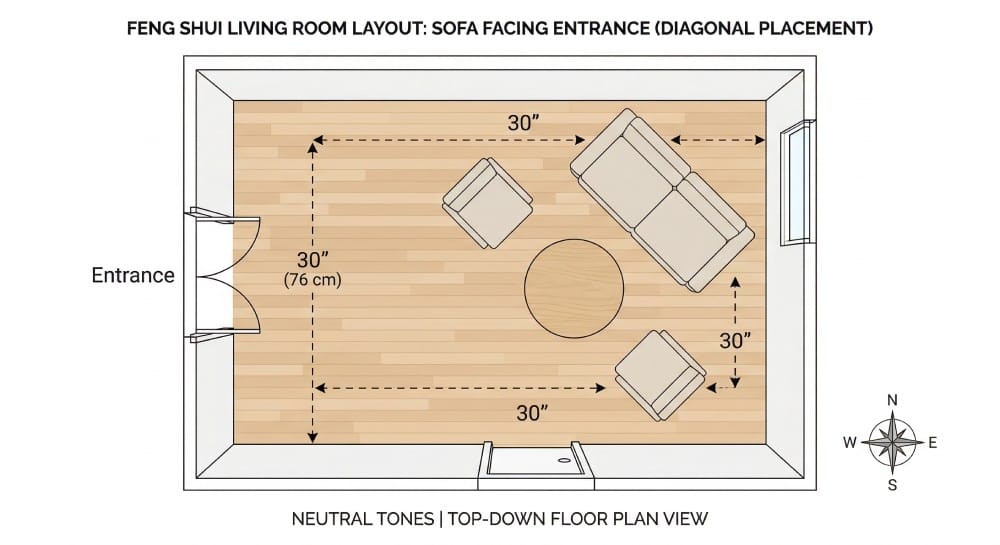
What to avoid: Don't angle the sofa so sharply that it blocks the main walking path. Keep at least 30 inches clear between the sofa and the nearest wall or chair.
Want to design your dream home faster?
Let AI do the heavy lifting with Planner 5D.
Layout 2: Sofa against a solid wall
Best for: Rooms where the main wall directly faces or flanks the entrance.
Works in: Most room shapes, especially square rooms.
How to arrange: Push the sofa flush against the longest solid wall. Place two chairs opposite each other, facing the sofa. A rectangular coffee table works well here, centered between the two seating sides. This is the most stable layout option.
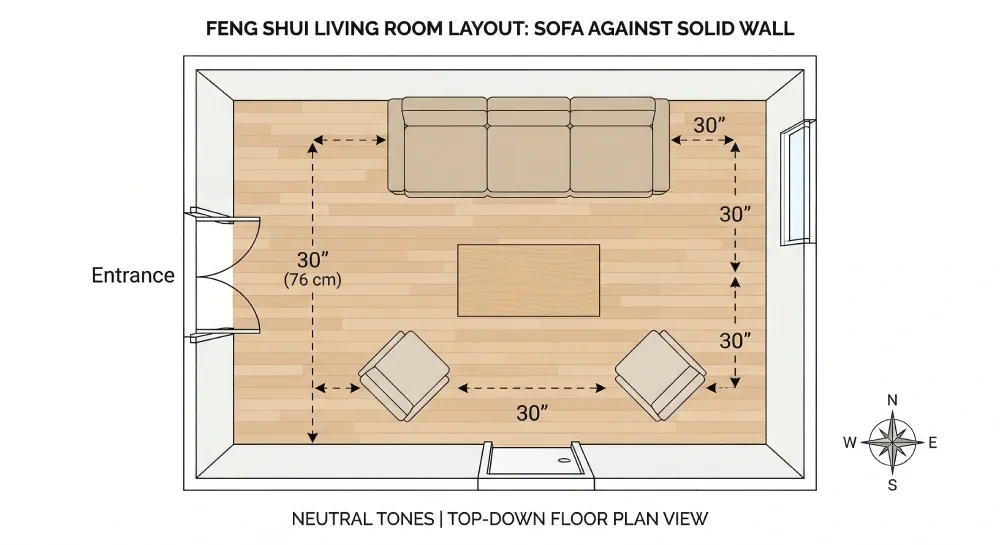
What to avoid: Do not place the sofa under heavy wall shelving or floating cabinets. Avoid positioning it directly under a window, which removes the solid backing effect.
Layout 3: L-shape protection layout
Best for: Corner rooms or spaces with multiple entry points.
Works in: Larger living rooms, open-plan areas that need defined zones.
How to arrange: Position an L-shaped sofa so one arm faces the entrance and the other runs along a side wall. The corner of the sofa sits farthest from the door, giving the main seating spot a full view of the room. Add one chair opposite the open end.
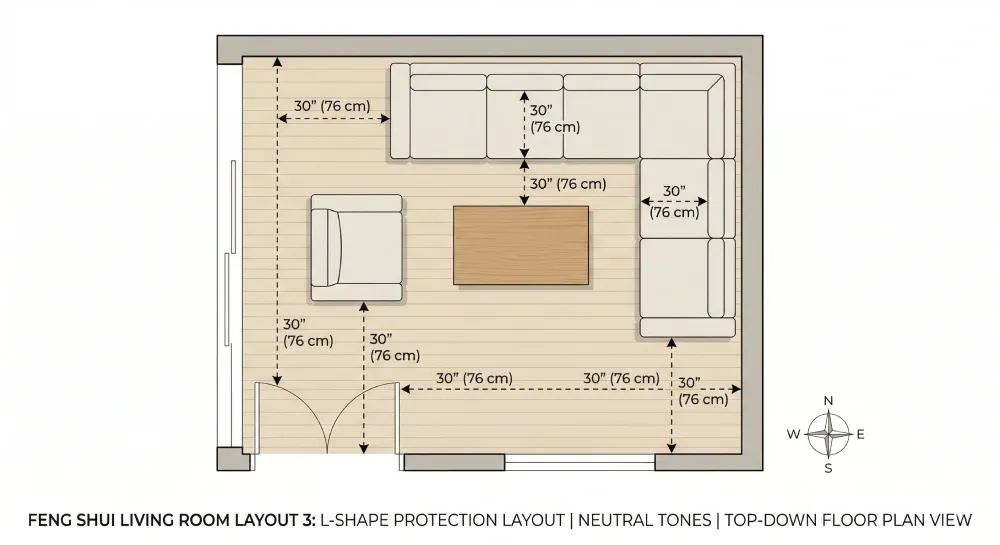
What to avoid: Don't let the open end of the L face directly toward a hallway or second doorway. Avoid sharp coffee table corners pointing into the seating area.
Layout 4: Balanced opposite seating
Best for: Rooms used for conversation or hosting.
Works in: Square rooms and wider rectangular spaces.
How to arrange: Place the sofa against one wall and two chairs or a loveseat directly opposite. Keep the spacing even on both sides. A square or round coffee table in the center ties the arrangement together. Both seating sides should have a partial or full view of the room entrance.
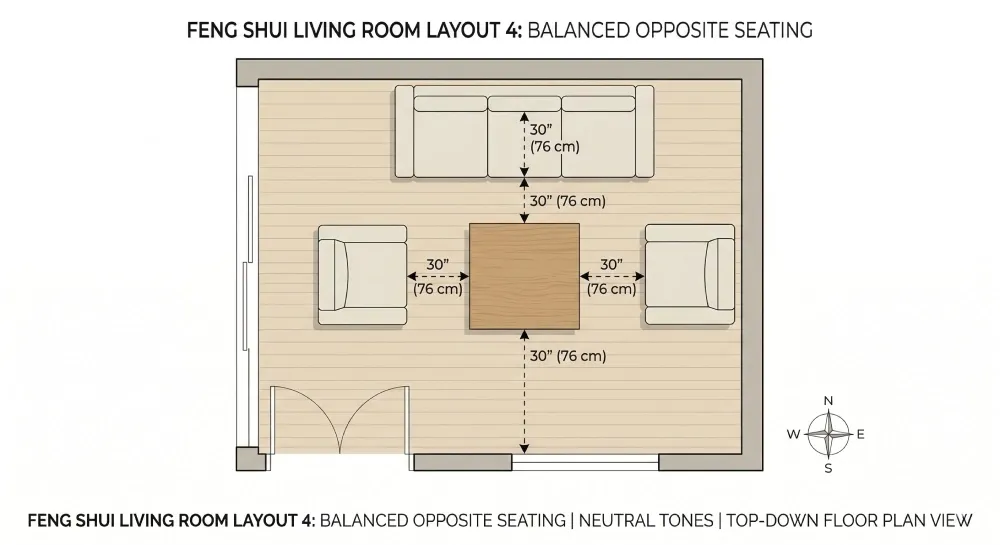
What to avoid: Do not push both seating sides so close together that the space between them is less than 30 inches. Avoid placing one side against a window with no backing.
Design smarter, not harder.
AI suggestions tailored to your space and style.
Layout 5: Small living room feng shui layout
Best for: Compact spaces with limited furniture choices.
Works in: Studio apartments, small separate living rooms.
How to arrange: Use a two-seat sofa against the wall that offers the best view of the entrance. Add one chair at a 45-degree angle to the sofa rather than directly opposite, which would crowd the room. A small, round coffee table keeps the center open. Wall-mounted shelving frees up floor space.
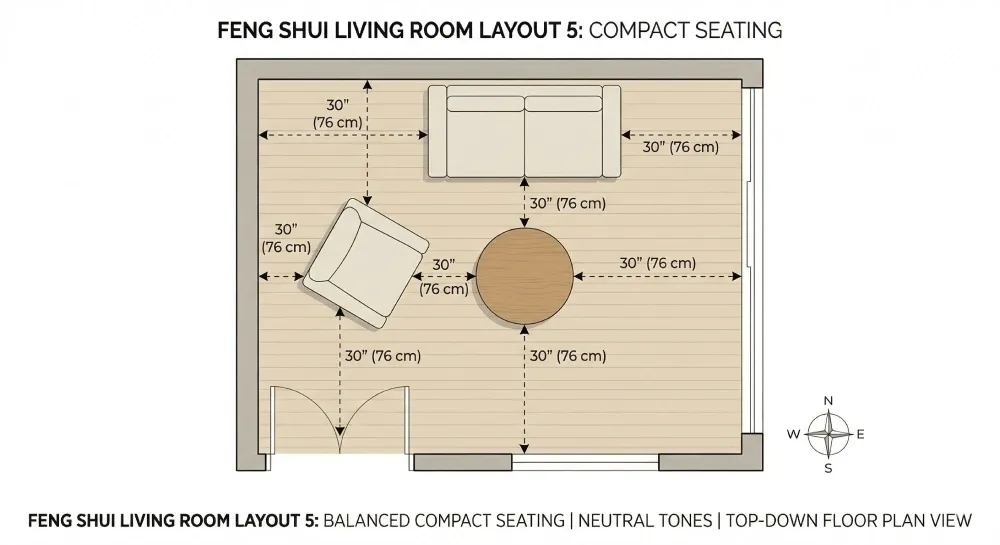
What to avoid: Avoid filling every wall with furniture. Leave one wall clear. Don't use an oversized sofa; it will block pathways and make the room feel closed off.
Layout 6: Open plan feng shui layout
Best for: Living areas that flow into a kitchen or dining space.
Works in: Modern homes, loft-style spaces.
How to arrange: Use the sofa as the dividing line between the living zone and the rest of the open space. Position it with its back to the kitchen or dining area, facing into the living zone. Make sure the sofa backs up to an implied boundary, such as a low console table or an area rug edge, rather than floating in open space. At least one seat in the arrangement should face the main entrance.
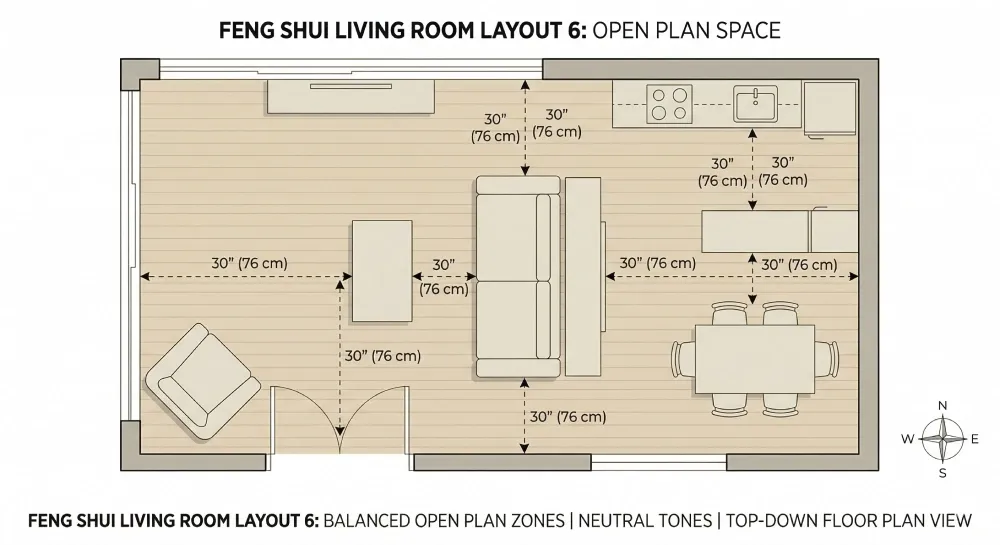
What to avoid: Don't place the sofa in the dead center of a large open floor with nothing behind it. Avoid letting traffic walk directly behind the main seating.
Practical spacing guidelines
- Leave a minimum of 30 inches for any walking path
- Keep the center of the room as open as possible
- Do not place the sofa directly under heavy shelving
- Avoid blocking windows completely; leave at least half the window clear
Get the layout right before adding decor. A stable, clear arrangement is the foundation on which everything else builds.
Planner 5D: The Future of Interior Design
Experience the power of AI-driven design with Planner 5D. Our innovative tools, including the Design Generator, Smart Wizard, and AI floor plan recognition, make bringing your dream home to life easier than ever. Transform your vision into reality and unlock a world of design possibilities today.
Start designing your dream home